






 Portuguese
  Spanish
  5 min of reading
  0 comments


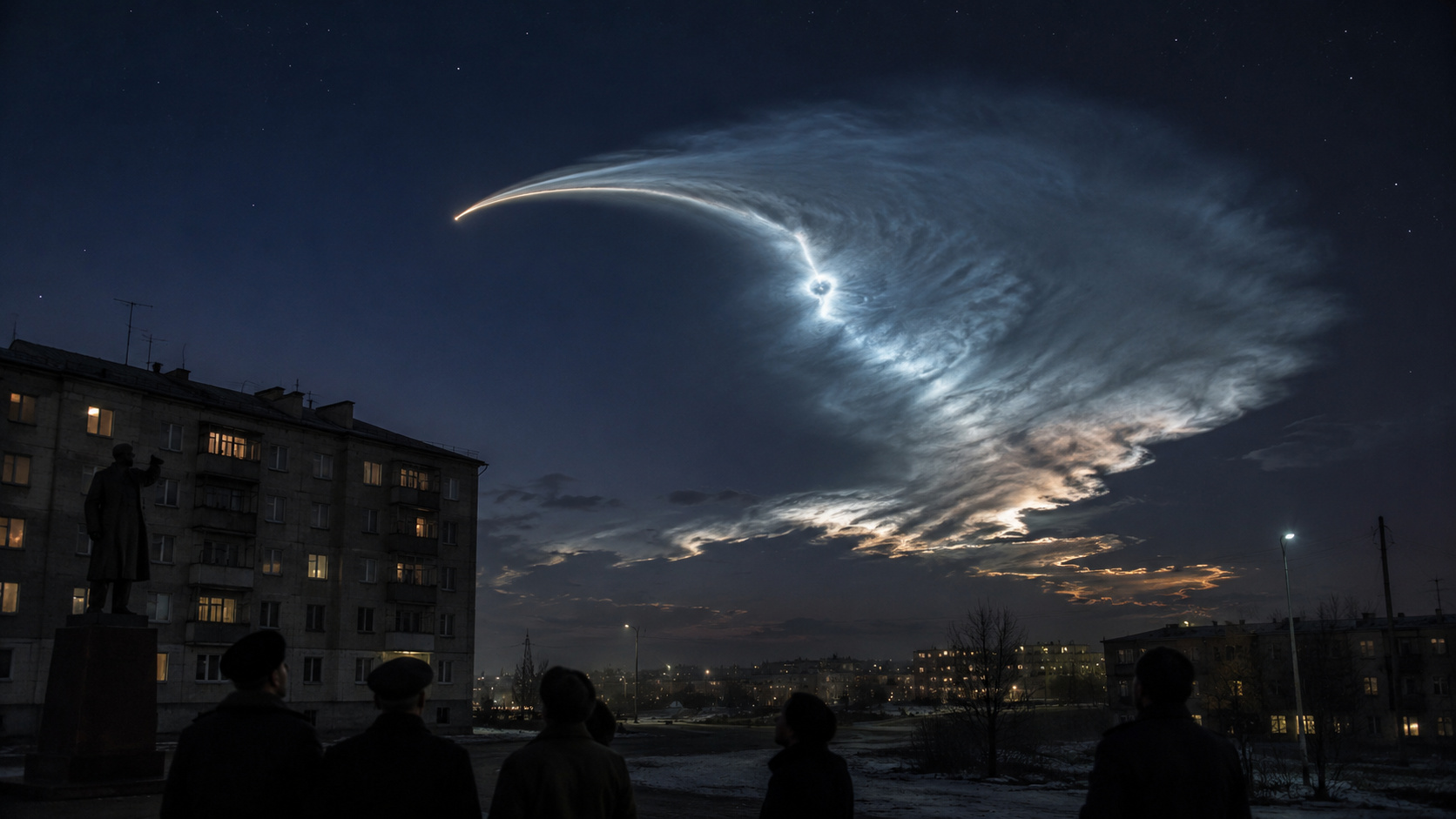
Phenomenon seen as UFO in the Soviet Union in 1967 was the trail of the FOBS, a secret orbital nuclear weapon created to escape US radars.
In the spring of 1967, residents of the western Soviet Union began reporting a strange phenomenon at dusk: a luminous crescent in the sky, visible always at the same time and repeated on six occasions throughout the year. The episode sparked speculation about UFOs and fueled the interest of Soviet groups dedicated to recording unusual aerial appearances. Decades later, the explanation became clearer: what seemed like a mysterious object was, in fact, the trail of tests of the FOBS, an acronym for Fractional Orbital Bombardment System, a Soviet fractional orbital bombardment system.
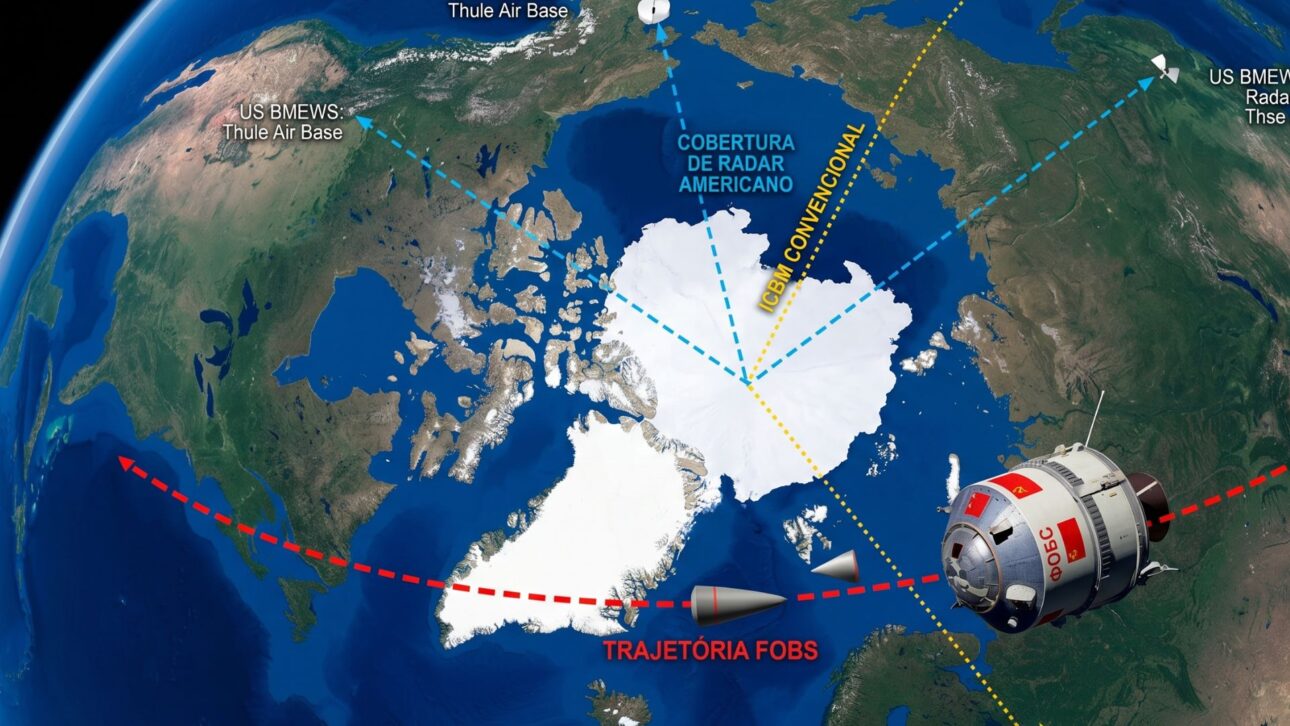
According to Popular Mechanics and Interesting Engineering, the FOBS was conceived during the Cold War to place a nuclear warhead in low Earth orbit for a fraction of a turn before bringing it down on the target. The goal was to circumvent the American early warning systems focused on the north, creating an attack route via the South Pole, an area that US radars did not monitor with the same attention.
What terrified and intrigued Soviet observers was not an extraterrestrial visitor, but the visual signature of one of the most unsettling weapons of that period.
-
The United States government approved a potential sale of 100 portable Stinger anti-aircraft missiles to the Brazilian Army, in a package estimated at around 330 million dollars that still depends on negotiations between the two countries.

-
The spy plane that flies on the edge of space and requires the pilot to wear an astronaut suit: U-2 Dragon Lady has been crossing the skies above 21 km altitude since the Cold War and remains one of the most extraordinary reconnaissance aircraft ever built.
-
Chinese aircraft carriers on alert amid Japanese military advancement: exercises with 64 anti-ship missiles, F-35 fighters, and new Type-12 missiles highlight the race to protect giant fleets in the Western Pacific.

-
USS Gerald R. Ford, the most expensive aircraft carrier in the world, returned to the USA after almost 11 months at sea with 4,600 military personnel on board, but is entering maintenance to repair a fire, rebuild accommodations, and fix a bathroom system that caused a series of failures.


Why the supposed Soviet UFO appeared as a crescent of light
The crescent shape was not random. According to Popular Mechanics, it appeared during the system’s braking maneuver, when the vehicle fired its deorbit engine and rotated to adjust the trajectory.
The combination of the exhaust illuminated by the Sun with the vehicle’s position in the early evening sky produced a C shape, clearly visible to those observing from the ground.
This appearance helped fuel the UFO narrative in the Soviet press at the time. But from a technical standpoint, the phenomenon was merely the visible reflection of a critical stage in the FOBS operation. Instead of a flying saucer, the public saw the trail of a military technology practicing the maneuver that would allow a less predictable attack.


The very resemblance between this crescent and modern images of rockets in return maneuvers shows that the physics of the phenomenon is understandable today. The mystery of the Soviet skies of 1967 was, at its core, a case of secret military technology observed without public context.
FOBS was created to bypass American radars and explore an unconventional route
The FOBS was born to solve a strategic problem for the Soviet Union. Traditional intercontinental ballistic missiles followed predictable trajectories, and the United States had organized its radar network primarily to detect attacks coming through the Arctic. By placing the warhead in a partial orbit, the Soviet system changed the logic of the flight and made it difficult to predict the final direction of the attack.
According to Interesting Engineering, this weapon offered three essential advantages for the Soviet logic of the time. It was not confined to the range of a conventional ballistic trajectory, did not easily reveal the final target during flight, and could approach North America from less monitored directions. This increased the adversary’s strategic vulnerability and put pressure on the entire American defense architecture.
The central point is that FOBS was not just a different missile. It was an attempt to change the geometry of nuclear confrontation, exploring the idea that space could be used as an approach path for a less detectable attack.
The Soviet orbital weapon exploited a legal loophole in the Outer Space Treaty
One of the most ingenious aspects of FOBS was legal, not just technical. The Outer Space Treaty of 1967 prohibited the placement of nuclear weapons in orbit around the Earth. The Soviet response was to argue that the system did not complete a full orbit of the planet and, therefore, would not exactly fall under the prohibition.
This is precisely where the term fractional in its name comes from. The orbit was not complete, but partial. This formulation allowed the Soviet Union to argue that it was not formally violating the treaty, even while developing a system with a military and nuclear function associated with space.

This ambiguity shows how the Cold War was also fought in the language of treaties. It was not enough to develop the technology. It was necessary to frame it in gray areas of international law to sustain its existence without openly admitting a frontal rupture with the newly created space legal regime.
The silence of the Soviet press began when the phenomenon ceased to be useful
Initially, the Soviets explained the tests as launches of scientific research satellites. But, according to Popular Mechanics and Interesting Engineering, American intelligence quickly realized it was something more sensitive and began publicly denouncing the military nature of the system.
It was at this moment that UFO reports became a problem for the Soviet Union itself. The press coverage and popular interest were creating a visible record of secret tests.
When the authorities realized that this attention was helping to expose the technology in development, the repercussion simply disappeared from the newspapers.
The sudden disappearance of the news was not, therefore, proof of extraterrestrial cover-up. It was a movement of information control around a sensitive military program, tested too visibly for the secrecy standards required by Soviet logic.
The concept of FOBS did not die with the Cold War
Although the Soviet system aged and lost some of its utility with the evolution of radars and missile-launching submarines, the logic behind FOBS remained relevant. According to Interesting Engineering, the idea of combining less predictable trajectories with hard-to-intercept vectors has reappeared in recent strategic debates.
The history of the so-called Great Soviet Crescent remains important precisely because it shows how a phenomenon interpreted as ufological hid an advanced military experiment. The case anticipates a recurring pattern: new strategic technologies often seem incomprehensible to the public until the technical and political context comes to light.
In the end, the luminous crescent that scared and fascinated the Soviets in 1967 was not a sign of alien life. It was an involuntary visual warning that the nuclear race had already found a way to use space as a direct extension of the battlefield.





Be the first to react!