






 Portuguese
  Spanish


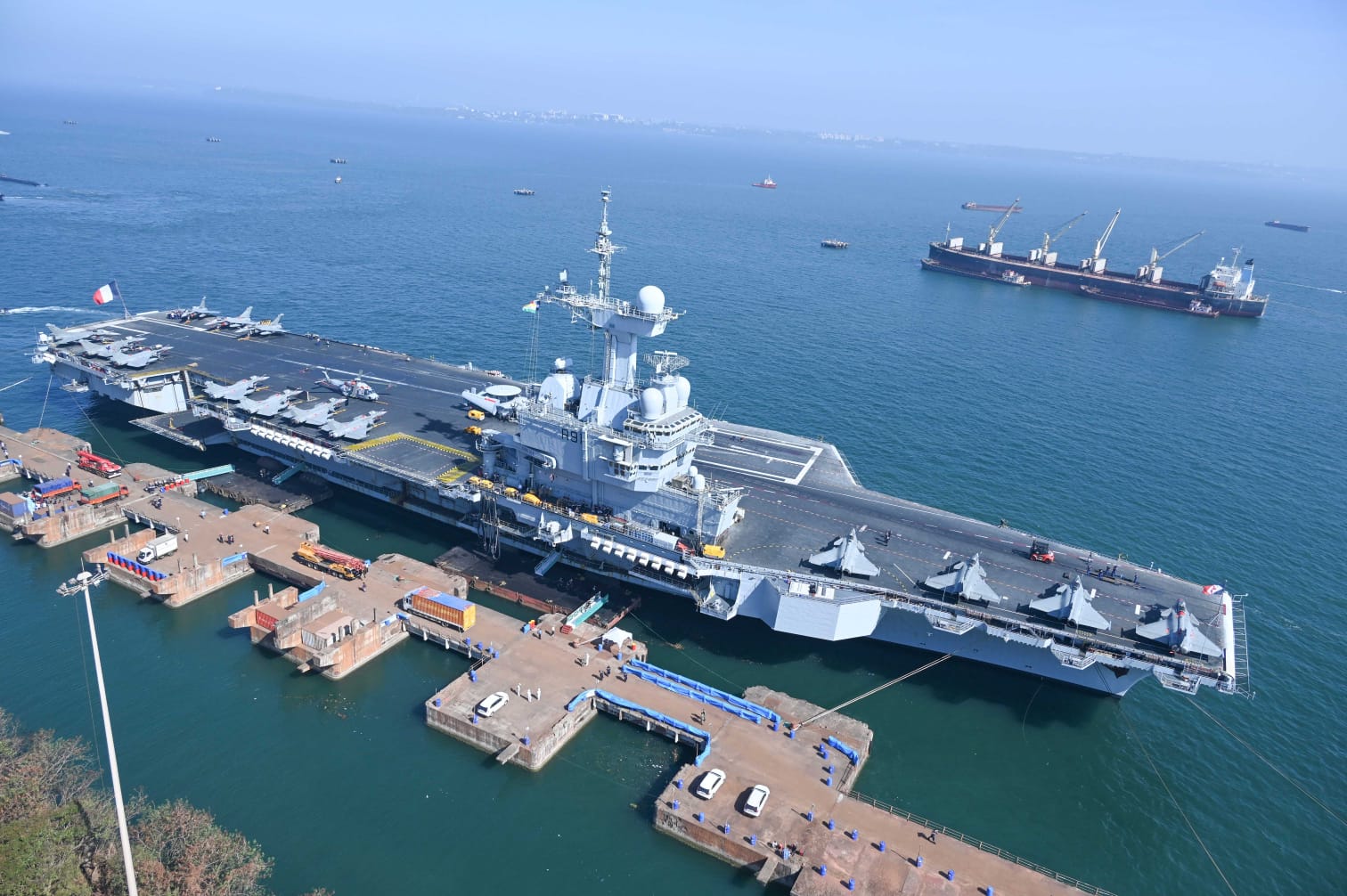
The Charles de Gaulle displaces 42,500 tons, uses nuclear propulsion, and remains the only atomic aircraft carrier in operation outside the USA.
The Charles de Gaulle holds a unique position in contemporary naval engineering. With about 42,500 tons of displacement and 261.5 meters in length, it has established itself as the main ship of the French Navy since its entry into active service in 2001.
Its uniqueness is straightforward and rare: according to the Naval Group, France remains the only country outside the United States to operate a nuclear-powered aircraft carrier. This condition places the ship at a technological and strategic level that few navies in the world have achieved.
Nuclear propulsion of the Charles de Gaulle ensures unusual strategic autonomy
Unlike ships powered by fossil fuel, the Charles de Gaulle operates with two onboard nuclear reactors. In practice, this drastically reduces the dependency on energy refueling for propulsion and gives the ship much greater employment flexibility in prolonged missions.
-
The military spaceplane that almost took the Cold War into orbit: Boeing X-20 Dyna-Soar was designed to re-enter above Mach 20, fly for up to 40 hours, land like a plane, and transform Titan rockets into a gateway to a new era of orbital warfare.

-
FAB bets on national drones and increases investments to strengthen the Brazilian aerospace industry

-
Six times, a luminous crescent the size of the Moon startled the Soviet sky at dusk: it seemed like a wave of UFOs, but it was a secret orbital weapon created to attack the United States via the South Pole and evade Cold War radars.

-
The United States government approved a potential sale of 100 portable Stinger anti-aircraft missiles to the Brazilian Army, in a package estimated at around 330 million dollars that still depends on negotiations between the two countries.




The reactor’s autonomy does not eliminate the ship’s logistics, because supplies, ammunition, parts, and technical support are still necessary. What changes is the core of the energy problem: nuclear propulsion allows the aircraft carrier to remain in operation for long periods without the same logistical pressure typical of conventional ships.
Dimensions and air capacity make the ship the center of the French naval air group
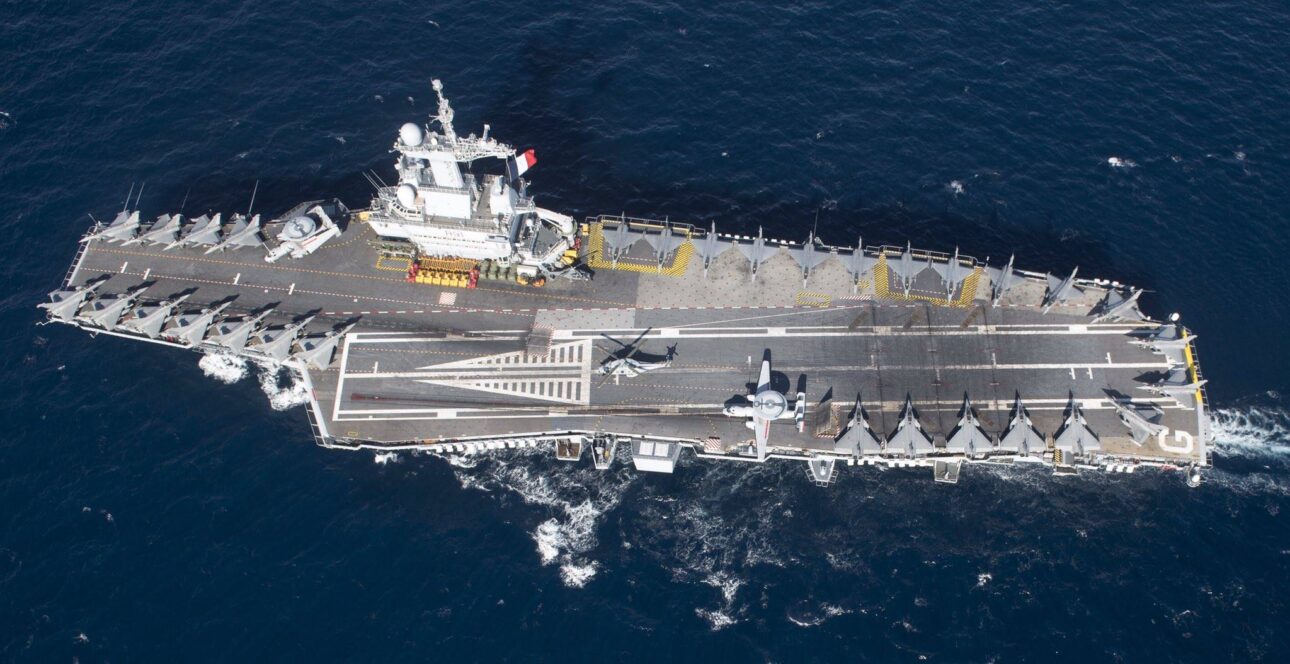
The aircraft carrier is 261.5 meters long, displaces about 42,500 tons, and operates at about 27 knots. These numbers help explain why it functions as the hub of the French naval air group and as a large-scale embarked aviation platform.
The vessel carries about 30 aircraft in operational configuration, in addition to housing two nuclear reactors and two catapults, a combination that supports an intense pace of air operations at sea. Among the embarked vectors are Rafale M fighters and E-2 Hawkeye early warning aircraft, essential for extending the range and situational awareness of the naval group.
Only nuclear aircraft carrier outside the United States places France in a restricted circle
The uniqueness of the Charles de Gaulle lies not only in the size or political weight of the ship but in the technology it encompasses. The Naval Group claims that the ship’s nuclear propulsion ensures considerable autonomy at sea and great flexibility of use, reinforcing France’s position in an extremely restricted circle of powers with this capability.

This mastery requires integration between naval architecture, reactor safety, specialized maintenance, and the operation of embarked aviation on a deck with catapults and arresting cables. Therefore, the ship is not just a military platform but also a symbol of France’s industrial sovereignty and technological continuity.
Long-distance naval projection transformed the Charles de Gaulle into a central instrument of France
Since entering service in 2001, the Charles de Gaulle has established itself as the main instrument of France’s naval projection. Instead of relying solely on land bases, the country now has a mobile airbase capable of operating in different seas and sustaining a prolonged presence far from metropolitan territory.
This logic explains why the ship has become a central piece of the French naval air group in long-distance deployments, real missions, and exercises with allies. The combination of nuclear propulsion, embarked aviation, and command capability transforms the aircraft carrier into a tool of presence, deterrence, and rapid response in crisis scenarios.
Nuclear autonomy does not eliminate logistics or heavy maintenance in the shipyard
The idea of total autonomy often causes confusion. The Charles de Gaulle can spend long periods without refueling for propulsion, but this does not mean complete independence from external support. Food, ammunition, medical supplies, parts, and maintenance remain indispensable in any prolonged operational cycle.
Additionally, a nuclear aircraft carrier relies on highly specialized technical stops to preserve safety, availability, and performance. The Naval Group itself highlights that it is involved in the construction and operational maintenance of the ship, which shows that energy autonomy reduces fuel dependency but does not eliminate the logistical and industrial complexity of the system.
Comparison with conventional aircraft carriers shows where the strategic differential lies
In a conventional aircraft carrier, fuel dependency directly affects area permanence, range of action, and logistical planning. In the case of the Charles de Gaulle, the nuclear energy core reduces this vulnerability and allows greater freedom of employment in long crossings and continued missions.
This differential does not eliminate costs or technical challenges, but it changes the scale of the strategic problem. In scenarios of international crisis, the ability to deploy an embarked aviation platform over long distances without the same urgency for energy refueling enhances the military and diplomatic value of the ship.
France is already preparing the succession of the Charles de Gaulle to preserve this nuclear capability
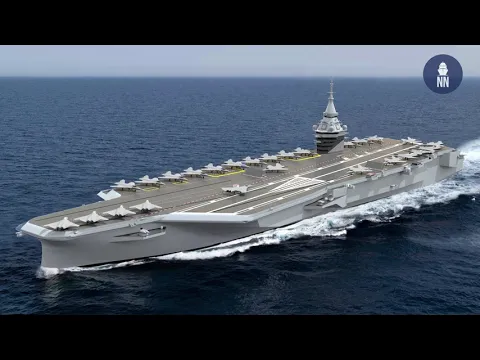
The importance of the ship is so great that France has already decided to preserve this tradition with a next-generation successor. The Naval Group stated, back in 2020, that the development of a future aircraft carrier would ensure the continuity of French industrial competencies and keep the country among the powers operating a nuclear aircraft carrier.
This shows that the Charles de Gaulle is not just a product of its time. It has become the basis of a long-term strategy, in which energy autonomy, naval projection, and technological mastery go hand in hand. Even after more than two decades in service, the ship remains one of the clearest examples of how naval engineering and strategic sovereignty can merge into a single platform.








Be the first to react!