Portuguese
  Spanish


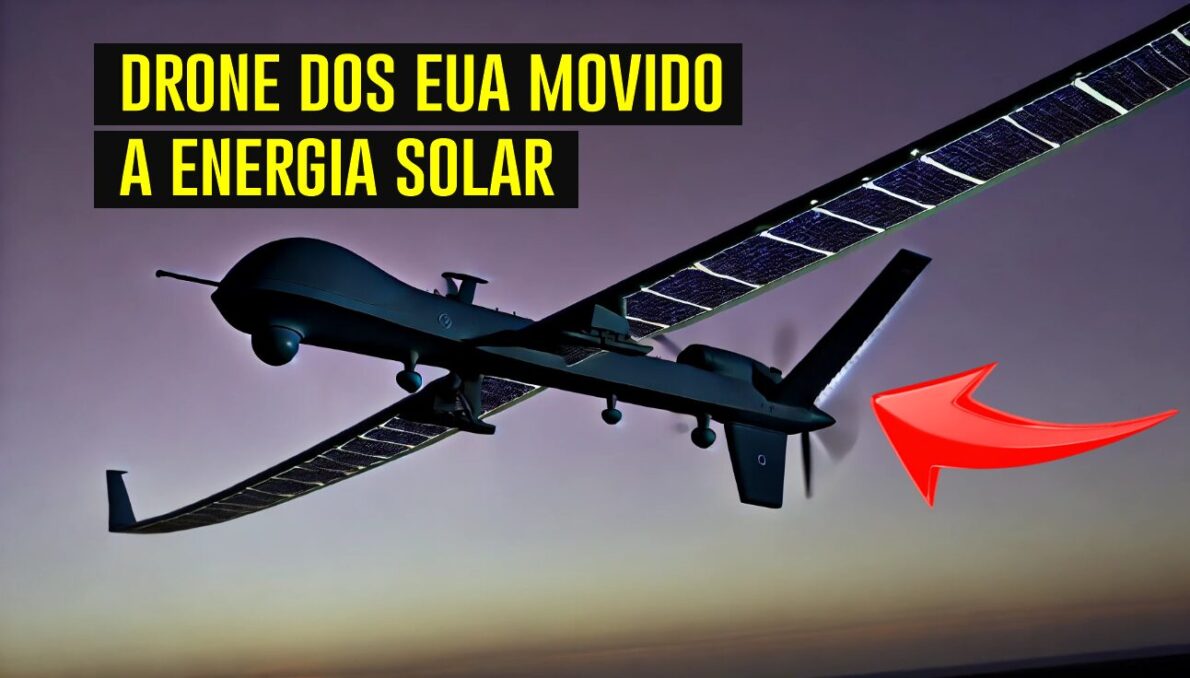

A Solar-Powered Drone Capable of Flying for Months in the Stratosphere With an Absurd Offensive Capacity Is Being Tested by the US Army
The drone warfare has rapidly evolved, and the technology for unmanned aerial vehicles (UAVs) is becoming increasingly sophisticated. With the introduction of solar drones, countries like the United States are exploring ways to extend flight time and increase the efficiency of these aircraft. Recently, the US Army tested a solar-powered drone designed to fly for months in the stratosphere, carrying up to 150 pounds (approx. 68 kg) of equipment.
The latest advancement in this technology was led by the defense company AeroVironment (AV), which introduced the Horuss A, a new version of the Sunglider drone.
This solar-powered drone was developed to meet government needs and represents a significant innovation in terms of capacity and endurance.
-
World’s Largest Engie Solar Plant in Brazil Highlights Billion-Dollar Energy Waste Issue: Company Considers Batteries and Bitcoin Mining to Avoid Wasting Production

-
Over 60 Tractors Take to the Streets in Lopera as Solar Parks Compete with Olive Groves, Affecting 13,000 to 100,000 Trees According to Conflicting Reports

-
Brazil’s Vitória Airport to Launch Solar Plant Covering Area of 10 Soccer Fields, Boosting Clean Energy and Cutting Costs
-
Switzerland Converts Train Tracks into Solar Power Plants with Removable Panels to Generate Energy Without Using Additional Land



With a power of 1.5 kW, the Horus A can carry multiple payloads for various applications, demonstrating top-notch stratospheric performance.
The company states that the Horus A, with its enhanced design and redundant systems, is prepared to take on challenging missions. Additionally, the solar drone received airworthiness approval from the US Army, as well as a Special Airworthiness Certificate from the FAA.
These certifications allow the Horus A to operate in national airspace, facilitating testing and missions on US territory.
Stratospheric Performance of the Solar-Powered Drone of the US Army
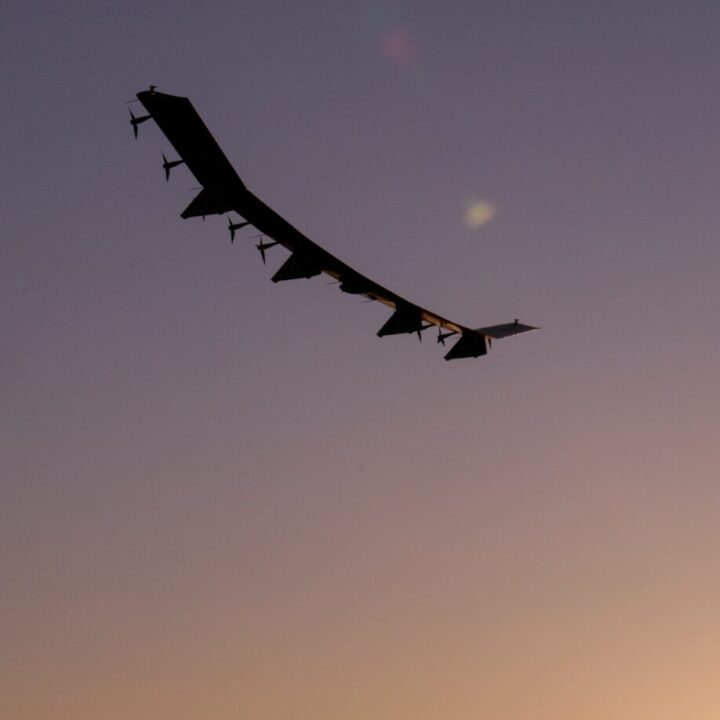
During a recent flight, the Horus A demonstrated its ability to carry multiple payloads for the Department of Defense, including a synthetic aperture radar (SAR) and a tactical mesh radio.
According to Jeff Rodrian, Senior Vice President of AV and General Manager of MacCready Works, this flight marked a significant milestone for the company’s stratospheric platform, proving the effectiveness of the solar drone in challenging environments.
In addition to maintaining real-time data transmission during the mission, the solar drone managed to land safely after facing adverse weather conditions, demonstrating the robustness of its design.
According to AV, the Horus A is ready to return to the stratosphere and undertake future long-duration missions, contributing to increased situational awareness and responsiveness of the US Army.
The Strategic Importance of the Solar Drone
The Horus A stands out for its beyond-line-of-sight (BLOS) satellite-based radio, which allows for the extension of resilient communication networks.
Additionally, it features a robust set of avionics and datalink, facilitating communication and real-time data transmission even under adverse conditions.
This capability is crucial for applications such as Assured Positioning, Navigation and Timing (APNT) and Space Domain Awareness, essential for modern military operations.
The solar drone also has long-endurance Intelligence, Surveillance, and Reconnaissance (ISR) capabilities and can be used for deep detection on the battlefield.
These features make the Horus A a key asset in the US military strategy, especially in missions involving the coordination of smaller drone swarms like the Switchblade 600.
In addition to contributing to the effectiveness of combat missions, the Horus A allows the US Army to test and validate new payload and communication technologies in real operating conditions.
This versatility is crucial, as it enables the solar drone to quickly adapt to different scenarios, facilitating the implementation of new capabilities on the battlefield.
The Future of Horus A
The success of the Horus A’s most recent flight paves the way for future operational missions, supported by the Office of the Under Secretary of Defense for Research and Engineering.
With this validation, AeroVironment (AV) plans to advance the development of the solar drone towards operational employment. This progress reinforces AV’s leadership in the sector, which continues to explore the potential for stratospheric applications for both the commercial and governmental markets.
Solar drones like the Horus A represent an important milestone in the evolution of UAV technology. By integrating solar power and advanced communication systems, these drones promise to expand the capabilities of the US Army, offering unparalleled persistence and resilience.
With the ability to fly for months in the stratosphere, the Horus A stands out as a powerful tool in national defense, demonstrating that solar drones can be essential in modern warfare.