Portuguese
  Spanish



Data Exploration: Understand the Explosive Performance of the Retail Sector
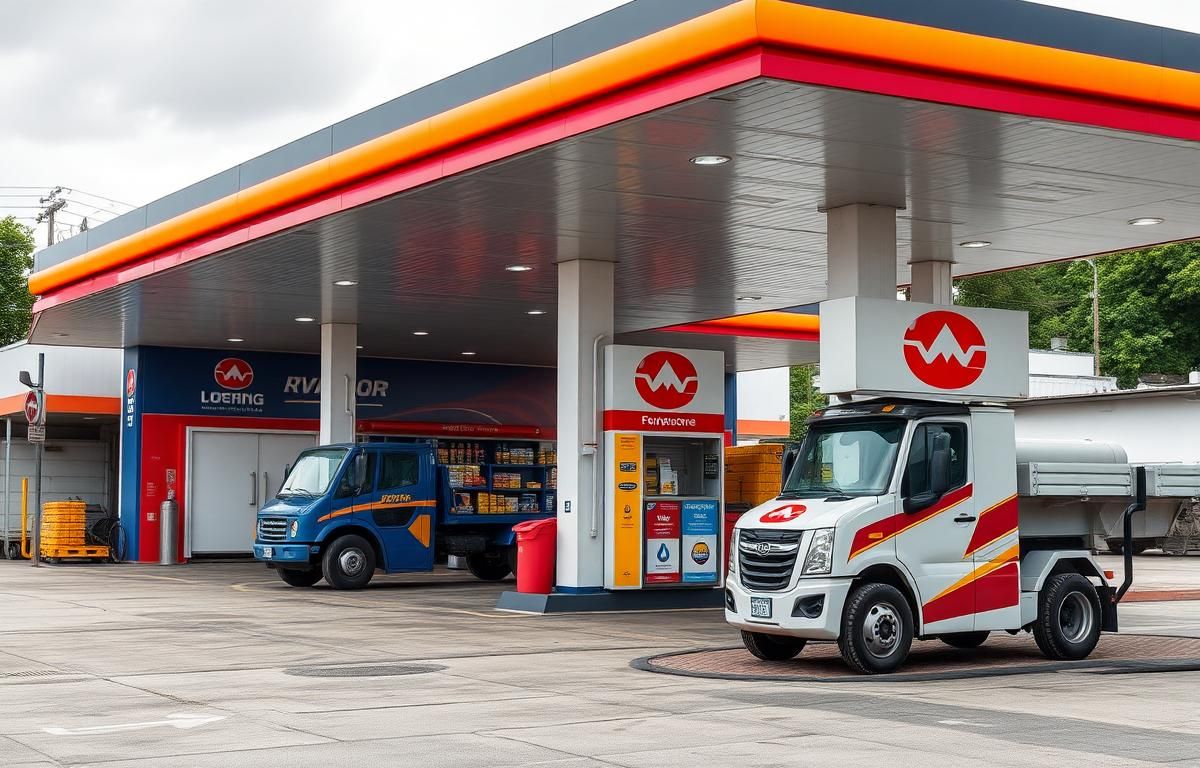
In the latest analysis of the Stone Retail Index (IVS), there was a surprising increase of 1.1% in the fuels and lubricants sector in January. Even more impressive was the annual growth of 9.3%, marking 2025 as the year to remember in the retail sector. The 25th edition of the IVS highlights the remarkable progress compared to previous months, reaffirming the power of the indicator as an essential tool for understanding market movements. The data was compiled by the Stone team, who continues to monitor trends with incredible accuracy.
Looking ahead, beyond the traditional consumer sectors, the mining sector also witnessed significant advancements. As the extractive industry adjusts to new demands, mineral exploration accelerated its pace to meet the global energy transition. Mining, once seen as a traditional field, is now a strategic pillar for sustainable growth. With reforms in automation and a sustainable commitment, expectations are that these changes will reflect in diversified economic indicators with positive influence, as Stone specialists point out.
Diving Into the Numbers of Consumption and Mineral Exploration
The retail sectors are not alone in this growth journey. The interaction between mineral exploration and consumer demands has become a topic of relevance, according to analyses from IBGE and Market Insights. Since early 2024, mining has played a crucial role in providing the necessary resources for renewable energies and technological advancements. These transformations are visible not only in quarterly sales reports but also in employment projections. The digital integration and ESG are shaping new leaderships and opening innovative paths for the market.
-
99Food Under Investigation by Brazilian Consumer Protection Agency for Lack of Price Transparency, Faces Potential $2.8 Million Fine

-
Race for data centers in Brazil increases pressure on critical energy

-
Growth without profit has become one of the most costly management mistakes in Brazil.

-
Anvisa blocks batch of antibiotic after unexpected discovery in sealed vial and also suspends clindamycin with impurities and saline solution used in intravenous application




Since the launch of the IVS, the narrative surrounding the retail sector and its performance metrics has been rewritten, with Stone bringing deeper insights that help decipher the changing economic landscape. Continuing this pace, the focus on sustainability practices and automation could transform entire industries, impacting both consumers and businesses. The future looks promising for both areas, with market leaders anticipating even greater advancements over the coming years.
For analysts, growth is a promise that more dynamic changes are coming. Government policies and stimulus measures play a vital role in supporting these crucial sectors for the economy. Keeping a close eye on these indicators will allow for more effective strategic planning, ensuring that the retail sector and mining move together toward an innovative and sustainable future. Indicators like the IVS are receiving increasing attention as they reveal trends that were previously unthinkable.
Annual Performance of the Stone Retail Index (IVS)
In the annual analysis, the segment presented the best performance of the year for the second consecutive time, registering an increase of 9.3%. This monthly study, which monitors the movement of the retail sector in Brazil, is an initiative of Stone, a technology and financial services company that stands out as the main partner of Brazilian entrepreneurs. In January, all other sectors also showed monthly growth: textiles, clothing, and footwear increased by 4.8%; pharmaceutical articles grew by 2.2%; the category of other personal and household items had a growth of 2%. Furniture and appliances rose by 1.7%, while hypermarkets, supermarkets, food products, beverages, and tobacco presented a growth of 1.5%. Books, newspapers, magazines, and stationery also showed growth, with an increase of 1.4%, followed by construction materials, which grew by 1.1%.
Regional Highlights of the IVS
In the regional highlights of the Stone Retail Index, 19 states showed positive results in the annual comparison. Roraima led with an impressive increase of 9.3%, followed by Amazonas with 6%, Acre with 4.6%, Alagoas with 4.3%, and Ceará with 4.1%. Amapá saw an increase of 3.9%, Pará grew by 3.2%, while Rio de Janeiro and São Paulo recorded increases of 2.9% and 2.8%, respectively. Goiás and Minas Gerais had a growth of 2.6%, Espírito Santo recorded 2.2%, and both Tocantins and Maranhão showed an advance of 1.6%. Rondônia grew by 1.5%, while Pernambuco recorded an increase of 1%. Rio Grande do Norte had a performance of 0.9%, with Bahia and Sergipe rising 0.8%. Seven states recorded decreases, with Piauí having the largest drop of 1.9%, followed by Mato Grosso do Sul with 1.4%, Rio Grande do Sul with 1.1%, Santa Catarina with a reduction of 0.8%, Mato Grosso reducing by 0.7%, Paraíba 0.3%, and Paraná had a slight drop of 0.2%. The Federal District remained stable, without variations.
Segments Analyzed by the IVS
The complete report can be accessed on Stone’s new content platform. Regarding the analyzed segments, the Stone Retail Index (IVS) focuses on eight areas: pharmaceutical articles, medical products, orthopedic, perfumery and cosmetics; hypermarkets, supermarkets, food products, beverages, and tobacco; books, newspapers, magazines, and stationery; furniture and appliances; textiles, clothing, and footwear; construction materials; fuels and lubricants; and other personal and household items. The Stone Retail Indicator, through the IVS, continues to be an essential tool for tracking the new results and performance of the year in the retail sector, providing fundamental data and analyses for entrepreneurs.
Source: STONE Press