






 Portuguese
  Spanish
  3 min of reading
  1 comment


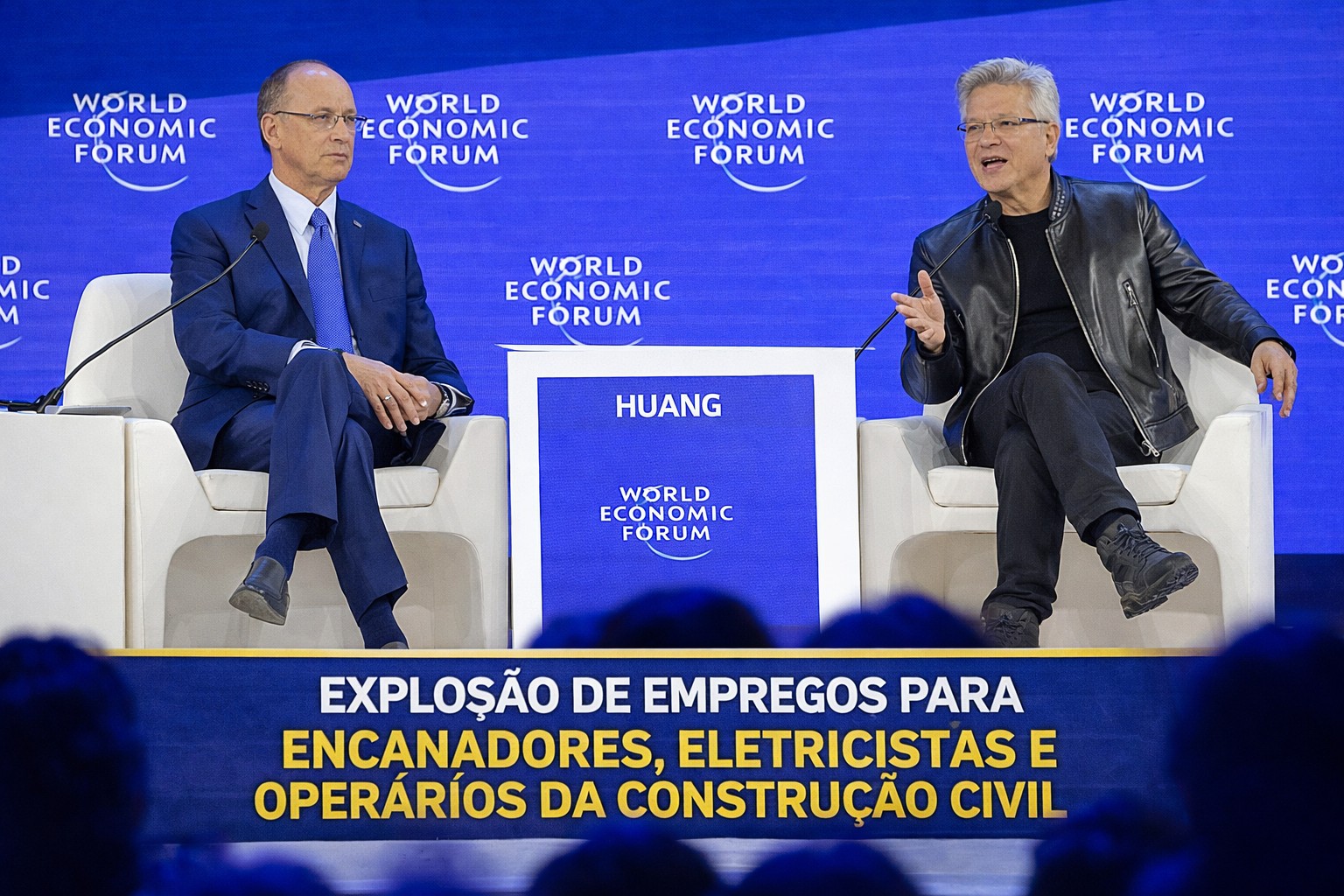


At The World Economic Forum In Davos, Tech Giant Leader Projects New Opportunities For Technical Workers At The Peak Of The Expansion Of Artificial Intelligence
The CEO of Nvidia, Jensen Huang, stated that the explosive growth of artificial intelligence (AI) will not only be a driver of automation but also a catalyst for creating traditional and well-paid jobs — including roles such as plumbers, electricians, and construction workers. His declaration was made during a conversation with Larry Fink, CEO of BlackRock, at the World Economic Forum 2026 (21), in Davos, Switzerland.
AI And The Largest Infrastructure Expansion In History
According to Huang, the development of AI is driving one of the largest infrastructure expansions ever seen, especially in data centers, storage facilities, and data processing that support the most advanced AI systems. This demand for physical structure, he argues, requires thousands of skilled professionals for construction, installation, and maintenance — roles where traditional university education is often not a prerequisite.
“We are talking about six-figure salaries for people who build chip factories, computer factories, or AI factories,” Huang said in Davos.
ARTICLE CONTINUES BELOWSee also
Brazilian Joins Homeownership Consortium, Faces Decade of Dual Payments Totaling $141,000, Surpassing Traditional Mortgage

Land Rover to Halt Production in July, Putting 371 Jobs at Risk, as Chinese Automaker Negotiates to Convert Factory to 100,000 Vehicles Annually by 2027

Mexican Pest Threatens U.S. Cattle Herds at Historic Lows, Potentially Boosting Brazilian Beef Exports as Burger Prices Soar

Brazilian Freight Bill Progresses in Congress with $5,000 Minimum Wage, 70% Advance Payment, and Fines Up to $1 Million, as Agriculture and Industry Warn of Rising Costs and Legal Uncertainty


Huang emphasized that the need for energy, cooling systems, electrical infrastructure, and physical facilities makes these professions central to supporting the infrastructure required by AI. As a result, technical workers — historically associated with more modest salaries in many economies — may begin to earn significantly higher compensations, comparable to levels he describes as “six figures” (in dollars).

Counterpoint To The Fear Of Mass Unemployment
Huang’s remarks contrast with more pessimistic views circulating in the market, where automation replaces large volumes of human work. In Davos, he stressed that AI does not necessarily “eliminate jobs,” but reshapes how work is distributed in the economy. Manual and technical professions, according to him, could be among the most benefitted by this transformation.
Huang used a layered metaphor to explain his vision of AI: at the top are smart applications and services, below come models and computing platforms, and at the base lies all the physical infrastructure that needs to be built and maintained — precisely where technical job opportunities arise.
Practical Impact On The Job Market
Huang’s comments reflect a reality already observed in several recent reports: while certain entry-level technology roles may face automation pressure, there is a shortage of skilled labor for tasks that require technical preparation and manual skill.
In this context, workers such as plumbers, electricians, and specialized technicians are likely to see increasing demand for their services, driven by both the construction of new facilities and the maintenance and expansion of existing systems.
Broader Debate On The Future Of Work
Huang’s vision contributes to a broader picture of debates about AI in the job market: while some leaders emphasize the need for adaptation and reskilling, others warn of potential social challenges arising from accelerated automation. Nevertheless, the Nvidia CEO’s stance highlights that AI can create new pathways for jobs and income beyond traditional expectations of technology — reaching sectors that many considered immune or indifferent to the digital boom.
Source: InfoMoney, based on an interview given by Jensen Huang at the World Economic Forum on January 21, 2026. (Gizmodo in Portuguese)


Eletricista só ganha bem e trabalha com segurança só trabalhando autonomo