Portuguese
  Spanish


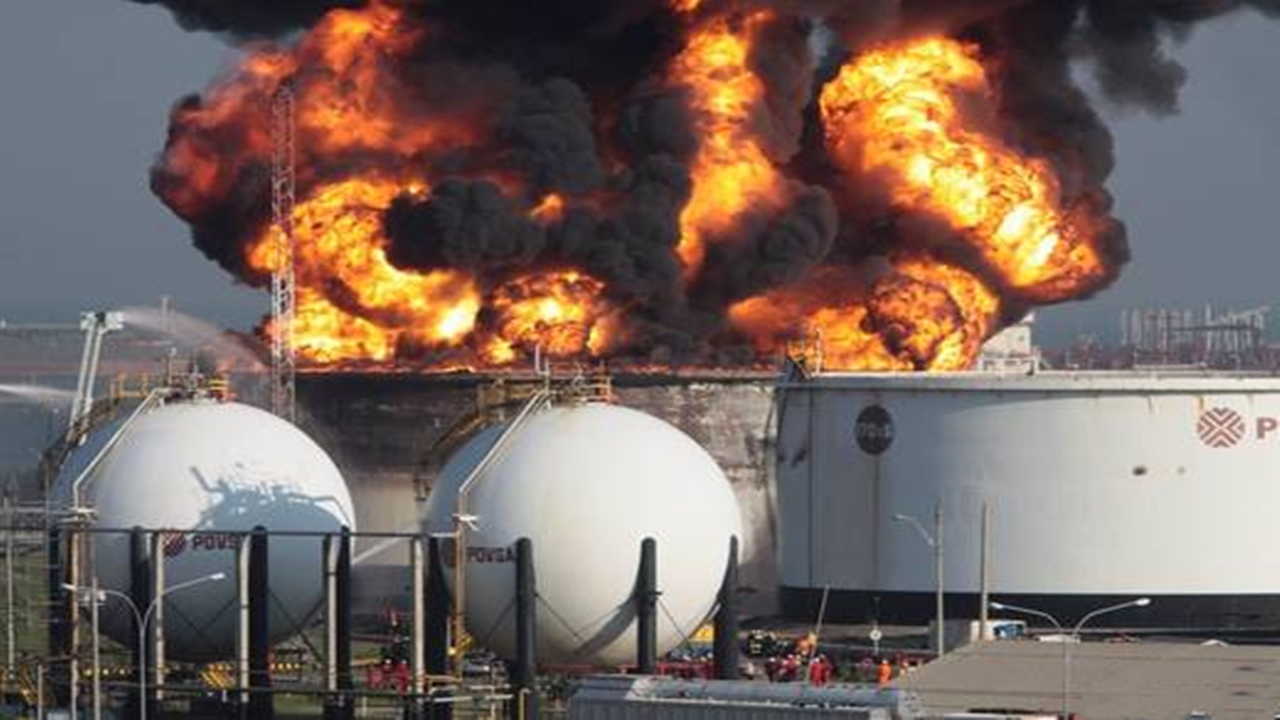

Suspicion of Terrorist Attack on Pipeline in Venezuela: Pipeline Supplying Natural Gas to PDVSA’s Plant Exploded Last Saturday
The pipeline supplying natural gas to the gas reinjection plant of state-owned PDVSA may have been the target of a terrorist attack last Saturday, according to police authorities and PDVSA executives, the Venezuelan oil company. Iranian oil tanker loaded with gasoline heading to Venezuela “breaches” American barrier in the Caribbean Sea
Read Also
- In Desperation, the Population of Venezuela Steals Oil to Produce Its Own Gasoline
- Another Major Oil Spill Hits the Sea of Venezuela
- Venezuelan Tanker FSO Nabarima at Risk of Sinking Loaded with Crude Oil
- “Increase Production or Leave the Country” Warns Venezuela’s Ministry of Petroleum to Foreign Oil Companies
Part of a 36-inch pipeline supplying natural gas to the gas reinjection plant Pigap II of PDVSA, located in the northern state of Monagas – Venezuela, exploded on Saturday afternoon, forcing the state-owned company to temporarily shut down the plant to contain the flames and assess the damage to the pipeline.
Tareck El Aissami, Venezuela’s Minister of Petroleum, described the incident as a “terrorist attack.” The statement was made on state television, and Aissami did not provide details about who was responsible or the impact on the plant and the pipeline.
-
Brazil’s ANP Opens 86 New Oil Blocks in the Equatorial Margin, Expanding the Amazon River Mouth Frontier

-
OPEC+ Boosts Oil Supply by 188,000 Barrels per Day in July 2026, Leading to Price Drop from $112 to $89 per Barrel in Under Two Months

-
TotalEnergies Signs 20-Year Deal to Purchase 2 Million Tons of LNG from Alaska, Boosting Project Viability
-
Turkey Deploys Çağrı Bey Drilling Ship to Explore New Oil Frontier Off Somalia’s Coast

The neighboring country has large reserves of oil and natural gas but has seen production fall to decades-low levels in recent years amid a national economic collapse that has reduced PDVSA’s cash flow and led to an exodus of skilled personnel.
Venezuelan authorities have previously blamed explosions in pipelines and refineries, as well as blackouts and other infrastructure failures, on attacks aimed at sabotaging the country’s economy. Critics say that the incidents are due to chronic maintenance shortages, lack of investment, and mismanagement.
“Increase Production or Leave the Country” Warns Venezuela’s Ministry of Petroleum to Foreign Oil Companies
Venezuela, a country with the largest oil reserves in the world, warned the licenses of foreign oil companies Chevron and Repsol to help increase production, with the aim of not stopping exploration in the country. Petróleos de Venezuela and the Ministry of Petroleum in Caracas sent a letter last month to all 19 partners of the joint venture whose contracts will end in 2026, to inquire about their exploration intentions.
According to the letter, all oil companies had until January 15 to respond, and the companies could still request a contract renewal with the country.
Venezuela will seek new partners if the current ones do not respond and help reactivate the collapsing oil industry after years of mismanagement and U.S. sanctions.