






 Portuguese
  Spanish


An explosion followed by a fire occurred on June 21, 2026, in the Industrial City of Ras Laffan, Qatar, at the Barzan gas plant of QatarEnergy, during the start-up operation of the facility after scheduled maintenance that had begun in December 2025, leaving 13 workers dead and 66 injured, in an accident that the Qatari government attributed to technical failure and ruled out as an act of sabotage.
The incident: chronology and identified cause
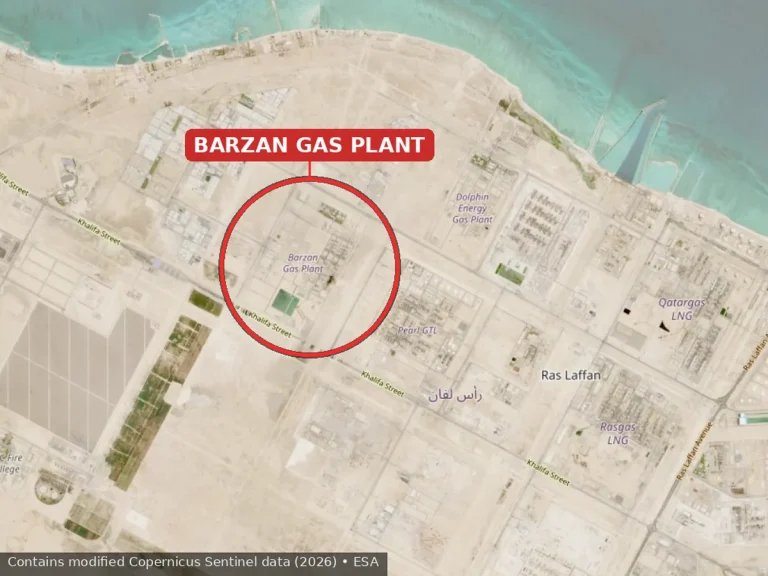
The accident occurred during the night hours of Sunday, June 21, 2026, during the start-up operation of the Barzan plant after a scheduled maintenance shutdown. The plant had been completely shut down in December 2025 for urgent maintenance requirements and was being restarted for the first time two days before the explosion.
Qatar’s energy minister, Saad Sherida al-Kaabi, publicly ruled out the hypothesis of sabotage and attributed the incident to a technical accident during the start-up process of operations. Qatari authorities have initiated a formal investigation to determine the precise technical cause of the explosion.
The Barzan plant is a natural gas processing facility intended for Qatar’s domestic supply. It is operated by QatarEnergy LNG and is located within the Ras Laffan industrial complex, one of the largest LNG processing and export centers in the world.
-
Brazil’s Búzios Oil Field Sets Record with 1.2 Million Barrels Per Day, Strengthening Global Leadership in Deepwater Production

-
Petrobras and Equinor Reach Agreement for 50% Stake in Itaimbezinho Block in Brazil’s Pre-Salt Campos Basin

-
Venezuelan Refinery Halts Operations After Power Outage, Highlighting Country’s Energy Infrastructure Challenges
-
São Paulo LNG Terminal Approved to Connect to Pipeline Network, Sparking Debate Over Larger Alternative Through Serra Route




Victims and emergency response
The 13 identified dead were all foreign workers, with 12 being Indian nationals. The 66 injured received medical care and none were in life-threatening condition according to information released by QatarEnergy after the accident.
Qatar has a migrant workforce that represents more than 80% of the country’s population and is widely employed in the hydrocarbons industry and infrastructure works. QatarEnergy stated that it is providing assistance to the victims’ families.
The emergency response mobilized firefighting and rescue teams from the Industrial City of Ras Laffan, which has specialized brigades given the nature of the hydrocarbon processing industrial complex.
Impact on Qatar’s LNG exports
The Qatari government and QatarEnergy emphasized that the country’s LNG exports were not affected by the accident. The Ras Laffan LNG facilities, Ras Laffan Port, and the complex’s logistics operations remained fully operational, according to an official company statement.
Qatar is the world’s second-largest LNG exporter, behind the United States, and operates the largest LNG liquefaction capacity in the world at facilities located in Ras Laffan. The country exports approximately 77 million tons of LNG per year to markets in Europe, Asia, and North America.
The Barzan plant, affected by the explosion, is a gas unit for domestic consumption and is not part of the LNG export chain. The physical and operational separation between the Barzan plant and the LNG export facilities explains why the accident did not disrupt the country’s export flow.
Safety context in the LNG industry
Accidents at natural gas and LNG processing facilities are rare but occur worldwide. The LNG industry has developed rigorous safety protocols for start-up and shutdown operations, which involve pressurization, system purging, and continuous monitoring of flammable gas mixtures.
The accident in Ras Laffan occurred weeks after the Middle East went through a period of military tension, which led to an initial assessment of possible sabotage — a hypothesis formally ruled out by the Qatari government. The ongoing investigation is expected to identify specific failures in the start-up process of the Barzan plant to support improvements in the facility’s safety procedures.
Qatar maintains one of the largest safety records in the global LNG industry, with decades of operation without serious accidents at export facilities. The accident in Ras Laffan is considered unusual for the sector, and the outcome of the technical investigation is expected to generate safety recommendations with potential impact on similar operations worldwide. QatarEnergy reported that the resumption of operations at the Barzan plant will only occur after the completion of investigations and the implementation of corrective measures.


