






 Portuguese
  Spanish


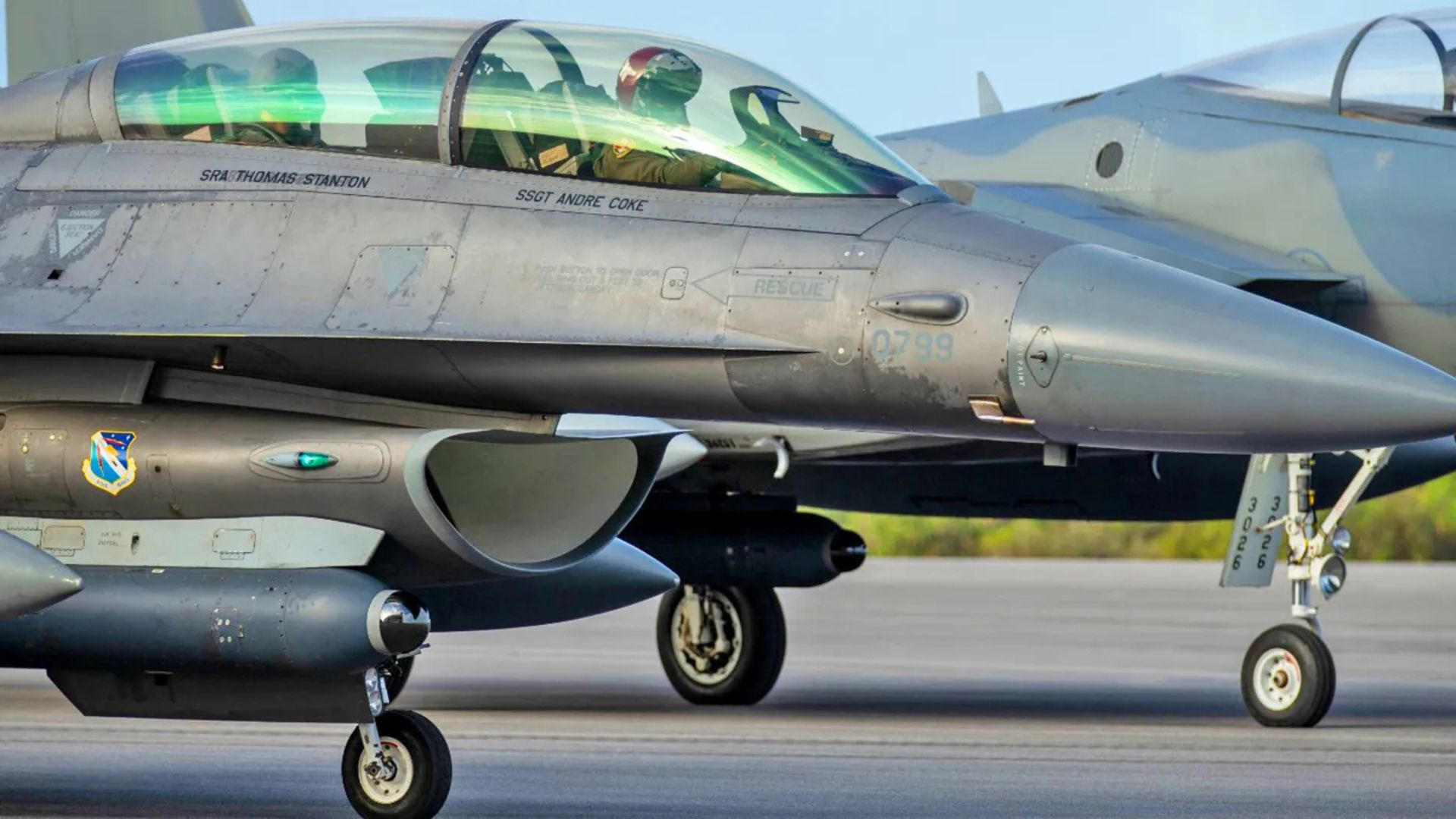


Integration of Passive Infrared Sensors into F-16 Enhances Taiwan Air Surveillance, Strengthens Ability to Detect Stealth Aircraft Without Radar Emission and Inserts New Technological Element into the Strategic Calculation of the Indo-Pacific, Amid Modernization of the Fleet and Increase in Regional Tensions.
Taiwan has advanced in modernizing its air defense by signing a US$ 328.5 million contract to integrate the passive infrared sensor IRST21 Legion-ES into F-16 fighters, via the Foreign Military Sales (FMS) program from the United States.
The measure aims to enhance the capability to detect and track aircraft without emitting active signals, which reduces the fighter’s exposure and improves situational awareness in surveillance, interception, and air defense missions in high-threat scenarios.
IRST21 Legion-ES Sensor and Electronic Warfare in Modern Air Combat
Unlike radar, which transmits energy and can reveal the aircraft’s position, an IRST system works as a silent “observer,” capturing heat emissions and forming tracking trails without irradiating detectable signals to enemy alerts.
-
Xiaomi Launches Compact Photo Printer with Bluetooth, Extra Black Ink, and Augmented Reality Photo Printing

-
Teen Invents AI-Powered Traffic Light to Assist Elderly Pedestrians by Extending Crossing Time

-
NASA Plans Telescope That Can Be Repaired by Robots 1.5 Million Kilometers from Earth
-
China Launches First Oceanic Medical Rescue Ship with Advanced Facilities to Serve Remote Regions






This discreet character gains importance in environments with strong electronic warfare, where interference can degrade the performance of active sensors; in this context, infrared search becomes an alternative path to maintain surveillance and support decision-making.
Moreover, infrared can assist in detecting aircraft with low radar signatures, as the system looks for thermal signatures associated with flight, such as engine and surface heating, complementing the readout obtained from other onboard sensors.
Integration of Legion-ES into F-16 and Capabilities Beyond Visual Range
The Legion-ES is a configuration of the IRST21 designed for the F-16, mounted on a pod and connected to the mission system to provide long-range tracking and “weapons employment quality precision,” according to the manufacturer’s description for the IRST21 family.
In practice, the infrared information becomes part of the tactical picture displayed to the pilot, alongside radar and other means, speeding up contact identification and threat prioritization during interceptions and patrols, especially beyond visual range.

The contract includes the acquisition and delivery of 55 Legion Enhanced Sensor pods, as well as associated processors and containers, with work scheduled to take place in Orlando, Florida, and an estimated completion by June 2031, according to information released about the agreement.
Detection of Stealth Fighters and Change in Regional Strategic Calculation
The operational logic behind the investment is to expand search and tracking options without relying exclusively on radar, given that modern adversaries combine low signatures, interference, and tactics that exploit detection windows, raising the cost of error in seconds.
With an IRST, the aircraft can alternate operational modes, keeping the radar silent for longer when the situation demands, without sacrificing a layer of situational awareness, which tends to influence how formations are positioned and how contacts are confirmed.
Although infrared sensors do not replace all radar functions, the advantage lies in redundancy and the combination of sources because a heat detection can reinforce or contest a radar track, reducing ambiguities in congested environments.
Modernization of the Taiwanese Fleet and Impact on the Indo-Pacific

The announcement of the contract came amid a period of heightened tension surrounding Taiwan, with ongoing attention to regional military behavior, and was presented as a response to an “urgent operational need” of the Taiwanese air force.
At the same time, Taiwan is undertaking a broader effort to update and expand its F-16 fleet, including the order of F-16V, whose timeline has already faced publicly acknowledged delays, while the Taiwanese government seeks to maintain its readiness in the strategic landscape.
In this context, the incorporation of the Legion-ES is likely to increase the pilot’s reaction margin and the tactical flexibility of the platform, as it offers an additional capability for scanning and tracking that does not depend on emissions, which is valued in missions where discretion and survival go hand in hand.
Considering that the technological competition involves sensors, countermeasures, and integration, to what extent can the adoption of an IRST at scale in Taiwan’s F-16s alter how patrol and interception missions will be planned and responded to in the region?


