






 Portuguese
  Spanish


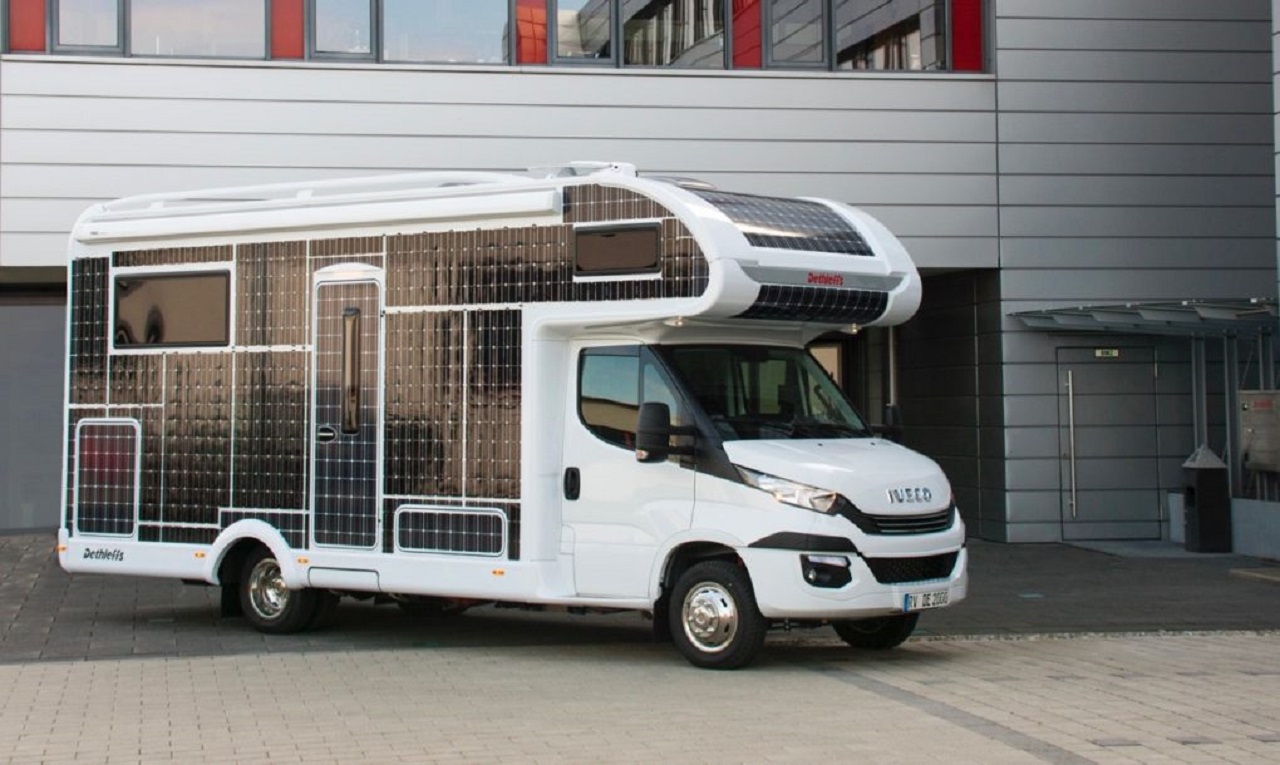


The American Company, Winnebago, Developed an Electric Motorhome Powered by Solar Energy. The Vehicle Offers a Range of 174 km with Just One Charge.
Winnebago, a company that produces motorhomes, announced this week its fully electric prototype powered by solar energy, named eRV2. Based on the same chassis as the Ford-E Transit, the electric motorhome looks like a conventional van on the outside and provides a range of 174 km per charge. The American company equipped the vehicle with a trick up its sleeve, a 48-volt and 15 kWh battery stored under the floor.
Electric Motorhome Comes with Solar Panels Installed on the Roof and Sides


The battery powers only the internal amenities for a week without recharging, including heater, air conditioning, shower, ceiling fan, and refrigerator. The secret to keeping this setup running is a set of solar panels of 900 watts installed on the roof that keeps the battery charged. According to the expectations of the responsible company, with just 4 hours of sunlight a day, it is possible to stay unplugged for up to a week.
The interior of the vehicle, in turn, features several recycled materials, including carpets, flooring, mattresses, and finishes. With a promise to provide a multifunctional and calm environment, the electric motorhome also includes workspaces and integrated charging ports. A Wi-Fi router is also included in the package.
-
2027 Toyota Corolla Cross Unveiled: New Design, Enhanced Fuel Efficiency, Reduced Maintenance Costs, Advanced Technology, Connected Services, and Up to 10-Year Warranty

-
Fiat Cronos Precision 2018: Affordable Sedan with Spacious Trunk and Reliable Maintenance
-
Volkswagen to Cut Production by 1 Million Cars by 2030, Reducing Jobs and Platforms, Focusing on More Profitable Models

-
Toyota Launches First 100% Electric Car in Brazil: bZ4X with 343 HP, All-Wheel Drive, 361 km Range, Priced at $419,990 BRL, Limited to 99 Units




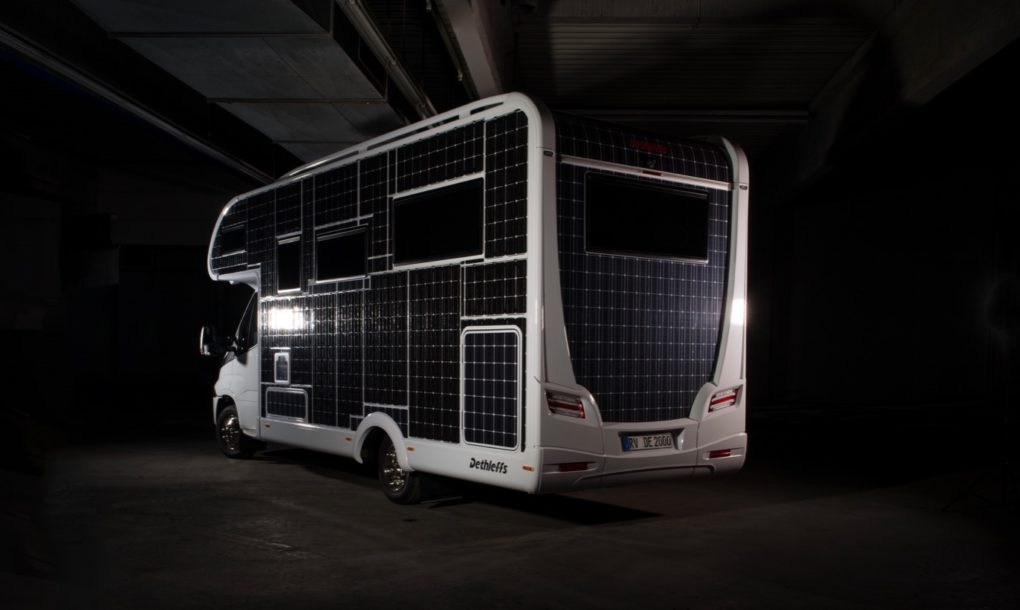
It is worth noting that the fabric covering the cabin seats is also plant-based, and the countertops are made of biodegradable materials. In the end, Winnebago still has not revealed some technical details and made it clear that the model is still a concept with no date set for market release.
The company highlights that the range of the model is still low to meet the demands of a standard customer who buys an RV. The goal is for the owner to be able to drive for at least three hours between charges. Nonetheless, it is a concept capable of demonstrating that the recreational vehicle market is also focused on zero-emission models.
Estrella Mobil Launches a Motorhome in Brazil That Increases Energy Range
Estrella Mobil, keeping in mind those adventurous spirits, recently launched the Rigel Black Series model, a motorhome that comes equipped with ideal supplies for those who will be without much structure nearby, such as remote and hard-to-access areas. The model features technology for energy, gas, and water autonomy.
According to Julio Lemos, co-founder of Estrella Mobil, this is an exclusive and customized production model built on the Sprinter Van, a very robust vehicle. It is equipped for total energy autonomy, has 800 watts of solar generation, and includes the complete energy management system and lithium battery bank from Dutch company Victron Energy.
Lemos explains that, through a hydronic system, equipment that eliminates the need for gas is used with diesel from the vehicle’s tank, allowing heating of the water and the internal environment of the motorhome.
VW Announces the World’s Most Expensive Motorhome
The VW Beetle has gained prominence in various parts of the world, being one of the most sold and iconic vehicles in Brazil’s history. Thus, a Beetle motorhome, known as Super Bugger, is being sold in the USA.
The model features interesting details and costs around R$ 216, 43 thousand. This model is listed on the famous classified ad website eBay, and according to the advertisement, it is a Super Bugger from the year 1969.
The vehicle has been transformed into a motorhome, reminiscent of some transformations done on Kombis. Meanwhile, in the USA, the motorhome version of the Beetle has become a reality. During the 1970s, a company offered kits for building and conversion.







