Portuguese
  Spanish


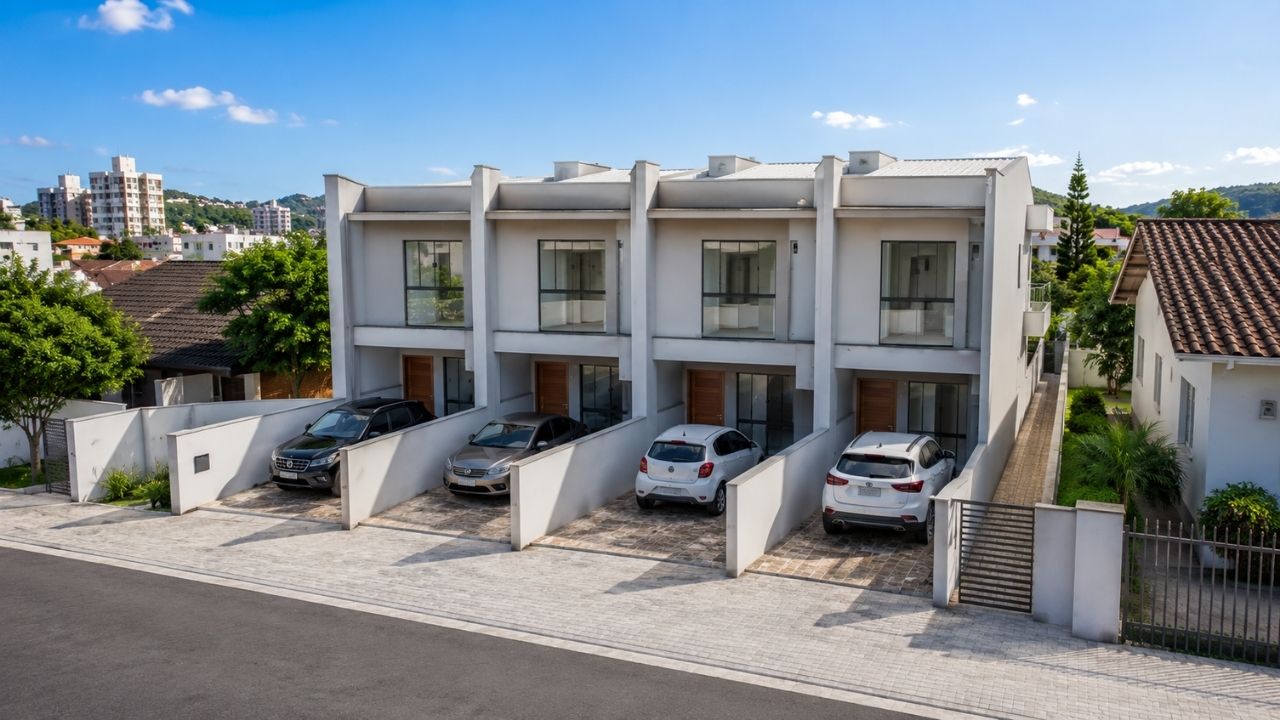

Popular house project in Blumenau shows compact townhouses with two parking spaces, suites, skylights, and free space for expansion. The solution attempts to fit into Minha Casa Minha Vida, given expensive land and the pressure of gated communities, without informing the construction cost or the final price of the local urban lot.
The popular house in Blumenau received a different solution: compact townhouses on a common lot, with two parking spaces and an attempt to fit into Minha Casa Minha Vida. The project was presented in a video during a visit to the property, focusing on construction, investment, and affordable housing.
In a video released by the channel Maicon Bruske Investe, on June 13, 2026, the proposal shows four units on the same lot, each with direct street access, front space for two cars, social area on the ground floor, bedrooms on the upper floor, skylights in the bathrooms, and free space for possible expansion. The source does not inform the final construction cost or the price of the land.
Common lot was divided into four compact townhouses
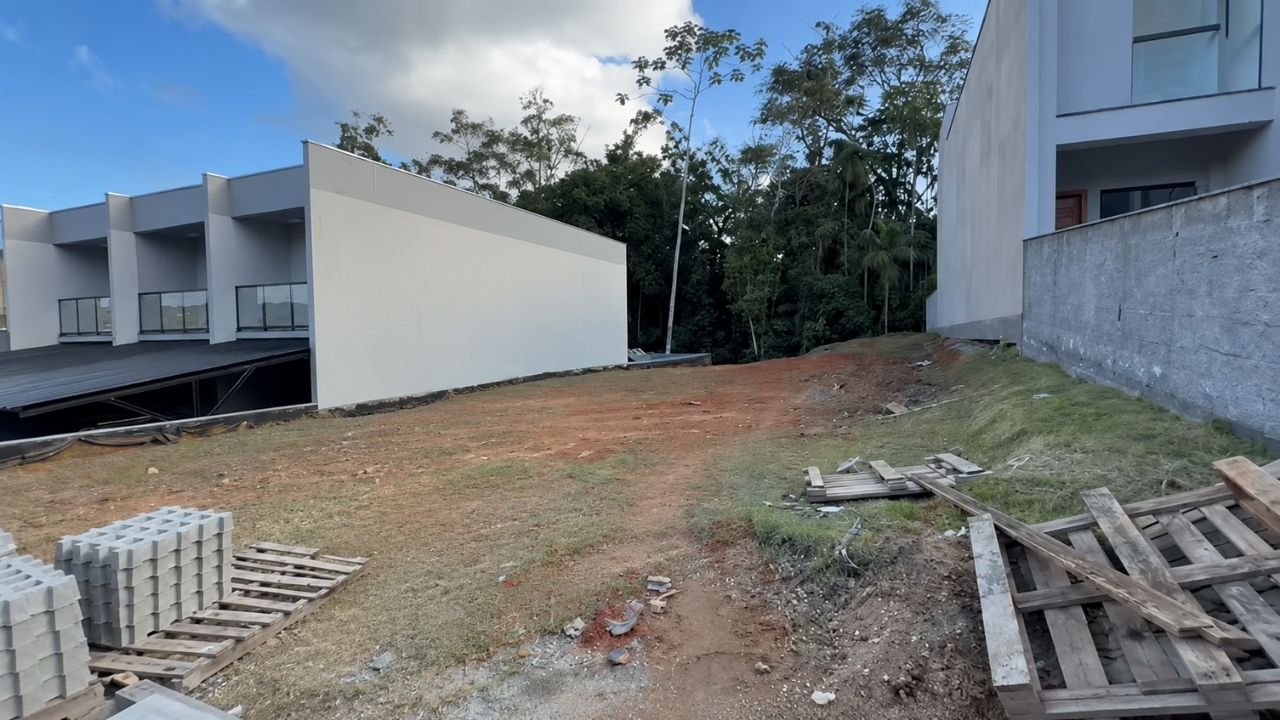
The project draws attention because it addresses a common problem in valued cities: the high price of land. Instead of building a single larger house or just three units, the builder chose to accommodate four townhouses on the same lot, aiming to reduce the land cost impact on each property’s price.
-
On the world’s highest navigable lake, the Uros people have hand-built around 100 floating straw islands, living on them for 3,000 years without concrete or foundations.

-
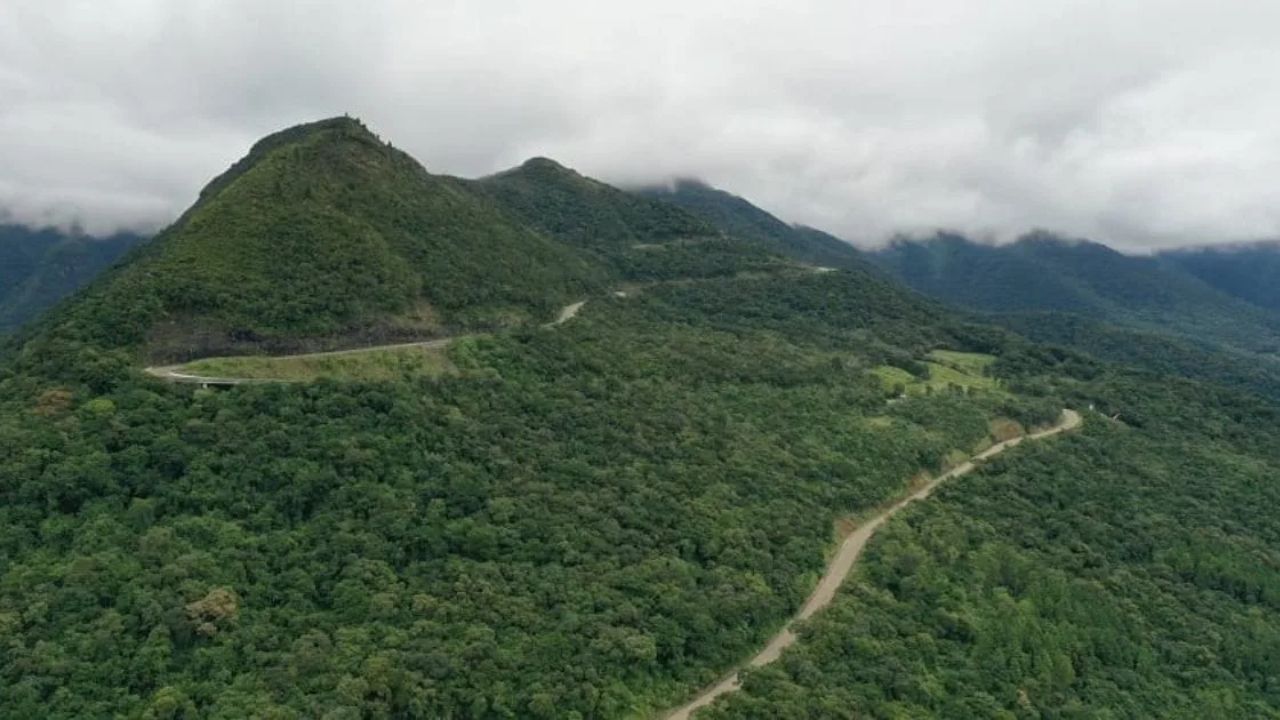
Newly Completed Brazilian Highway in the Serra da Rocinha Becomes a 16.5 km Cycling Challenge and Boost for Local Tourism

-
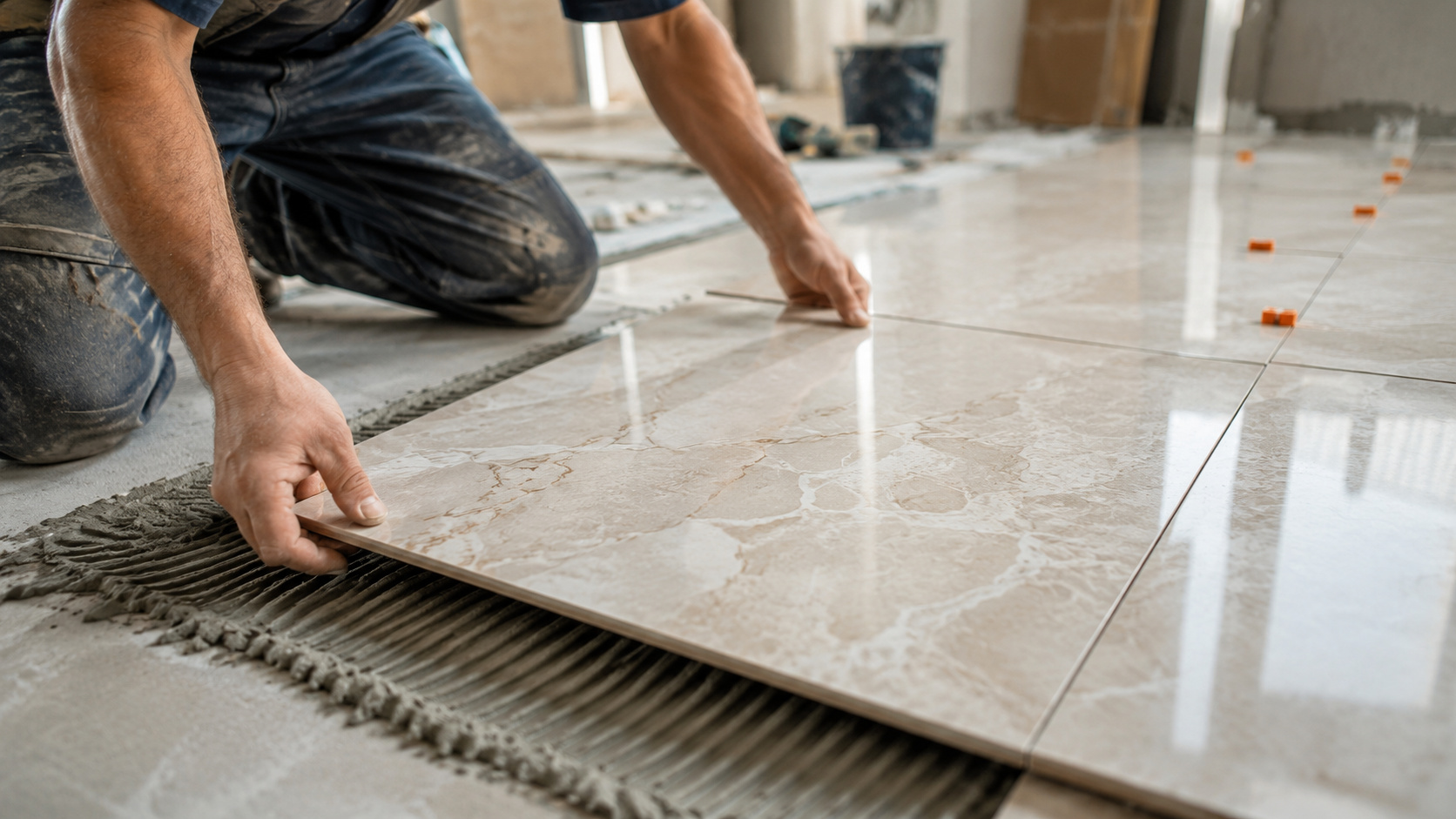
Innovative Mortar Technique Enhances Porcelain Tile Stability, Reduces Buckling and Detachment Risks, and Provides Durable Finish Under Heavy Use

-
Giant Robots Build Entire Neighborhood of 100 3D-Printed Homes in the U.S., Showcasing Technology’s Impact on Construction Industry


This strategy tries to bring the project closer to the financing range of Minha Casa Minha Vida. The logic is simple: when the lot becomes expensive, the construction needs to make better use of each meter to keep the popular house viable without relying on high-standard gated communities.
Blumenau faces pressure from expensive land and gated communities
According to the video presentation, plots in Blumenau are considered expensive, especially outside of condominiums. This pushes many builders towards more compact solutions, capable of catering to families who want to live in houses but cannot keep up with the cost of larger properties.
The narrator also notes that a good portion of the city’s new developments end up adopting the gated community model, with higher values and superior standard houses. In this scenario, the compact townhouse appears as an alternative to keep the popular house within the common urban fabric.
Narrow front did not prevent two parking spaces
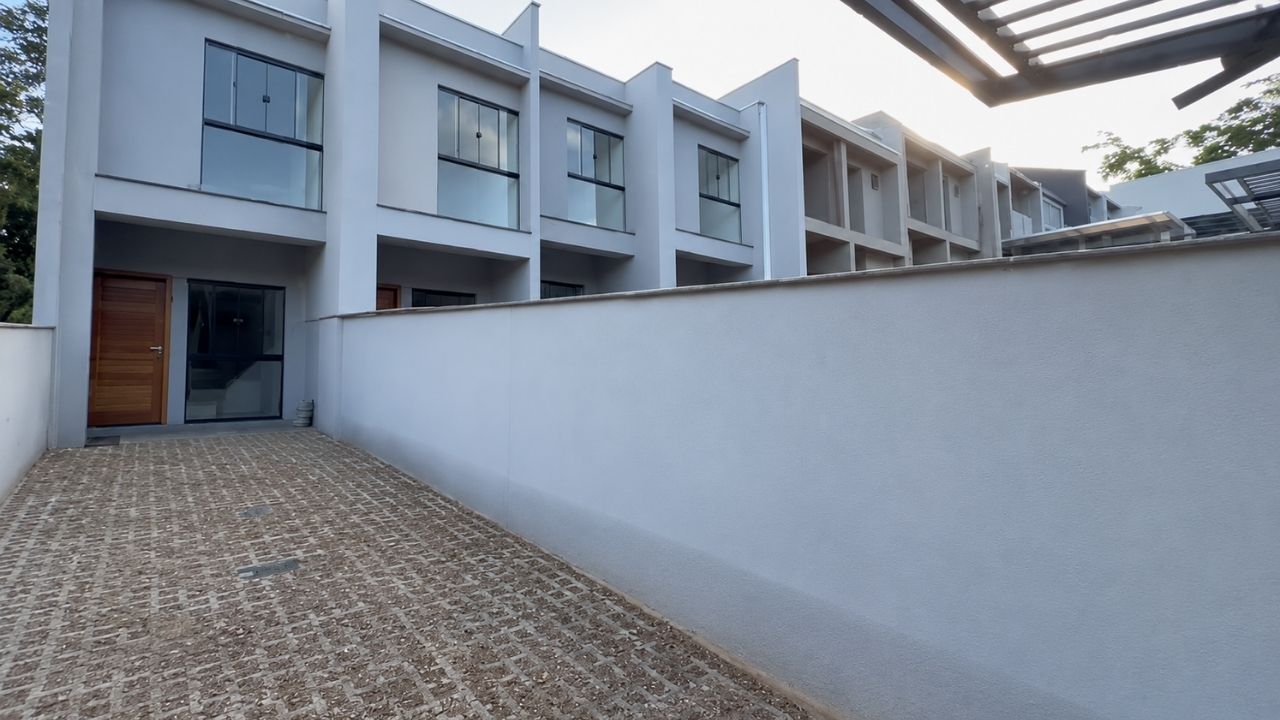
One of the highlighted points in the project is the presence of two spaces in front of each unit. Even with a reduced facade, the front space was planned to allow two cars to be parked within the lot, which is usually valued by families.
The gate opens upwards, not outwards, due to the need not to obstruct the sidewalk. This detail shows how the viability of a popular house also depends on local urban planning rules, such as master plan, setbacks, and pedestrian circulation.
Living room and kitchen were integrated on the ground floor
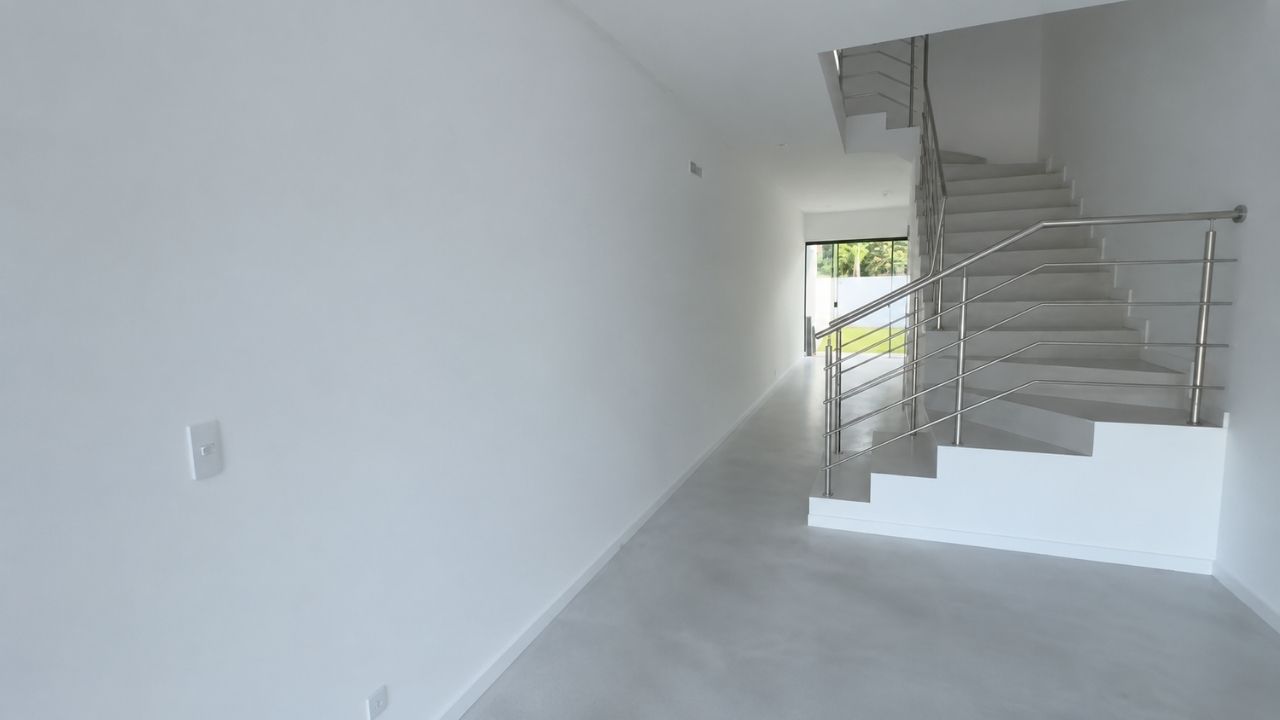
On the lower part, the townhouse concentrates the living room and kitchen. The living room was described as spacious enough to accommodate a sofa, TV, and even a compact dining table, with the possibility of using a corner bench to better utilize the space.
The kitchen appears integrated into the house’s routine, with space for a counter, appliances, and circulation. The proposal does not attempt to transform the property into a large house but seeks to make the compact work without an immediate feeling of tightness.
Free back area allows for service area and possible expansion
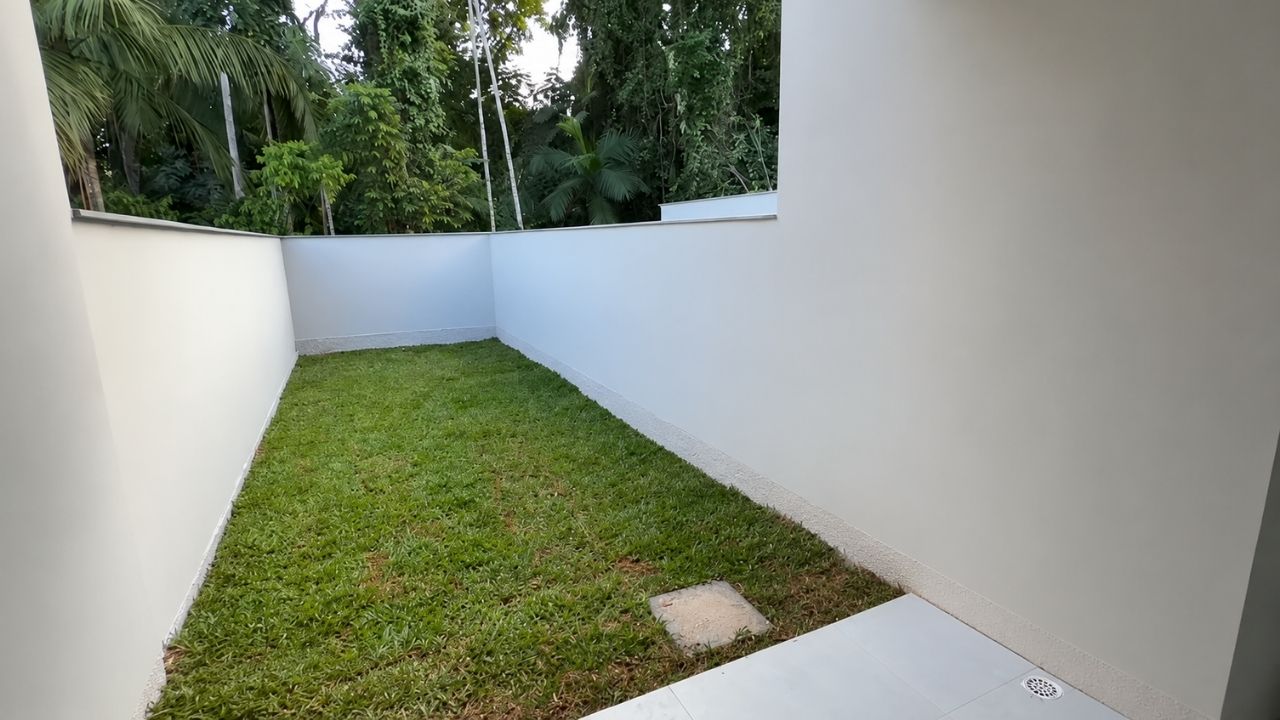
At the back, the project preserves a service area and still leaves free space. According to the presentation, this section could eventually accommodate a party area, barbecue, garden, small pool, or expansion of the common part of the townhouse.
This point is important because it differentiates the project from compact apartments. Even being a streamlined affordable house, the property maintains a piece of land at the back, something many buyers value for allowing adaptation over time.
Upper floor concentrates bedrooms and bathrooms with skylight
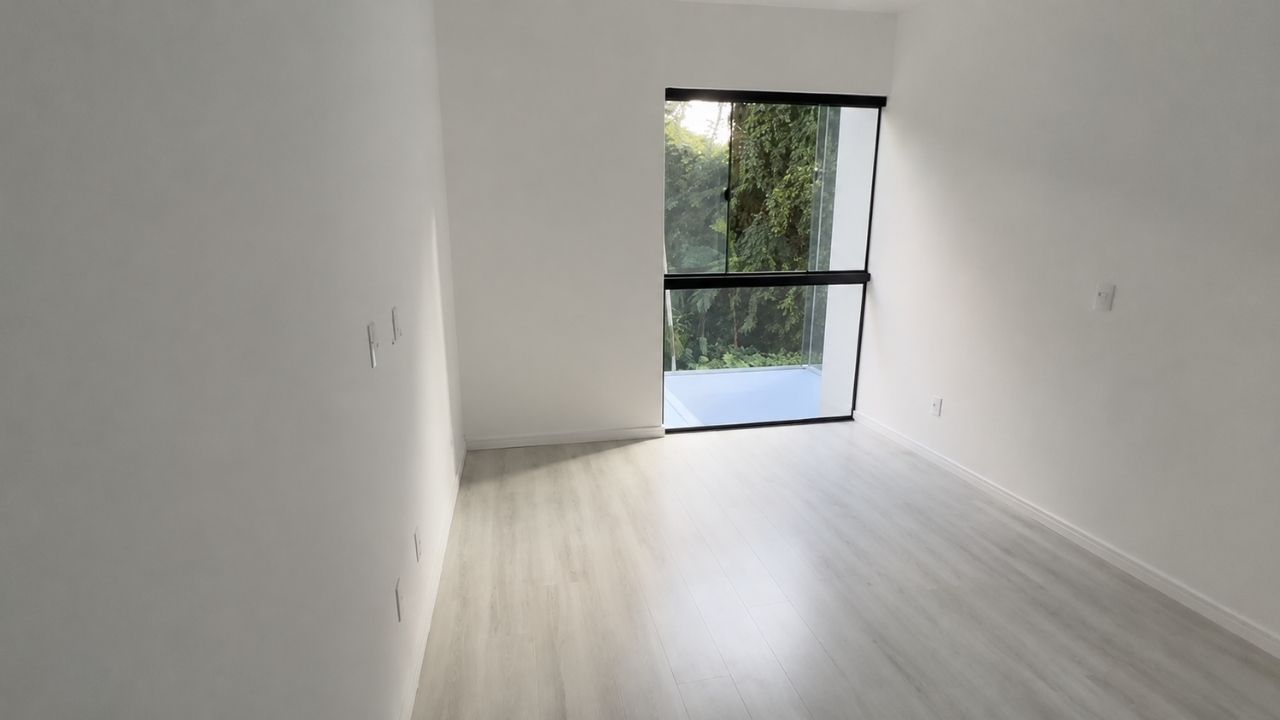
On the upper floor are the bedrooms and the private part of the residence. The source shows rooms with laminate finish, larger windows, and views of green areas and mountains of the Blumenau region, reinforcing the idea that the narrow front did not eliminate the entry of light.
As there are blind walls on the sides, the bathrooms use skylights to receive natural lighting. This feature solves a typical challenge of semi-detached townhouses: ensuring brightness in internal environments even when there is no side opening available.
Project tries to balance cost, comfort, and lot utilization
The construction follows a modern aesthetic, with a parapet facade, larger frames, and standardized finish among the units. The goal is to deliver a visually organized set without deviating from the compact property proposal.
For the logic of affordable housing, this balance is crucial. The property needs to look pleasant, offer functionality, and still remain within a cost that makes sense for financing. When the land weighs on the final price, architecture needs to compensate with efficiency.
Model can work in other cities with valued land
The video mentions that similar solutions also appear in cities like Jaraguá and Joinville, as well as Blumenau. Adoption depends on the rules of each municipality, especially the master plan, setbacks, occupancy rate, lot width, and garage requirements.
Therefore, the project should not be seen as an automatic formula for any place. The same idea of affordable housing in a compact townhouse may work in one city and be unfeasible in another, depending on urban legislation and land costs.
Minha Casa Minha Vida pressures builders to optimize every meter


Minha Casa Minha Vida appears as a reference because many buyers depend on qualifying for the program to finance their property. When land, materials, and labor costs rise, the challenge for builders is to keep the product within an affordable range.
In this context, placing four townhouses on a common lot can be an attempt to dilute costs. The solution shows how affordable housing has come to require more calculation, planning, and creativity to continue offering a house, garage, and outdoor area.
Compact solution or excessive utilization?
The project in Blumenau shows a practical response to an urban dilemma: how to keep affordable housing possible in cities where land is becoming increasingly expensive. Four compact townhouses, two parking spaces, suites, skylights, and free backyards form a solution that tries to balance price, comfort, and intelligent use of the lot.
The question is whether this model represents an efficient solution for families wanting to move out of renting or if the reduced frontages and high land occupancy make the houses too compact. Would you live in such a townhouse, with two parking spaces and free backyards, or would you prefer a smaller house on a larger lot? Share your opinion.