





 Portuguese
  English
  Spanish
  4 min of reading
  1 comment


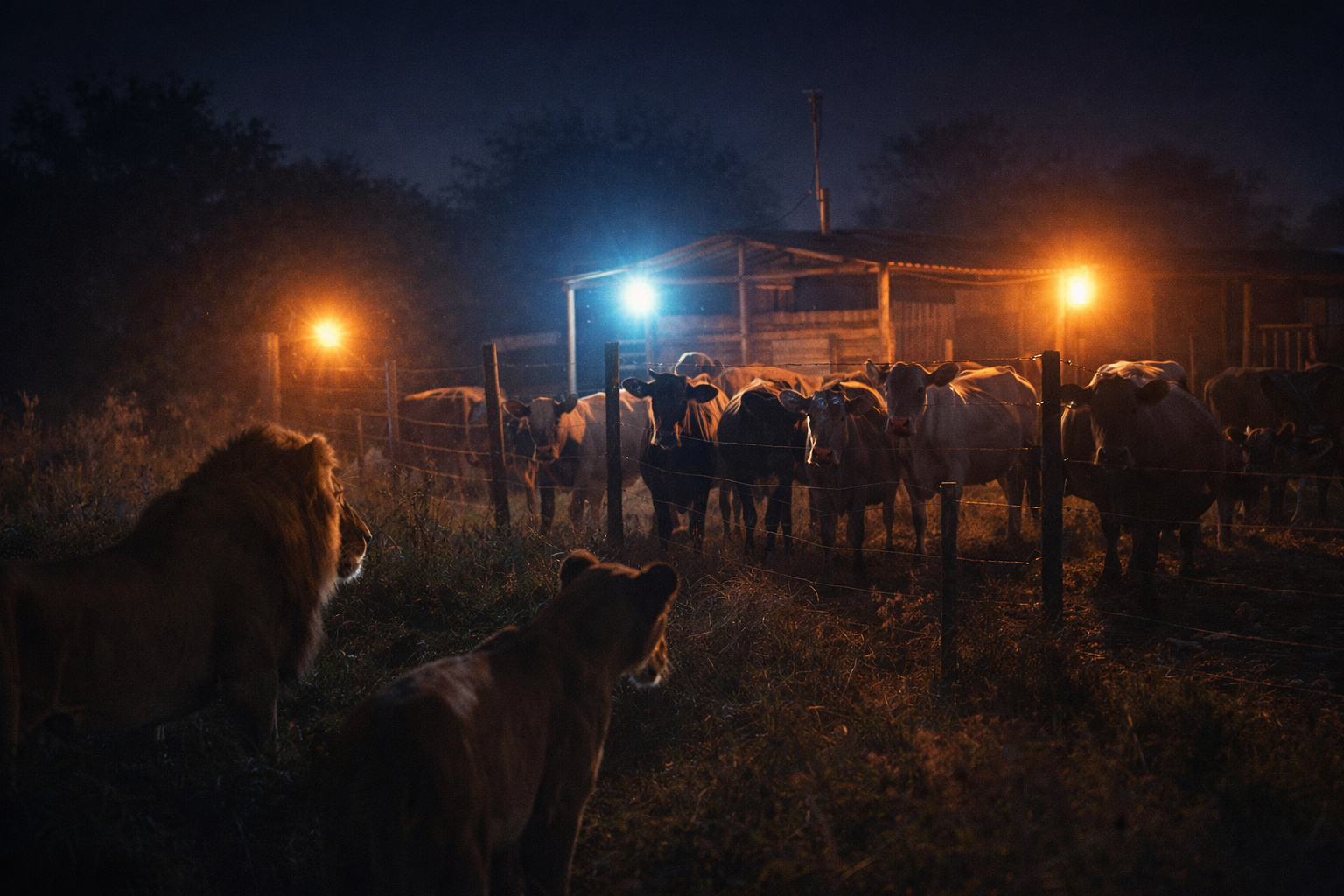


Wood Posts, Metal Fence, and Solar Light Transformed Rural Corrals, Eliminated Night Attacks by Lions, and Drastically Reduced Predator Culling in Africa.
For decades, the relationship between cattle ranchers and lions in eastern Africa was marked by a predictable and violent cycle. Whenever a night attack occurred, the response came in the form of direct retaliation against the predators. This conflict led to the death of thousands of lions and placed the species under severe pressure in areas where rural communities depend on cattle for survival. What few imagined is that the turnaround of this scenario would come not from weapons, electrified fences, or sophisticated technology, but from simple and inexpensive materials, applied strategically.
The Problem with Traditional Corrals and Night Vulnerability
In many rural communities in Kenya, Tanzania, and Namibia, cattle are kept at night in corrals known as bomas, structures traditionally made from branches, thorny bushes, and loose wood.
Although functional during the day, these improvised fences have critical flaws at night when lions exploit weak points, dig underneath, or simply force their way in.
-
After BYD and others, China invades Brazil with giant tractors of up to 700 hp, 50% fuel savings, and a billion-dollar factory planned after Zoomlion projects R$ 500 million in sales in Brazilian agriculture.

-
China buys 1.1 million tons of beef in four months, an increase of 25.75%, and Brazil leads with 612.87 thousand tons

-
While the world discusses geopolitics, China is quietly closing a deal with its Kazakh neighbor to secure grain supplies during any global food crisis, with more than 3,600 Kazakh companies already able to export directly to the Chinese market.
-
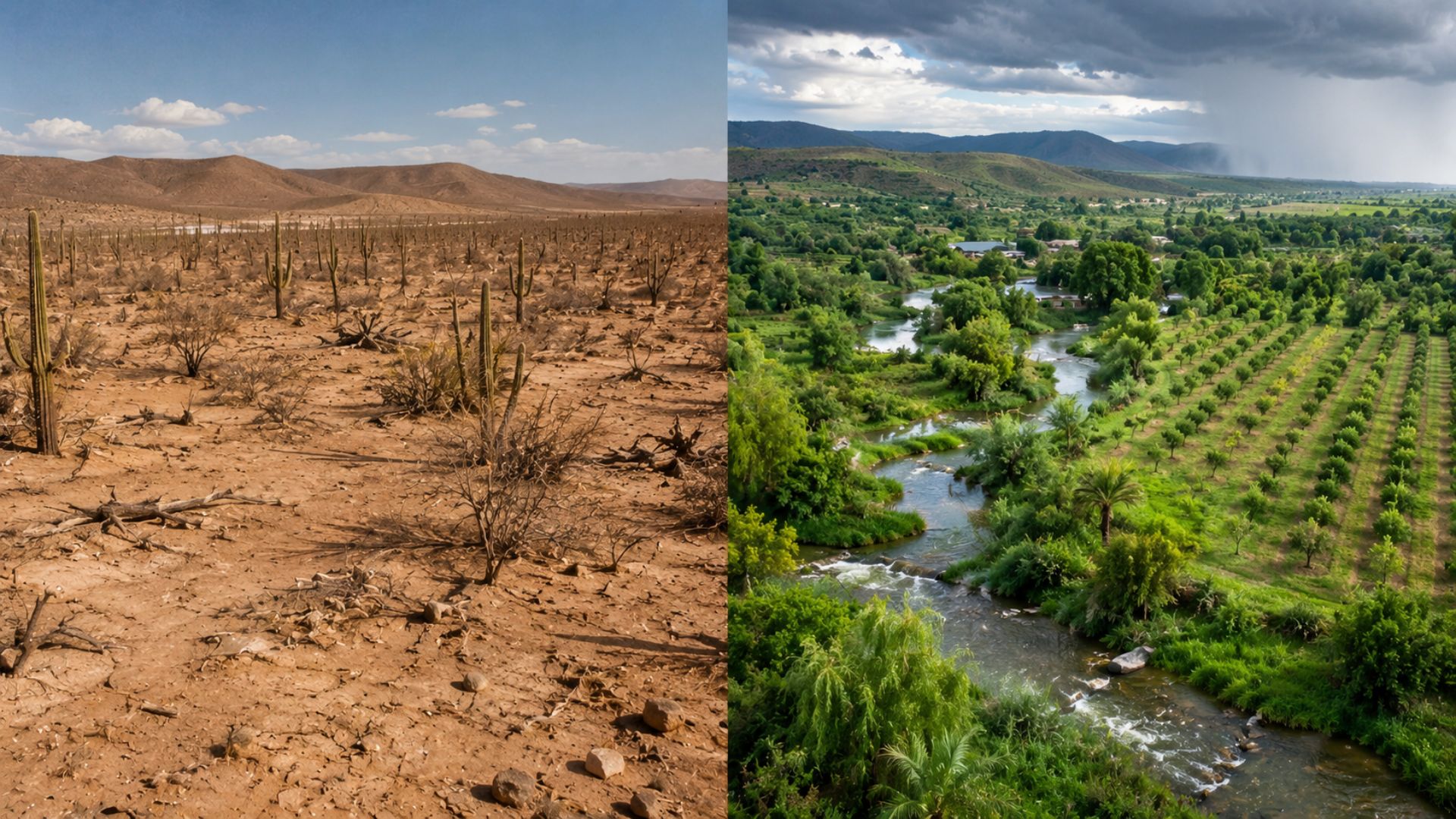
A farm in the Mexican desert has become so green that today it has rivers flowing year-round and even rain in the dry season, all thanks to a technique that transforms dead sand into fertile soil with manure, mountain microorganisms, and what farmers call the secret soil formula.



Attacks often occur in just a few minutes and, when successful, trigger a chain reaction. In addition to the immediate economic loss, the rancher begins to view the lion as a direct enemy, which has historically led to the use of poisons, traps, and organized hunts.
The Change in Approach: Empower Instead of Retaliate
The turnaround began when conservation projects started to work directly within communities, not imposing restrictions but offering practical solutions. In initiatives such as the predator-proof bomas, the corrals were reinforced with three central elements: wood posts firmly driven, resilient metal fencing covering the sides and base, and simple solar lighting, sufficient to eliminate shadowy areas.


These reinforcements did not turn the corrals into technological fortresses. They simply corrected the vulnerabilities most exploited by predators, making attacks more labor-intensive, risky, and, in most cases, futile.
Simple Materials, Measurable Impact
The cost of these reinforcements is relatively low and accessible for rural communities. Posts and wood are often sourced locally, metal fencing is common in regional markets, and solar lights are low power but work continuously throughout the night.
The effect, however, is disproportionate to the investment. In areas monitored by projects like Lion Guardians, night attacks on cattle dropped drastically, reaching near-zero levels in various communities after the adaptation of the corrals. With fewer attacks, the motivation to kill lions also plummeted.
Lighting as a Psychological Factor for Predators
One of the most interesting aspects of this method is the role of light. Lions are ambush predators, relying on darkness and surprise. The mere presence of constant lighting breaks this behavioral pattern, making the corral an unattractive place for approaching.
It is not about deterring the animal through pain or stress, but about removing the natural advantage it would have at night, causing it to seek wild prey instead of protected cattle.
Double Benefit: Economic Protection and Conservation
By reducing attacks, the reinforced corrals provide direct benefits to rural families, who no longer lose animals and income. At the same time, lions are no longer killed in retaliation, creating a real impact on the conservation of the species.

This dual effect is what makes the solution so powerful. It is not an externally imposed model but a practical adaptation that respects the local reality and transforms former enemies into parts of the same system.
A Replicable Model in Different Regions
The simplicity of the method has allowed it to be replicated in different countries and contexts, with small cultural and environmental adaptations. In all cases, the principle remains the same: strengthening fragile structures costs less than dealing with conflict afterward.
Today, reinforced corrals are cited as one of the most effective examples of coexistence between large predators and human activities, precisely because they do not rely on expensive technology or miraculous solutions.
When the Most Effective Solution Is the Most Basic
The story of these corrals shows that conservation does not always require cutting-edge innovation. In many cases, it is enough to observe the problem carefully and correct obvious flaws that have been normalized over time.
By replacing loose branches with firm posts, fragile fences with metal fencing, and darkness with solar light, entire communities have managed to break a cycle of violence that seemed inevitable. The result is a rare example in which humans and large predators can coexist, not through force, but through practical intelligence.




Curioso isso, as onças , que também são felinos , não se importam com a luz .