Portuguese
  Spanish



Wood Tools Used By Hominins To Dig Plants Reveal Sophisticated Behavior In The Lower Paleolithic, According To A Study Conducted In China
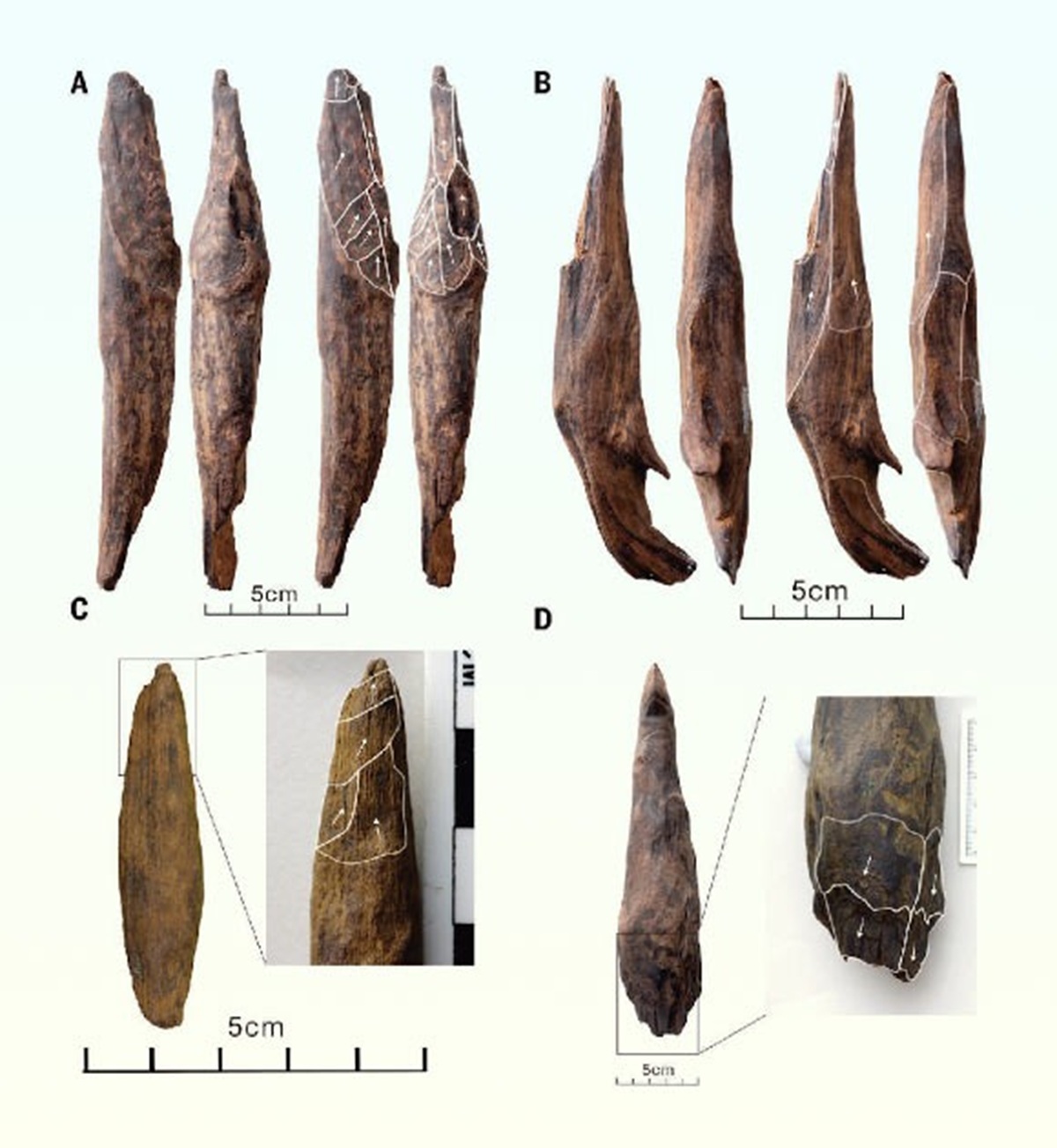
Archaeologists found 35 wooden tools at the archaeological site of Gantangqing in southwestern China.
The pieces date back to the Lower Paleolithic and include digging sticks and pointed instruments.
The discovery is considered rare, as wooden artifacts rarely withstand the test of time, especially during the Lower and Middle Pleistocene.
-
Melting Glaciers Uncover Ancient Tools, Preserved Mummies, and Strategic Minerals in the Arctic and European Mountains
-
Melting Glaciers Uncover Ancient Tools, Preserved Mummies, and Strategic Minerals in the Arctic and European Mountains
-
Melting Glaciers Uncover Ancient Tools, Preserved Mummies, and Strategic Minerals in the Arctic and European Mountains
-
Public School Student Develops Biodegradable Fiber from Sugarcane Waste, Secures Admission to 7 Brazilian Universities Including USP and UFRJ
Tools Made For Digging, Not For Hunting
The researchers explained that these tools were not created for hunting, but rather for digging and processing plants.
Many were made from pine and show clear signs of carving, smoothing, and wear.
The objects range from large instruments used with both hands to small handheld tools. Pieces resembling hooks were also identified, which may have been used for cutting roots.
More Diverse Than European Findings
According to scientists, the objects from Gantangqing demonstrate greater diversity than those observed in similar sites in Europe. There, hunting tools predominate.
In China, however, the instruments are varied and adapted for working with plants.
The study highlights that organic artifacts reveal aspects of primitive human behavior that stone tools do not show.
Bamboo And The Scarcity Of Evidence
The so-called bamboo hypothesis has always suggested that the first inhabitants of East Asia used the material to create tools. However, there are almost no archaeological records of these objects.
The new discovery provides important data for this discussion.
The researchers led by Jian-Hui Liu thoroughly analyzed the wooden artifacts, proving that they were intentionally shaped by hominins.
Publication In Scientific Journal
The study was published in the journal Science and reinforces the idea that prehistoric populations in East Asia had more complex technology and behavior than previously thought.
The tools found in Gantangqing expand the understanding of the use of wood by ancient hominins and the subsistence practices of these populations.
An article about the discoveries was published today in the journal Science.