Portuguese
  Spanish


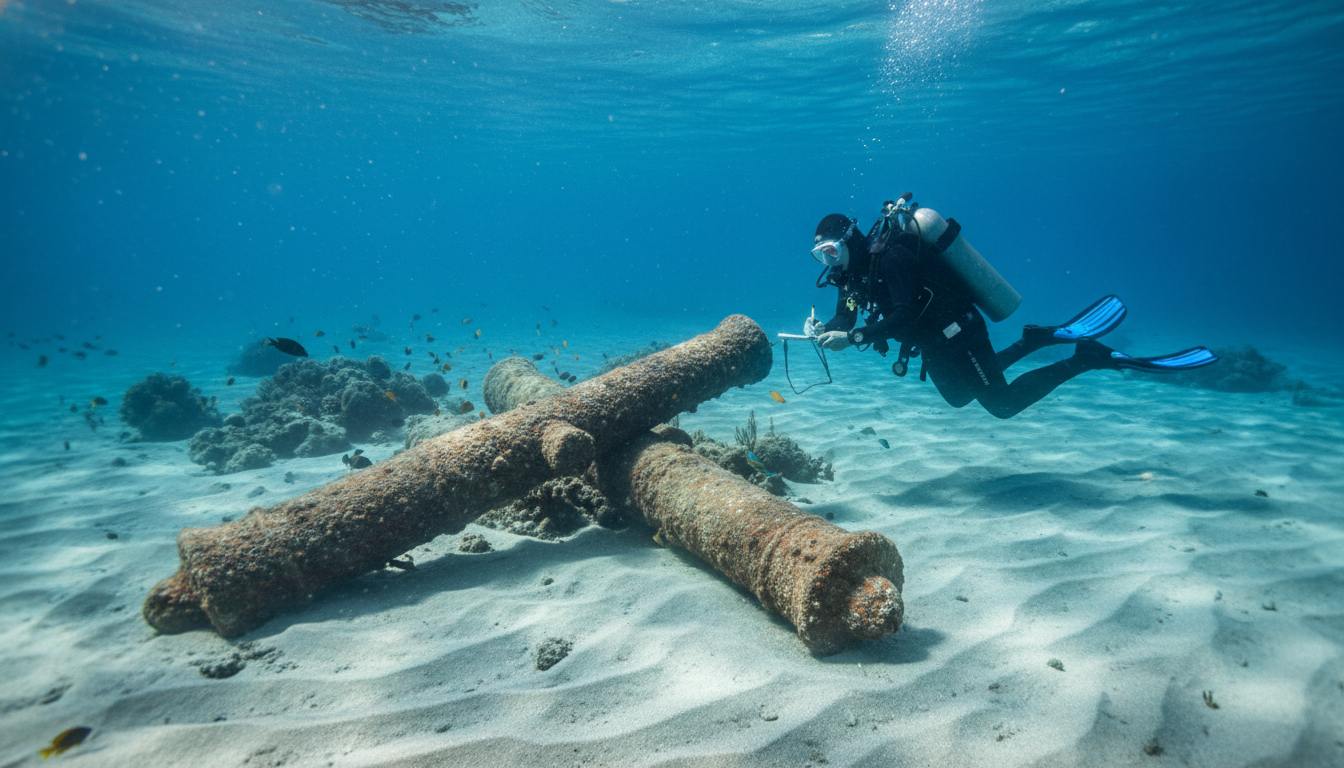

While treasure hunters compete for famous wrecks like the San José in Colombia and the Atocha in Florida, Andalusian archaeologists map a 17th-century Spanish galleon with 27 intact cannons and evidence of cargo linked to the colonial silver fleet at just 6 meters deep in the Bay of Cádiz, according to a report by Heritage Daily.
The site is approximately 3 nautical miles (about 5.5 km) from the coast. The research is conducted by the Center for Underwater Archaeology linked to the Andalusian Institute of Historical Heritage (IAPH).
Archaeologist Milagros Alzaga García, head of the operation, coordinates identification, recording, and conservation strategy. The focus is on heritage treatment, not commercial recovery.
-
Brazil’s Maceió Port Joins Decarbonization Efforts with Study to Supply Clean Energy to Cruise Ships

-
Brazilian Port Expands Ship Capacity to 9.5 Meters, Boosting Cargo Transport and Reducing Logistics Costs
-
New Smart Radar Begins Issuing Fines to Solo Drivers in Carpool Lanes, Uses Cameras to Count Occupants, Changing Traffic Enforcement Rules on Busy European Roads

-
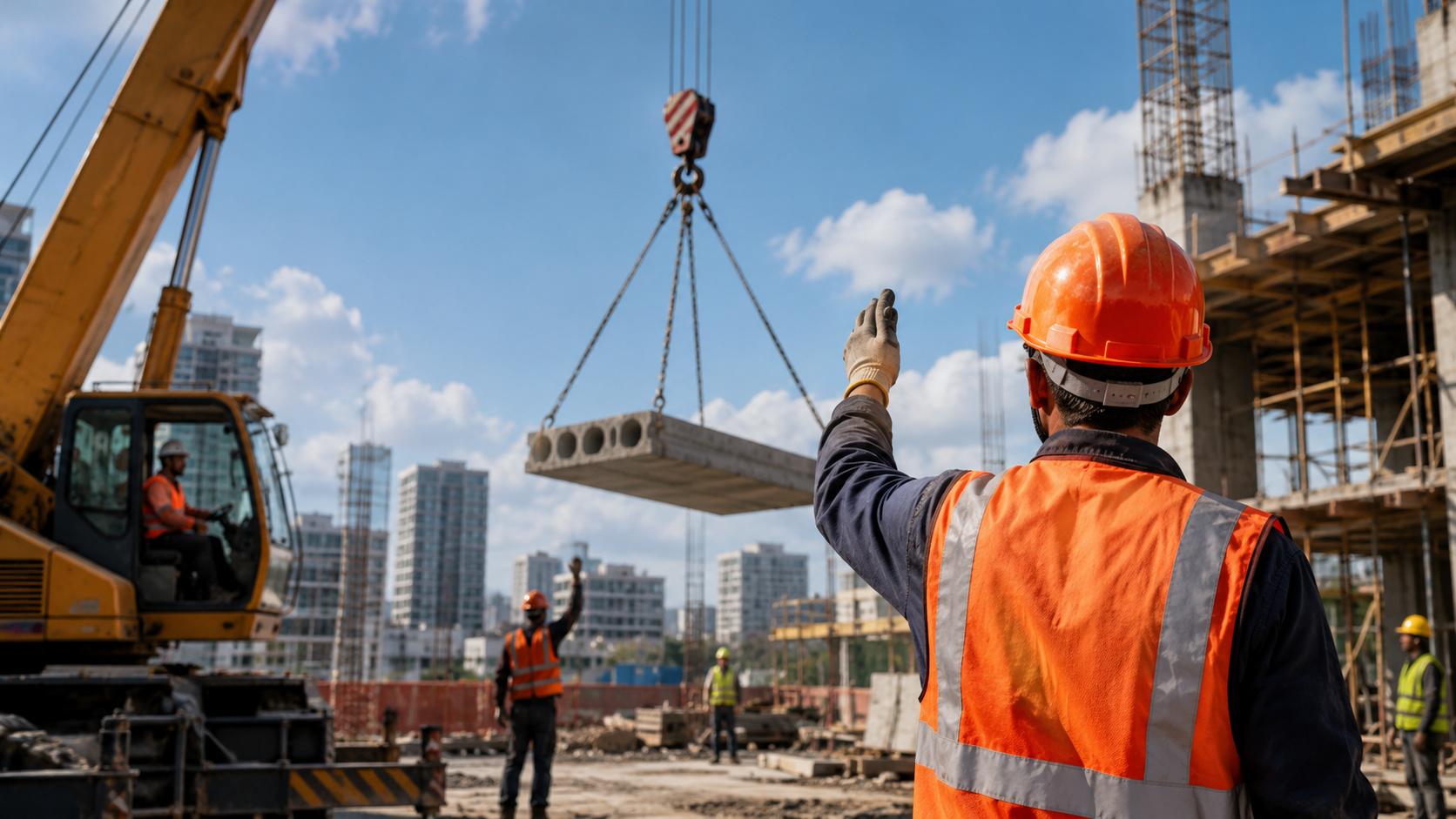
Why can the crane operator only obey the correct signalman on the construction site: among dozens of workers, a hand raised by the wrong person can confuse the maneuver and turn a load of tons into an immediate risk.


Cádiz was the central Atlantic hub of the Spanish Empire in the 16th and 17th centuries.
Why Cádiz is a cemetery of 17th-century galleons
The Bay of Cádiz operated as a central port for transatlantic flow for 3 centuries. Cargoes arrived from the Caribbean, New Granada, and the Philippines, were redistributed, and sent to the rest of Europe.
According to studies from the University of Seville, the Carrera de Indias system handled about 17,000 voyages of Spanish galleons between 1500 and 1778.
Silver from Potosí, then in the Viceroyalty of Peru, formed the bulk of the cargo. The annual caravans reached up to 100 ships in military escort.
On the other hand, Cádiz combined 3 risk factors. Intense ship traffic, vulnerability to Atlantic storms, and proximity to English and Dutch piracy routes.
The 3 main attacks occurred in 1587 (Francis Drake), 1596 (Earl of Essex), and 1702 (War of Succession).
In parallel, the catastrophic tornado of 1671 over the Bay of Cádiz is a classic reference in naval literature. The event destroyed at least 30 anchored ships and paved the way for heritage losses that archaeologists are still tracing today.
The numbers of the find in Cádiz
The pace of archaeological work in Cádiz has accumulated discoveries since 2024. According to El Debate, a 400-year-old galleon found in 2024 halted port works at the city’s terminal.
This find was a precursor to the current one.
According to El País, another 16th-century ship, Italian and sunk by Francis Drake’s attack in 1587, was documented by the IAPH in April 2026.
These are 2 finds in 2 years in the same perimeter.
The current site with 27 cannons is at 6 meters deep. The distance of 3 nautical miles from the coast places it in a low-pressure zone for recreational diving but high exposure to sand movement and local currents.
Above all, the presence of 27 cannons is significant material evidence. Common merchant galleons carried 8 to 16 cannons.
Quantities above 20 indicate a military escort vessel of the fleet or a high-value merchant ship with reinforced defense.

Technical reveal: how the IAPH documents without removing the site
In the background, the IAPH adopts a heritage protection protocol established by UNESCO in 2001. The Convention on the Protection of the Underwater Cultural Heritage recommends keeping sites in place whenever possible, rather than removing them to a museum.
According to the IAPH, the team uses side-scan sonar sweeps, underwater 3D photogrammetry, and bathymetric surveys to map the site without disturbing the material.
The data generates a precise three-dimensional model, millimeter by millimeter.
The system integrates 4 technical layers. The first is geophysical mapping. The second is photogrammetry with compact cameras at various angles.
The third is discrete fragment sampling for chemical analysis. The fourth is continuous erosion monitoring.
On the other hand, the site is vulnerable to 3 concrete threats. Intense maritime traffic from the commercial port, trawling in the region, and unauthorized visits by divers.
The Junta de Andaluzia imposed a 500-meter protection perimeter around the site.
The silver fleet and the central role of Cádiz
The Spanish Carrera de Indias system lasted exactly 278 years. It operated from 1500 to 1778, connecting 7 key ports: Seville, Cádiz, San Juan, Cartagena de Indias, Havana, Veracruz, and Manila via Acapulco.
According to the University of Seville, the silver galleon transported 250 to 600 tons of average capacity.
The typical cargo included silver from Potosí in bars, eight-real coins, Mexican cochineal, indigo, cocoa, and tobacco.
The average annual value of the Seville-Cádiz flow in the 16th and 17th centuries reached 8 million pesos of eight reales. In present value adjusted for historical inflation, this equates to about €2.5 billion annually per voyage on average in the 17th century.
In parallel, Cádiz replaced Seville as the main port of the Carrera in 1717. The Guadalquivir River silted up and prevented larger ships from reaching the interior.
The Casa de Contratación officially moved, consolidating Cádiz as the naval capital.

Human reveal: Milagros Alzaga García and 25 years at the Center for Archaeology
The human face of the operation is archaeologist Milagros Alzaga García, head of the Center for Underwater Archaeology of Andalusia since 2018. Before that, she worked for 18 years as a senior archaeologist at the same institution.
According to an interview published by the Andalusian Institute of Public Administration, Alzaga García has conducted more than 40 underwater archaeology projects on the Andalusian coast.
The research includes 12 sites already mapped and 6 declared Cultural Heritage Sites.
On the other hand, the IAPH technical team consists of about 18 permanent professionals in underwater archaeology. They cover the 836 km of Andalusian coast, of which approximately 12% have archaeological records.
In parallel, the team collaborates with universities in Seville, Cádiz, and Granada. The annual budget of the Junta de Andaluzia for underwater archaeology is €1.8 million.
Each new find adds about 2 to 3 years of documentation work.
Comparison with the 3 most famous shipwrecks of the Spanish Caribbean
The Cádiz galleon differs from the 3 largest shipwrecks in the Spanish circuit. The Nuestra Señora de Atocha, sunk in 1622 off the coast of Florida, was discovered in 1985 with 40 tons of gold and silver.
The current valuation of the cargo exceeds $450 million.
The San José, sunk in 1708 off the Colombian coast during the War of Succession, carries about 11 million pesos of gold and silver to the bottom.
The Smithsonian calls the ship the “Holy Grail of shipwrecks,” with a valuation between $4 and $17 billion.
The Santa Margarita, sister ship of the Atocha, sank in the same 1622 hurricane. Its cargo included 419 silver ingots and about 31 tons of refined silver destined for Seville.
It was partially recovered by Mel Fisher between 1980 and 1992.

Future reveal: what’s next in the 2027 phase
The next step planned by the IAPH is to complete the 3D photogrammetry of the site by mid-2027. Then comes the phase of chemical analysis of materials and dendrochronology dating of preserved wood.
According to the Junta de Andaluzia, the long-term goal is to classify the site as a permanently protected Cultural Heritage Site.
This status guarantees Spanish federal resources and prevents any port works within 500 meters.
In parallel, there is a plan for a traveling exhibition with smaller recovered pieces and the 3D model of the site. The preliminary schedule foresees a debut in museums in Cádiz, Seville, and Madrid in 2028.
It is worth remembering the coverage of historical events with global impact that helps contextualize the scale of this archaeological discovery.
- Location: Bay of Cádiz, Andalusia, Spain
- Depth: about 6 meters
- Distance from the coast: approximately 3 nautical miles (5.5 km)
- Century: XVII (1601-1700)
- Documented cannons: 27
- Team: Center for Underwater Archaeology of IAPH-Andalusia
- Leader: Milagros Alzaga García
- Protection perimeter: 500 meters

The points that still depend on identification
Despite the progress, 3 fronts still depend on additional research. The positive identification of the ship with its proper name, route, and crew has not been completed.
The possible association with the tornado of 1671 or the War of Succession of 1702 is still a hypothesis.
On the other hand, the exact value of the cargo and the final destination are uncertain. The chemical analysis of silver fragments will indicate the origin in America, whether from Potosí or Zacatecas.
Finally, the state of preservation of the wood in shallow waters requires continuous monitoring by the Junta de Andaluzia.