Portuguese
  Spanish


While Tesla is still awaiting regulatory approval for FSD in China since 2024, XPENG launched on May 18, 2026, in Guangzhou, the first unit of the Chinese mass-produced robotaxi off the assembly line.
The vehicle operates at L4 level, without LiDAR and without HD maps. According to XPENG, it delivers 3,000 TOPS of onboard computing with 4 proprietary Turing chips and latency below 80 milliseconds in the VLA 2.0 model.
The company’s CEO, He Xiaopeng, described the year 2026 as “the first year of global autonomous driving.” The industrial goal is to price the vehicle below 200,000 yuan, about $27,500, and achieve fully autonomous operations without onboard safety by early 2027.
-
Sales of Brazil’s Cheapest Electric Car Halted Before First Deliveries: E-Motors Suspends Emova Easy Due to Import Tax Increase and Rising Freight Costs

-
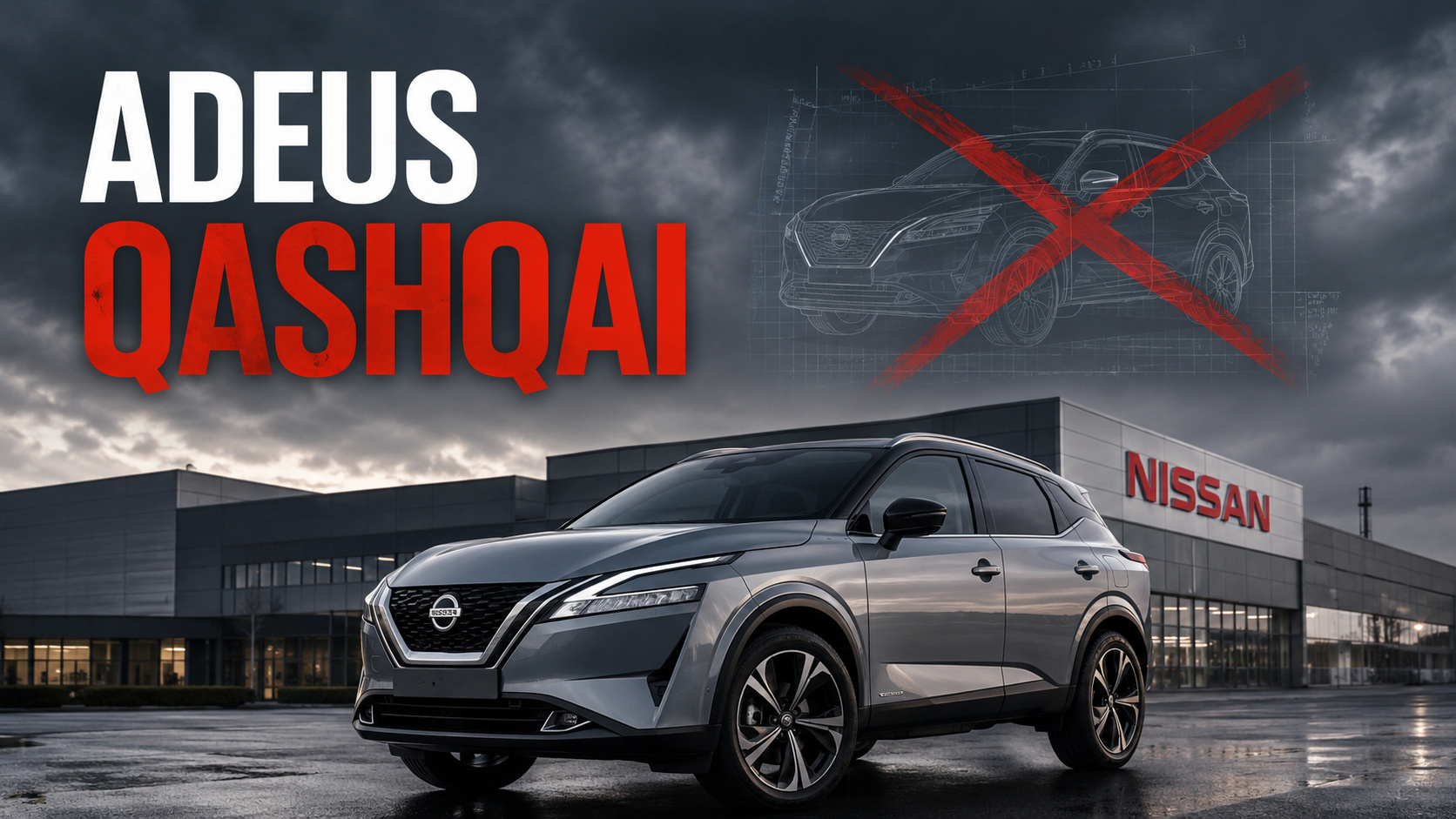
Nissan Discontinues Qashqai SUV Amid Cost-Cutting, Chinese Competition, and Product Line Review

-
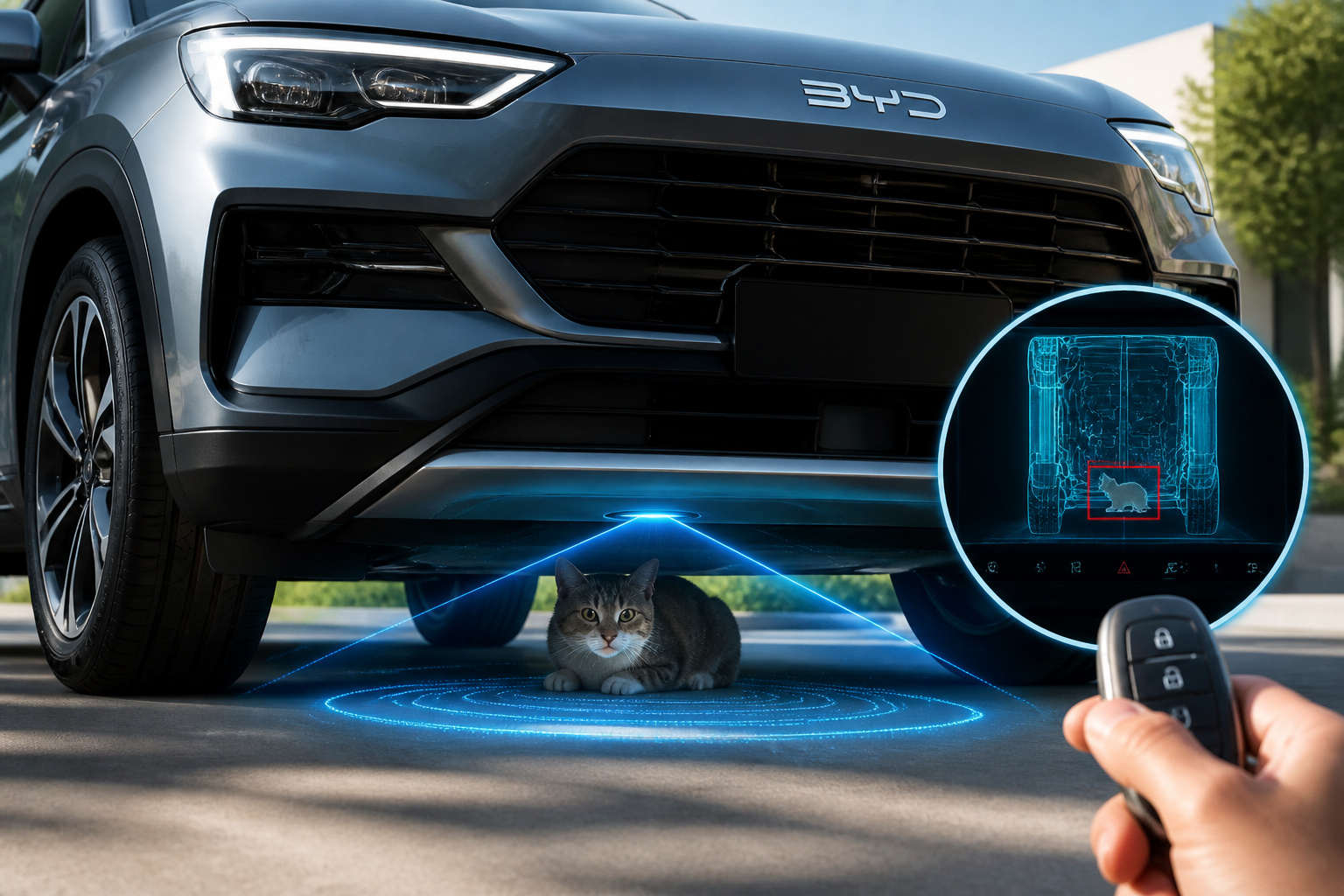
BYD Patents Revolutionary System Using Computer Vision to Detect Animals Under Cars Before Starting, Preventing Tragedies

-
Study Reveals Why Cars Are More Expensive to Produce and Buy in Brazil Compared to Mexico, Highlighting Taxes, Logistics, and Industrial Costs as Key Factors.


The schedule includes commercial pilots still in the second half of 2026.
According to a report by Electrek, XPENG is the first Chinese automaker to industrialize on a scale an L4 vehicle designed from the start as a robotaxi, rather than an adaptation of a consumer model.
The chosen structural platform is the GX SUV.
What changes with the mass-produced XPENG robotaxi in 2026
XPENG obtained in January 2026 the public road testing license for L4 level connected intelligent vehicles in Guangzhou. Since then, it has been accumulating data in a real urban environment.
According to Indexbox, the production expectation is hundreds to thousands of units in the next 12 to 18 months. The scale starts with a few dozen in 2026 and targets thousands by 2027.
On the other hand, this is still modest compared to Waymo, which recorded more than 500,000 weekly rides in 11 U.S. cities in May 2026.
It also lags behind Baidu Apollo Go, with driverless operations in 20 Chinese cities.
In parallel, XPENG’s robotaxi is part of the company’s broader “Physical AI” strategy, which combines proprietary chips, generative models, and intelligent vehicle platforms.
The advancement of centralized digital platforms in the automotive market also appears in Brazil, on other fronts.
Technical reveal: 3,000 TOPS and proprietary Turing AI without LiDAR
In the background, XPENG’s robotaxi bets on aggressive technical architecture. The system uses 4 proprietary Turing AI chips that total 3,000 TOPS of onboard computing.
This number is about 3 times greater than the 1,000 TOPS of Tesla’s Cybercab, disclosed in October 2024.
XPENG’s VLA 2.0 model processes perception, planning, and control end-to-end. Latency was below 80 milliseconds, compared to industry standards of 100 to 200 ms typical in 2025.
This interval is critical in high-speed urban maneuvers.
Unlike Waymo, which operates based on expensive LiDAR and detailed HD maps, XPENG chose “pure vision.” Only cameras support the entire environmental perception.
This approach coincides with Tesla’s thesis but with Chinese chips and models, outside the Nvidia ecosystem.
As detailed by Global China EV, XPENG aims for 3 distinct L4 models by 2027. The robotaxi rolled out in May 2026 is the first.
The other 2 will be sedan and van variants for urban deliveries.

How XPENG positions itself against Tesla, Waymo, and Baidu Apollo Go
The robotaxi sector became a competition of 5 giants in 2026. Waymo leads commercialization in the U.S. with 11 operational cities. Tesla struggles to approve FSD in China and has yet to commercialize the Cybercab.
Baidu Apollo Go operates driverless fleets in 20 Chinese cities by January 2026. Pony.ai scales L4 operations in Beijing, Shanghai, and Guangzhou.
GM Cruise was essentially shut down in 2024 after an accident in San Francisco in October 2023.
According to Stanford analysis, the Chinese strategy is vertically integrated. State, industry, and regulation operate aligned under the 15th Five-Year Plan. The West fragments the actors.
As noted by the Global Times, new Chinese rules in 2026 bring L3 and L4 closer to full commercial operation. Pilot cities include Beijing, Shanghai, Guangzhou, and Shenzhen, with regulatory acceleration.
Human reveal: He Xiaopeng bets the year on robotaxis
The human face of the announcement is XPENG’s CEO and co-founder, He Xiaopeng, 47 years old, former co-founder of UCWeb before Alibaba acquired it.
He founded XPENG in 2014 with initial funding from Alibaba.
In an interview with Gasgoo Auto News, He Xiaopeng stated that 2026 will be “the first year of global autonomous driving.” For him, XPENG needs to transition from physical AI research to scale deployment.
On the other hand, XPENG faces financial pressure. The company recorded a loss of 11.3 billion yuan in 2023 and 5.8 billion in 2024.
In 2025, the loss decreased to 1.2 billion yuan with the launch of new models. The robotaxi is a bet to accelerate recurring revenue.
In parallel, He Xiaopeng announced in 2026 the operational separation between the consumer vehicle division and the robotaxi division.
Each now has its own CEO, dedicated industrial scale, and separate goals for investors.

How much is the robotaxi market worth in 2030
The commercial effect of the announcement weighs on the sector’s revenue horizon. According to Grand View Research, the global robotaxi market jumps from $0.61 billion in 2025 to $147 billion in 2033.
China alone could surpass $120 billion in 2030.
To position itself, XPENG needs to cover 4 simultaneous fronts. Industrial scale production, commercial operation in pilot cities, full L4 certification, and acquisition of corporate clients for urban fleets.
On an individual scale, the company’s calculation is that each robotaxi runs 80,000 km/year and generates revenue of 200,000 to 400,000 yuan in operation per year.
This amortizes the vehicle in about 18 months, compared to 4 years for a traditional taxi with a driver.
Where Brazil fits into the XPENG race
XPENG does not yet sell vehicles directly in Brazil, but the Chinese BYD expanded its market share target to 10% in 2026.
As detailed by Electric Vehicles, BYD’s Brazilian sales rose 47% in 2025 and the company supports retail with 200 dealerships.
The robotaxi sector in Brazil is still embryonic. There is no federal L4 regulation in effect. The Senatran has been evaluating rules since 2024 but no proposal has entered public consultation until May 2026.
In parallel, the municipalities of São Paulo and Brasília are studying autonomous mobility pilots in specific corridors. None was officially announced in 2026.
The traditional taxi market in Brazil moves about R$ 8 billion/year with 350,000 active vehicles.

Future reveal: phase 2 of XPENG robotaxi in 2027
The next step planned by XPENG is the total removal of onboard safety operators at the beginning of 2027. Commercial pilots with a driver present begin in the second half of 2026 in Guangzhou.
In parallel, the company plans expansion to another 5 Chinese cities in 2027. Beijing, Shanghai, Shenzhen, Chongqing, and Hangzhou are on the preliminary list.
The goal is a fleet of 5,000 operational units by the end of 2027.
According to Stocktitan, the schedule potentially positions XPENG ahead of the Tesla Cybercab, whose production would start in 2026 but has repeated delays.
Elon Musk promised Cybercab at $30,000 in October 2024 but no unit has run commercially until May 2026.
- Launch: May 18, 2026, Guangzhou, China
- Onboard computing: 3,000 TOPS in 4 proprietary Turing AI chips
- VLA 2.0 latency: sub-80 milliseconds
- Target price: below 200,000 yuan ($27,500)
- Technology: pure vision, without LiDAR and HD maps
- Commercial pilots: H2 2026 with safety officer
- Full L4: early 2027 without driver
- Global robotaxi market 2033: $147 billion

The points that still depend on regulation
Despite the industrial leap, 3 aspects depend on complementary regulation. L4 authorization in a driverless environment varies between Chinese cities. Insurance coverage for autonomous fleets is still forming.
On the other hand, integration with mobility platforms like Didi and partnerships with pilot cities define the pace of phase 2, scheduled for 2027.
It is worth remembering the coverage of events with global impact that helps contextualize the scale of this transition in autonomous mobility.