






 Portuguese
  Spanish


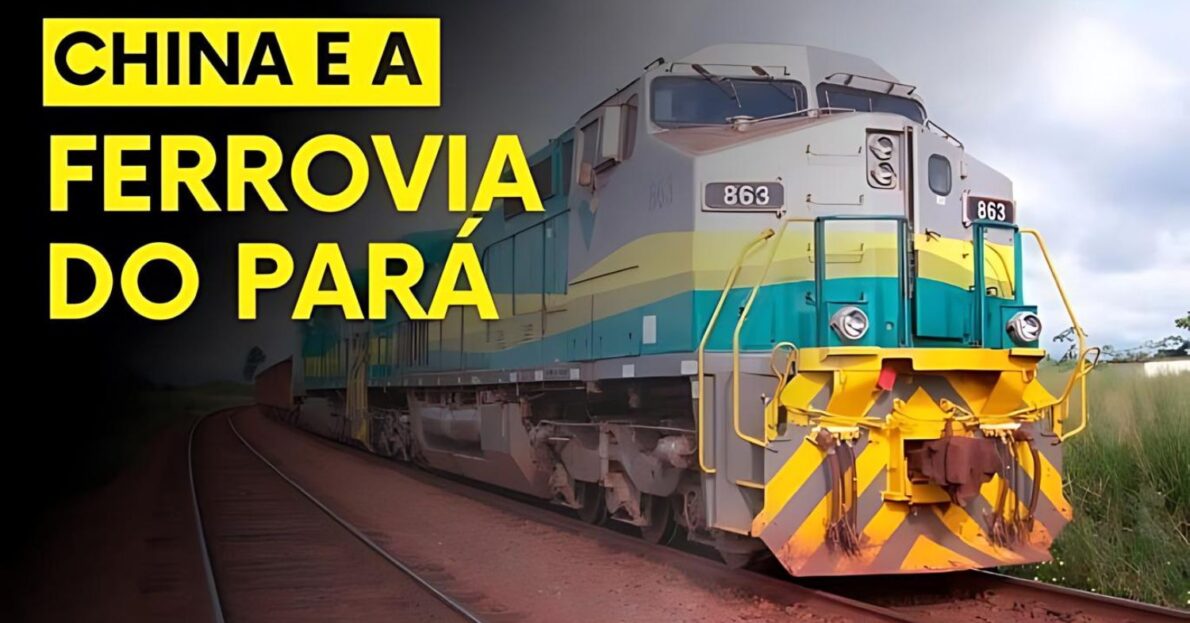

Billion-Dollar Chinese Investment In New Railway Promises To Transform Agriculture In Pará. With an investment of R$ 37 billion, the Greenfield Railway will be a milestone in the sector, facilitating the export of agricultural products and boosting the region’s economy. The initiative aims to modernize the logistical infrastructure and improve the competitiveness of Brazilian products in the global market.
The Pará Economic Development Company (CODEC), in collaboration with the Chinese state-owned Sino-Lac Supply Chain, is leading an ambitious project for Chinese investment in Brazil. This project aims to create a robust logistics structure to facilitate the export of Brazilian products, such as food, animal proteins, and vegetables, to the Chinese market. With a strategic focus on Pará’s agribusiness, the new railway promises to revolutionize the local economy, boosting the competitiveness and presence of Brazilian products in China. The planned infrastructure is expected to significantly improve the efficiency of production flow, consolidating Pará as an important agro-industrial hub in Brazil.
Understand The Partnership Between China And Brazil

China’s investments in Brazil, which aim to create an integrated logistics platform, encompassing storage, customs clearance, phytosanitary certification, as well as packaging and transportation, is a pioneering initiative in Latin America and promises to change the agribusiness landscape in Pará.
The project, which began discussions in 2020, aims to unify the industrial port area of Barcarena with the logistics platform of the port of Zhuhai, in southern China.
-
France Revamps 530 Social Housing Units with Large Balconies and Glass Facades Without Demolishing Existing Buildings

-
10-Year-Old Max Makes History with Paris Fashion Show, Launches Own Brand, Hires Staff, and Sets World Record as Youngest Runway Designer

-
European Parliament Approves Digital Euro, Aiming to Challenge Visa and Mastercard’s Dominance and Transform Payments Across Europe by 2029
-
Bolivian Female Construction Workers Form Association to Combat Discrimination and 38% Pay Gap in the Industry




The choice of the Barcarena port region as the best option in the country to receive these investments from China in Brazil resulted from studies conducted by the Chinese company since 2017, where the strong productive chain of proteins in the state played a significant role, especially in animal products (meat), which has 4 certified plants for export.
Alternatives for the implementation of processing plants within the future Export Processing Zone of Barcarena (ZPE) were discussed due to the significant tax and customs advantages they would bring to product pricing. Such alternatives are being explored by a bilateral commission involving representatives from Pará and Sino-LAC.
Chinese Investments In Brazil Reach R$ 38 Billion
Meanwhile, China’s investments in Brazil’s infrastructure in the State of Pará are being allocated by the federal government and promise to change Pará’s agribusiness with the construction of a new Greenfield Railway project.
The expectation is that R$ 38 billion planned in the New Growth Acceleration Program (PAC) of the federal government will be invested over the next four years in infrastructure capable of creating conditions for the so-called Northern Arc to become the exit port for an increasing share of the grain harvest from the Midwest.
The region produced about half of the 193 million tons exported by Brazil last year. According to the Amazon Basin Port Terminals and Transshipment Stations Association (Amport), 37% of agricultural bulk exports, such as corn and soybeans, passed through the nine ports represented by the entity, six of them in Pará.
It is worth noting that in April 2023, the governor of Pará, Helder Barbalho, the vice president of the Communications Construction Company (CCCC), Sun Liqiang, and the executive vice president of Corporate and Institutional Affairs of Vale, Alexandre Silva D’Ambrosio, signed a Memorandum of Understanding for the Greenfield Railway of Pará, connecting Marabá to the port of Vila do Conde, in Barcarena.
New Greenfield Railway Will Receive Investments Of R$ 10 Billion
According to the governor, the investments necessary for the construction of the new Greenfield Railway, which will change Pará’s agribusiness, are around R$ 10 billion.
The goal is to interconnect the municipalities of Barcarena, in the northeastern region of the State, with municipalities in southeastern Pará, such as Marabá and Parauapebas, and from there to the municipality of Açailândia, in Maranhão, through the North-South Railway for the transportation of people and flow of goods produced in Pará, particularly in mining and agriculture, which are characteristic activities of the region.
Pará remains a Brazilian powerhouse in mineral exports, according to data from the “Mineral Industry Bulletin of Pará,” published in 2022 by the Union of Mineral Industries (Simineral). Among the export products from Pará, 84% are minerals. The sector generated US$ 18.1 billion just in the last year, with China as the main buyer.








Vai do nada para lugar nenhum. Conversa fiada para fazer **** dormir.
Vida longa pra nosso presidente Lula, o cara é mágico, só ele assumir que as coisas começam a acontecer.
Isso se chama desenvolvimento que no governo passado não tinha.