Portuguese
  Spanish


Discover Everything About CNU 2025: Defined Board, Detailed Schedule, and Distribution of Vacancies
The Getulio Vargas Foundation (FGV) was officially confirmed as responsible for organizing the Unified National Contest (CNU) 2025. The information was disclosed on June 5, 2025, through the National Public Procurement Portal.
The choice took place without a bidding process, as provided for in the legislation. Thus, the second edition of the CNU will have 3,652 vacancies, distributed among 36 federal agencies. There will be opportunities for both high school and higher education levels.
Contest Structure and Distribution of Vacancies
The organization of the contest will unify the notice and divide the content into nine thematic blocks. Two of these blocks will exclusively serve candidates with completed high school.
-
City Hall opens selection process with free registration, salaries up to R$ 3,622.31, and positions for teacher, driver, speech therapist, assistant, and other roles in education in Juazeiro.

-
Work as an Enem exam supervisor and earn R$ 864 per day: Inep opens national selection for Enem, PND, and Enamed 2026 certifiers with applications from June 8 to 28 and strategic roles in exam supervision throughout Brazil.
-
Navy opens competition for the Technical Corps of Naval Ratings with strategic positions in military submarines and nuclear facilities, expanding the technological role of the naval force in 2026 with highly specialized training and impact on Brazilian defense.
-
Attention exam candidates: Maranhão accelerates public competitions in 2026 after the announcement by Governor Carlos Brandão with 3,350 confirmed vacancies, the definition of the organizing committee, and expected notices, expanding opportunities in security, education, and administration with a direct impact on the state economy.

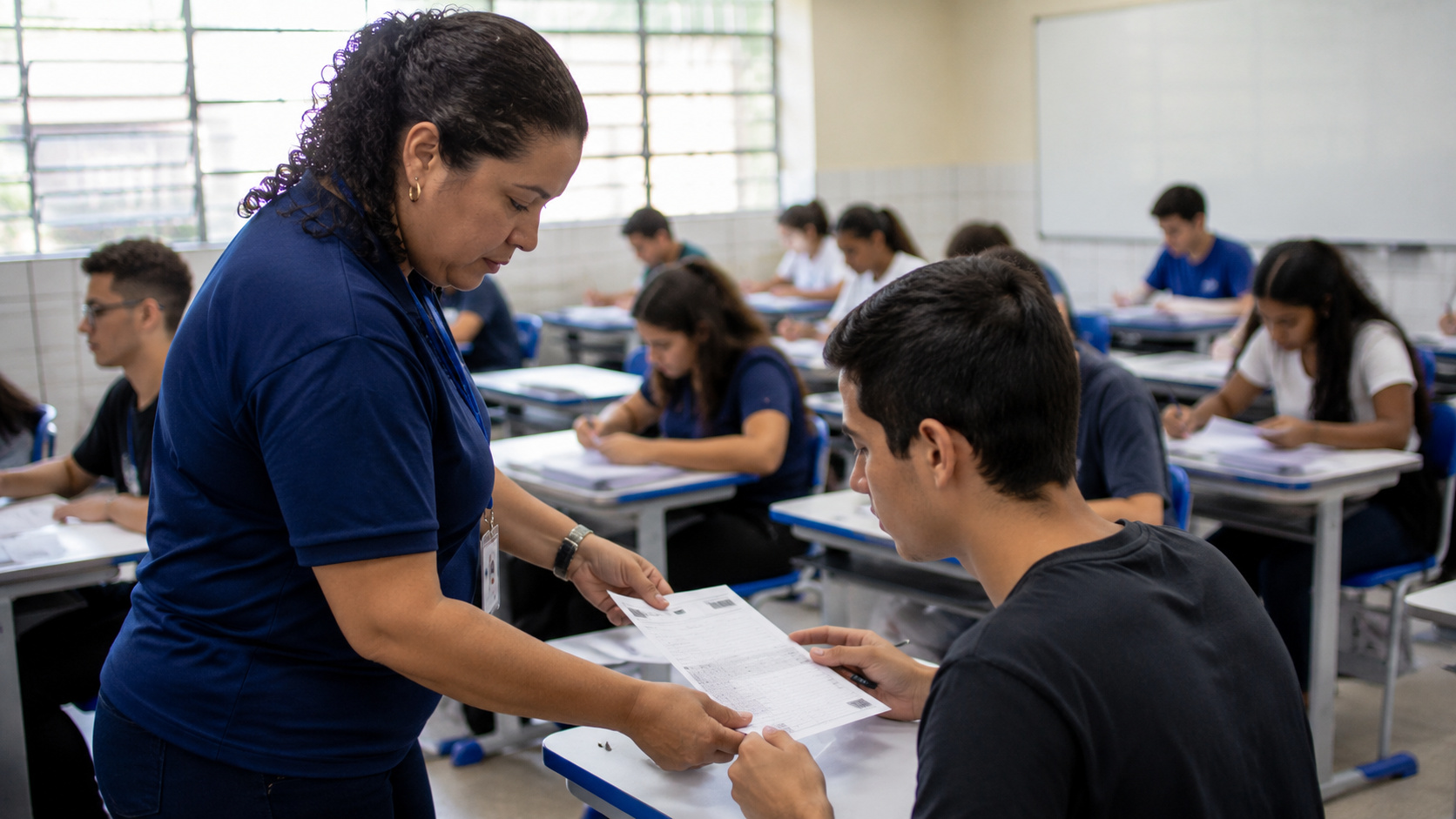


Of the total of 3,652 vacancies, 2,480 will be for immediate filling. Within this group, 1,972 vacancies are for higher-level positions, while 508 are intended for middle-level functions.
Additionally, there will be a reserve list with 1,172 vacancies, all for higher education. The vacancies are distributed across various Brazilian states, with highlights for:
- Rio de Janeiro: 315 vacancies;
- São Paulo: 65 vacancies;
- Pará: 66 vacancies;
- Pernambuco: 20 vacancies.
The agencies based in Brasília, in the Federal District, offer the remaining opportunities.

Proposed Schedule for CNU 2025
The Ministry of Management and Innovation in Public Services has already released the preliminary schedule. The department will publish the notice in July 2025, along with the opening of registrations.
The objective tests will take place on October 5, 2025. The written tests, intended only for those qualified in the first stage, will occur on December 7 of the same year.
The final results are expected in February 2026. The government will conduct the stages in 228 Brazilian municipalities, ensuring greater accessibility for candidates from different regions.
FGV’s Experience in Public Competitions
FGV has a tradition in organizing large-scale public competitions. The institution has already conducted, for example, the exams for the Brazilian Bar Association (OAB) and the National Judiciary Examination (Enam).
Furthermore, it was also responsible for competitions for the Federal Public Ministry (MPU) and the Brazilian Hospital Services Company (EBSERH). Therefore, its selection as the board for CNU 2025 reinforces the pursuit of seriousness and quality in the selection process.
The expectation is that the foundation will maintain high standards of transparency and organization, just as it did in previous editions of federal competitions.

Importance of CNU for Public Administration
The Ministry of Management and Innovation created the CNU with the aim of unifying the public competitions of the federal government, thus expanding access.
The first edition, held in 2024, for example, offered 6,640 vacancies and attracted nearly 1 million registrants, which demonstrates great interest.
The 2025 edition marks a new phase, however, focused on reconstituting the workforce, in addition to promoting greater fairness in access.
Thus, the government hopes to ensure greater agility in filling the vacancies, as well as making the processes more equitable and swift.
On the other hand, the unified model also facilitates the logistics of the exams and, at the same time, reduces operational costs for the public agencies involved.
The expectation, therefore, is for a more transparent, efficient, and even more democratic process for all candidates.