





 Portuguese
  English
  Spanish
  4 min of reading
  0 comments


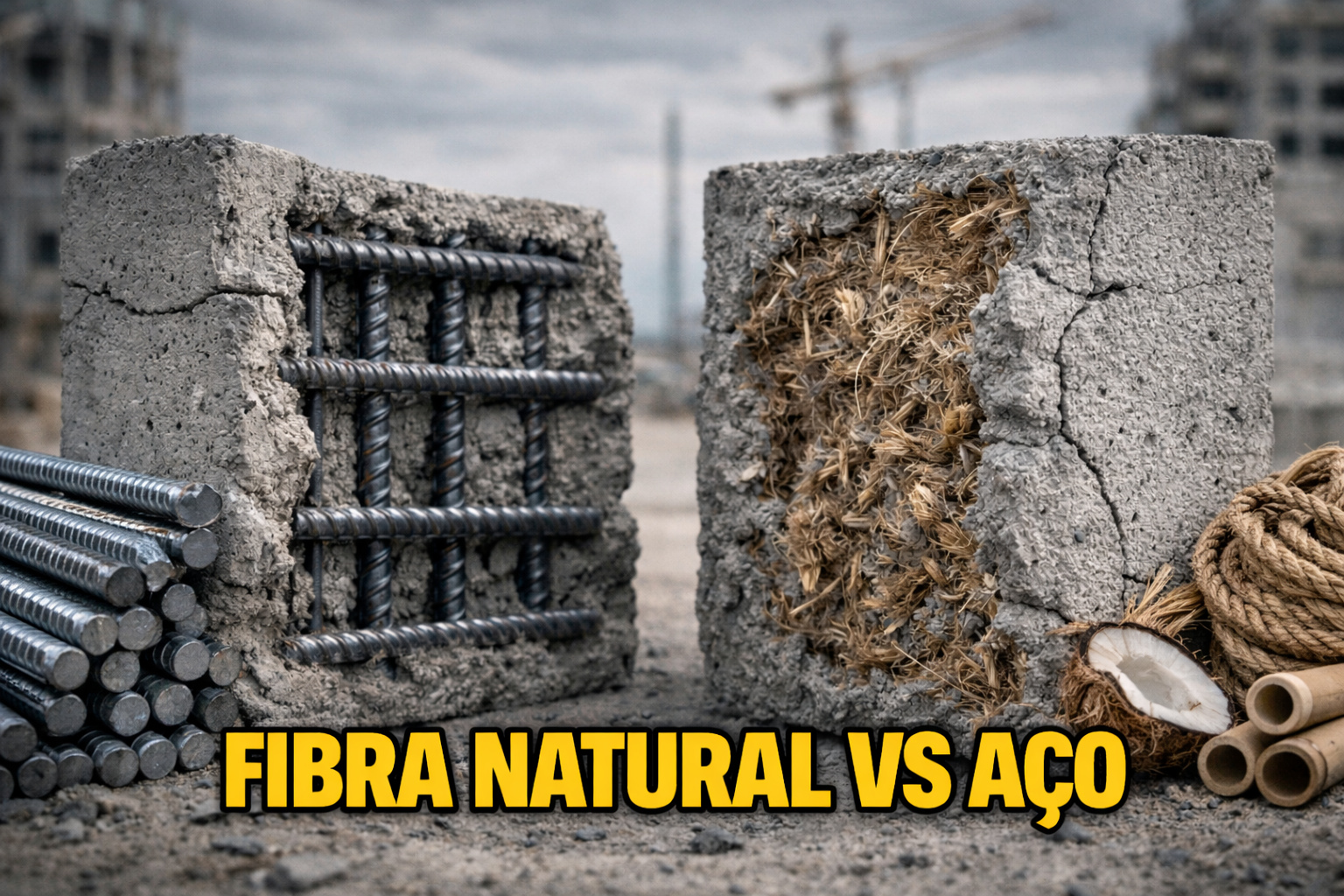
Researches In Brazil And Abroad Use Sisal, Coconut, And Bamboo In Concrete To Reduce Steel And Cracks; Gains Are Real, But Durability And Regulations Still Matter.
The idea of “replacing rebar with plant fibers” did not originate from viral videos or makeshift construction solutions. It has been studied for years by universities and research centers, with a clear goal: to reduce cracking, increase the toughness of concrete, and, in specific applications, even decrease the use of steel.
In Brazil, for example, research on cimentitious composites reinforced with sisal has been published in international scientific journals. A recent case is the article in the journal Fibers, published on October 11, 2025, which analyzed the structural performance of cementitious matrices with natural fibers, evaluating mechanical properties and durability.
In Europe and Asia, peer-reviewed studies published between 2024 and 2025, including in journals from Springer Nature, investigated the use of bamboo as structural reinforcement in experimental beams, with objective measurements of resistance, adhesion, and aging of the material.
-
Balloon the size of a stadium spends 25 days alone over Antarctica at nearly 37 km altitude and returns with data on cosmic antimatter that may reveal one of the rarest clues ever sought about the existence of dark matter.

-
The sea has stopped just warming and has started pushing storms towards the continent: marine heatwaves are already entering the path of up to 25% of extreme coastal rains and can increase storms by 30%, worsening floods on the coast.

-
Drone flies over indigenous area in Xingu and creates a point cloud capable of penetrating the tree canopy, revealing the forest floor, and mapping archaeological sites, ancient villages, roads, and ditches used to understand the historical occupation of the Kuikuro territory.
-
New technology may retire the common electric shower: Xiaomi introduces an intelligent model with tempered glass, a giant 305 mm spreader, antibacterial function, four water modes, and controls inspired by piano keys for around R$ 640 in China.




Also in 2024, laboratory tests examined bamboo as a partial alternative to steel — but with an important warning: without proper treatment, the risks of durability increase significantly. These works make a central point clear: it is not about indiscriminately eliminating steel, but about changing the behavior of concrete and optimizing the use of reinforcements where it makes technical sense.
Why Plant Fibers Entered The Radar Of Civil Engineering
Conventional concrete is excellent in compression but weak in tension. When it cracks, it quickly loses performance. Steel solves this problem, but brings cost, CO₂ emissions, and industrial dependency. Plant fibers emerge as an alternative for specific functions because:
- They “stitch” microcracks and delay the opening of cracks;
- They increase toughness (the ability to absorb energy before rupture);
- They can reduce secondary reinforcements in certain applications;
- They use renewable materials or agricultural waste.
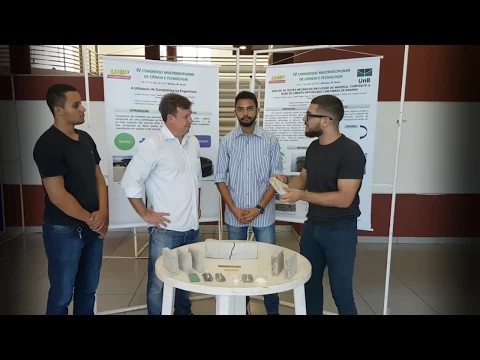

Important: this does not equate to replacing main rebar in the pillars and beams of high buildings. In serious engineering, each material has a defined function.
Sisal In Concrete: Brazil In The Center Of Research With Natural Fibers
Sisal is one of the most studied fibers in the world for cementitious applications. The reason is simple: relatively high tensile strength, availability in producing regions, and low cost.
What The Studies Show
Laboratory tests indicate that sisal:
- reduces cracking due to shrinkage;
- improves post-crack toughness;
- can be incorporated into mortars and concretes of low and medium strength.

The article published on October 11, 2025 in the journal Fibers analyzed the interaction between sisal fibers and the cementitious matrix, highlighting mechanical gains, but also the need for water absorption control to ensure durability over the years.
Where Sisal Makes Sense
- Industrial and rural floors;
- Fencing panels;
- Precast slabs;
- Elements where cracking is more critical than maximum strength.
Bamboo: When The Conversation Shifts From “Fiber” To “Reinforcement”
Bamboo is different. It does not just enter as short fiber; in many studies, it appears as a direct substitute for steel bars.
What Science Confirms
Research published between 2024 and 2025 in international technical journals shows that:
- Bamboo has good tensile strength;
- It can work in experimental beams under controlled conditions;
- It has variable adhesion with concrete.
The Real Problem: Durability
The articles themselves point out critical limitations:
- water absorption and swelling, which creates cracks;
- biological attack (fungi and insects);
- accelerated degradation if there is no chemical treatment;
- inferior performance in fires.
In high-temperature tests, columns with bamboo showed significant losses in structural capacity after prolonged exposure, which currently prevents unrestricted use in conventional buildings.
Coconut Fiber: Agricultural Waste Turning Into Technical Reinforcement
Coconut fiber (coir) has a strong environmental appeal: it is a waste abundant in tropical countries. Experimental studies indicate that it:
- increases impact resistance;
- improves the ductility of concrete;
- reduces initial cracks.
On the other hand, it can increase porosity if poorly dosed, which requires careful design. Thus, its use is primarily growing in mortars, blocks, and non-structural components.
So, Can We Really Reduce Steel?
The technical answer, without exaggeration:
- Main Structures (buildings, bridges, heavy works): steel remains indispensable.
- Specific Components: plant fibers can reduce secondary steel consumption, improve performance, and lower costs.
- Bamboo As Reinforcement: there is real scientific basis, but still experimental, with strong dependence on treatment, quality control, and local regulations.
Engineering does not reject these solutions — it just does not accept promises without proof of durability.
What Explains The Growth Of These Researches Around The World
Three forces drive this movement:
- Steel Cost And Emissions
Producing steel is expensive and carbon-intensive. Any controlled reduction is of interest to the sector. - Real Sustainability, Not Marketing
Universities and technical agencies seek materials with a lower environmental footprint without compromising safety. - Need For Local Solutions
In rural areas or with limited access to industrial steel, natural fibers can enable works that otherwise would not happen.
The Line Between Innovation And Illusion
What separates engineering from “gambiarra” is simple: testing, standards, and durability. When a published study with date, authors, and methodology shows measurable gains, that is real innovation. When someone promises to “replace all the steel” without long-term testing, that becomes a dangerous illusion.
Today, the technical consensus is clear: concrete is not abandoning steel, but is becoming smarter, using natural fibers to solve specific problems that steel alone does not address as well.
Sisal, coconut, and bamboo are not magic solutions, but they are not a trend either. They are part of a real movement in civil engineering to control cracks, reduce costs, and seek sustainability based on technical foundations.





Be the first to react!