Portuguese
  Spanish


The coconut shell transformed into a biodegradable mat reinforces rural roads in India, where heavy rain and heavy traffic challenge fragile soils. Applied under the asphalt, the natural fiber separates layers, drains water, reduces erosion, and shows how agricultural waste can replace petroleum derivatives in sustainable rural local works.
The coconut shell is gaining an unexpected role in India’s road engineering: becoming a biodegradable mat applied under rural roads to stabilize fragile soils, control erosion, and better withstand heavy rain and heavy traffic.
In a video released by the MACHINE WORLD PT channel, on March 7, 2026, the technology, related to the use of coir, fiber extracted from the coconut shell, was accepted by the Indian government for use in rural roads under PMGSY-III, a program focused on infrastructure in the country’s interior. The application targets regions where fragile soil, water, and vehicle weight accelerate cracks and deformations in the pavement.
India replaces part of the concrete with natural fiber
When it comes to roads, the most common image involves concrete, steel, gravel, and asphalt. These materials remain essential, but the Indian experience shows that not every structural solution needs to come from synthetic polymers or petroleum derivatives.
-
28-meter, 156-ton titans traveled 20,000 km from China to the port of Santa Catarina: Portonave received 7 fully electric megacranes, part of a R$ 210 million package, to double container handling.

-
They exchanged the idea of a large house for a 35 m² warehouse, spent US$ 12,000 on the structure, and created a tiny house in Colorado with space to live and work.

-
A newly opened terminal in the middle of the Amazon has begun transporting soy and corn through Amapá, eyeing the queue of ships that is congesting the ports in the South.

-
Goodbye to old tiles: renovation technique without construction transforms bathrooms in a few hours, eliminates debris, and reduces costs with coverings using special paints, high-resistance adhesives, and modern finishes that completely renew the space.



The mat made from coconut shell enters precisely in a less visible part of the construction: the base. It doesn’t appear on the surface, but it helps keep the layers of soil and pavement separate, reducing deformations over time.
Material stays hidden under the asphalt
The coconut fiber geotextile is placed between the subgrade and the upper layers of the road. Its function is to act as reinforcement, filter, separator, and erosion controller in sections where water and vehicle weight compromise the stability of the road.
In practice, the biodegradable mat functions as a technical layer. It distributes loads, allows controlled water passage, and prevents the weaker soil from mixing with the gravel and asphalt structure.
Coconut shell ceases to be agricultural waste
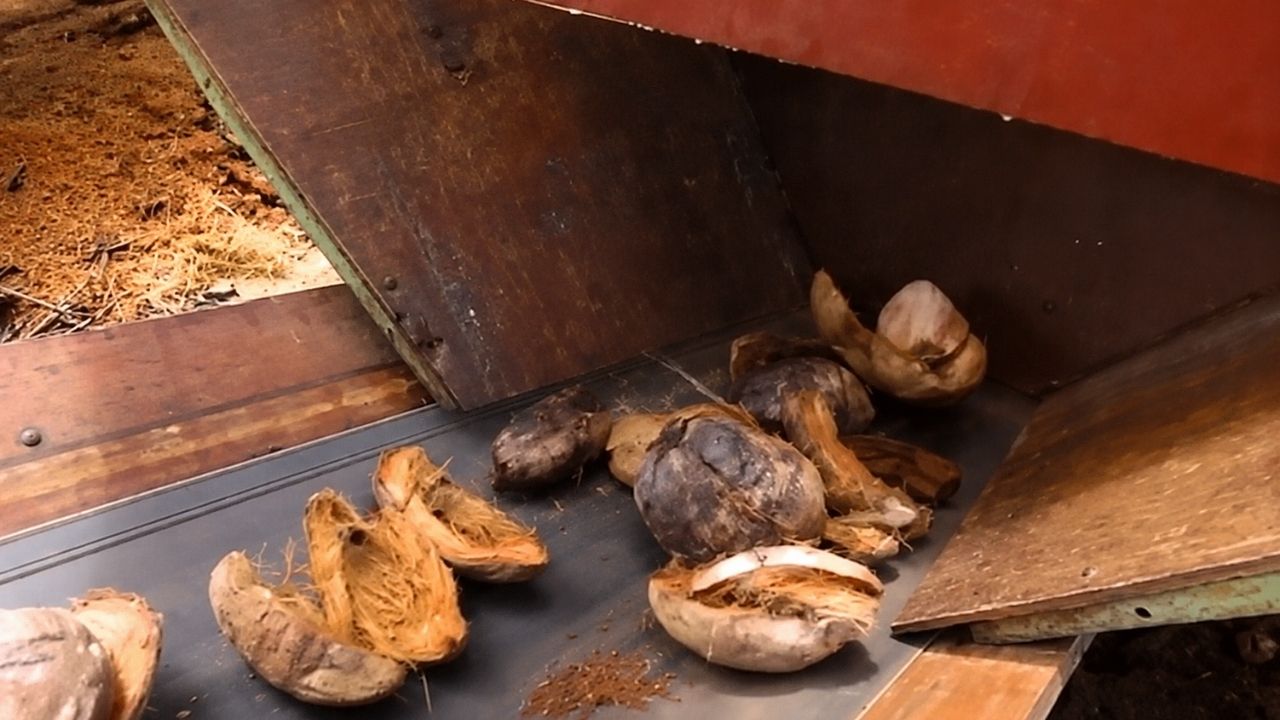
The transformation begins in the field. India is one of the largest coconut producers in the world, with an annual production of over 21 billion fruits, generating a huge volume of shells and fibers available for reuse.
The coconut shell, previously treated in many cases as an agricultural byproduct, gains industrial value. What remains of the fruit can become raw material for roads, reducing waste and creating new demand for rural chains.
Natural fiber replaces part of the synthetics
Traditional geotextiles often use synthetic materials, such as petroleum-derived polymers. They are durable, but carry environmental impacts related to their fossil origin and prolonged presence in the environment.
Coconut fiber offers another path. Being natural, durable, and biodegradable, the mat can fulfill a technical function for a certain period and then degrade in a way more compatible with the environment.
Rural roads face fragile soil and heavy rain
The use of the mat makes special sense on Indian rural roads. Many of them cross areas of unstable soil, agricultural regions, and zones exposed to intense seasonal rains, especially during the monsoon period.
Under these conditions, water penetrates the pavement layers, drags fine particles, and weakens the base. Without adequate reinforcement, the road may crack, sink, or lose load-bearing capacity sooner than expected.
Geotextile helps control erosion
One of the central functions of coconut fiber geotextile is to contain erosion. By allowing drainage while holding soil particles, the mat helps reduce material loss in vulnerable areas.
This function is important on slopes, shoulders, subgrades, and sections where water flows forcefully. The processed coconut husk becomes a sort of natural net that holds the terrain while the road structure consolidates.
Production depends on harvesting and processing
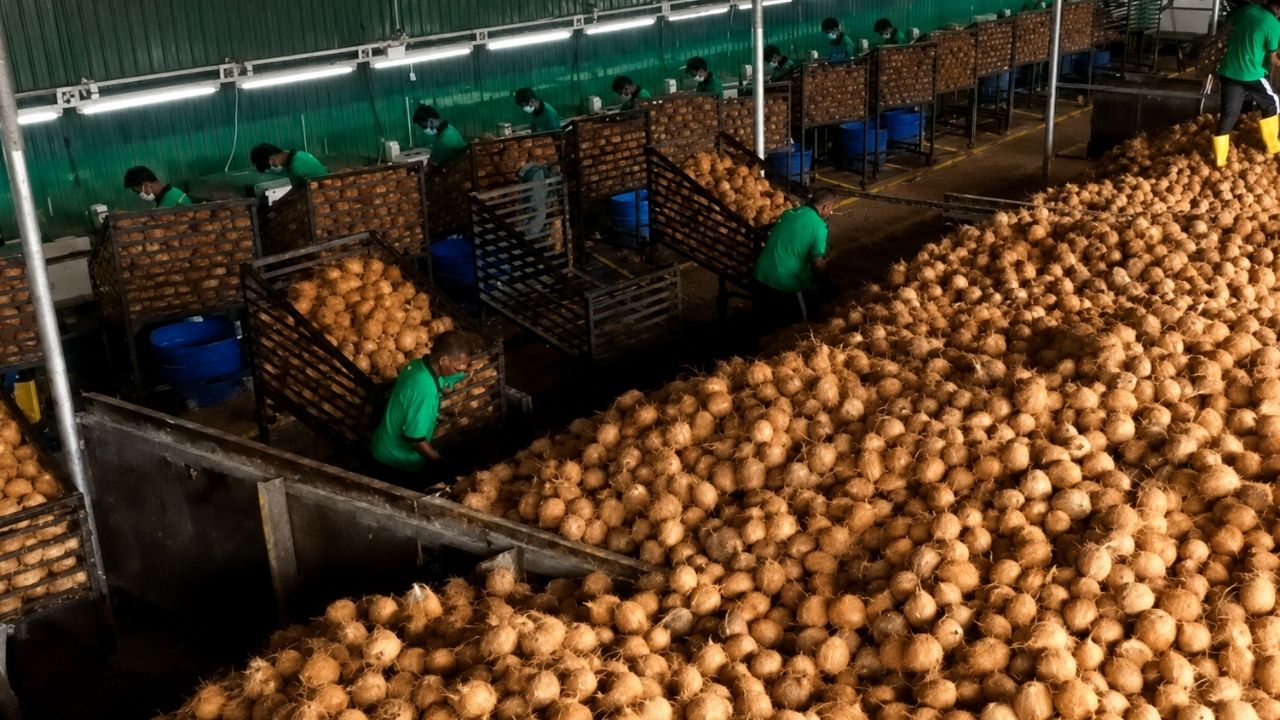
The chain begins with the removal of mature coconuts, which undergo separation of the outer husk. This fibrous part concentrates the material used to produce threads, mats, and technical fabrics applied in civil engineering.
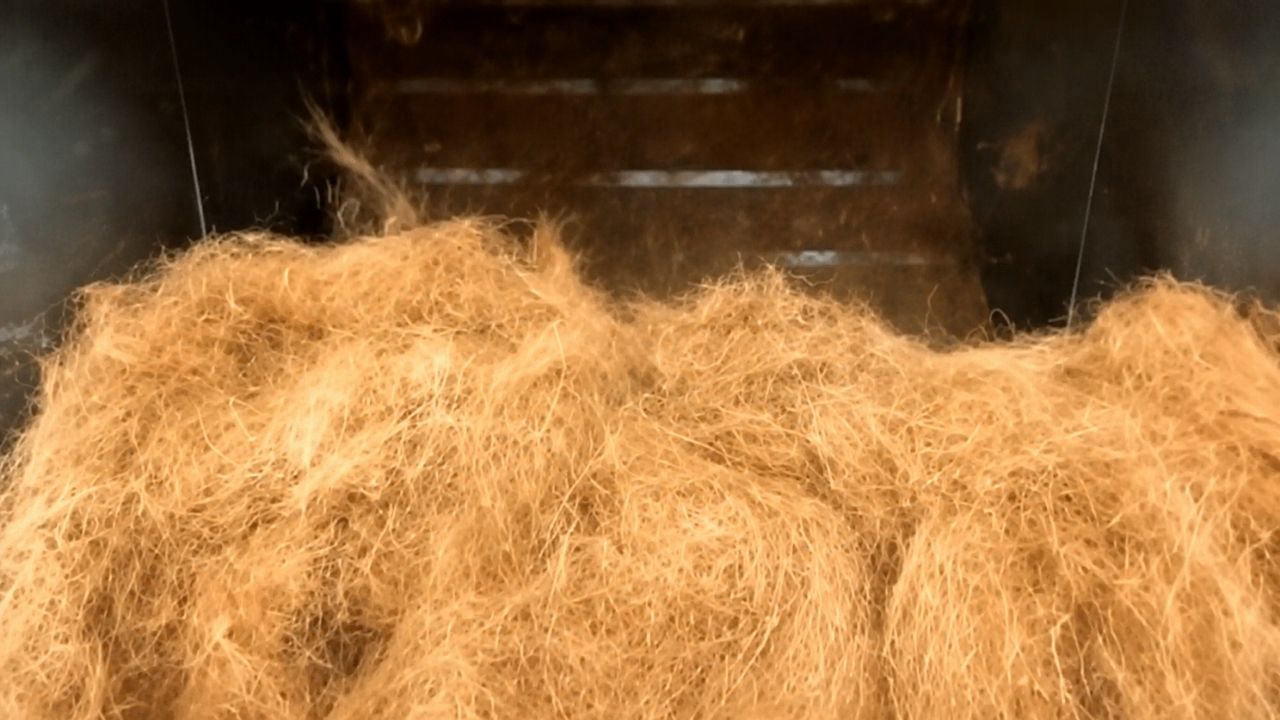
After separation, the fiber undergoes drying, cleaning, defibring, spinning, and weaving. The simple appearance of the coconut hides an industrial chain that needs to standardize strength, moisture, and density before application in works.
Mats are woven to resist the soil
The fibers are transformed into threads and then interwoven into mats. This mesh structure allows the material to work as mechanical reinforcement without completely blocking water circulation.
The spacing of the weave is an important part of the performance. The mat needs to be open enough to drain, but firm enough to hold the soil and distribute the loads coming from the upper layers.
Application requires rigorous ground preparation
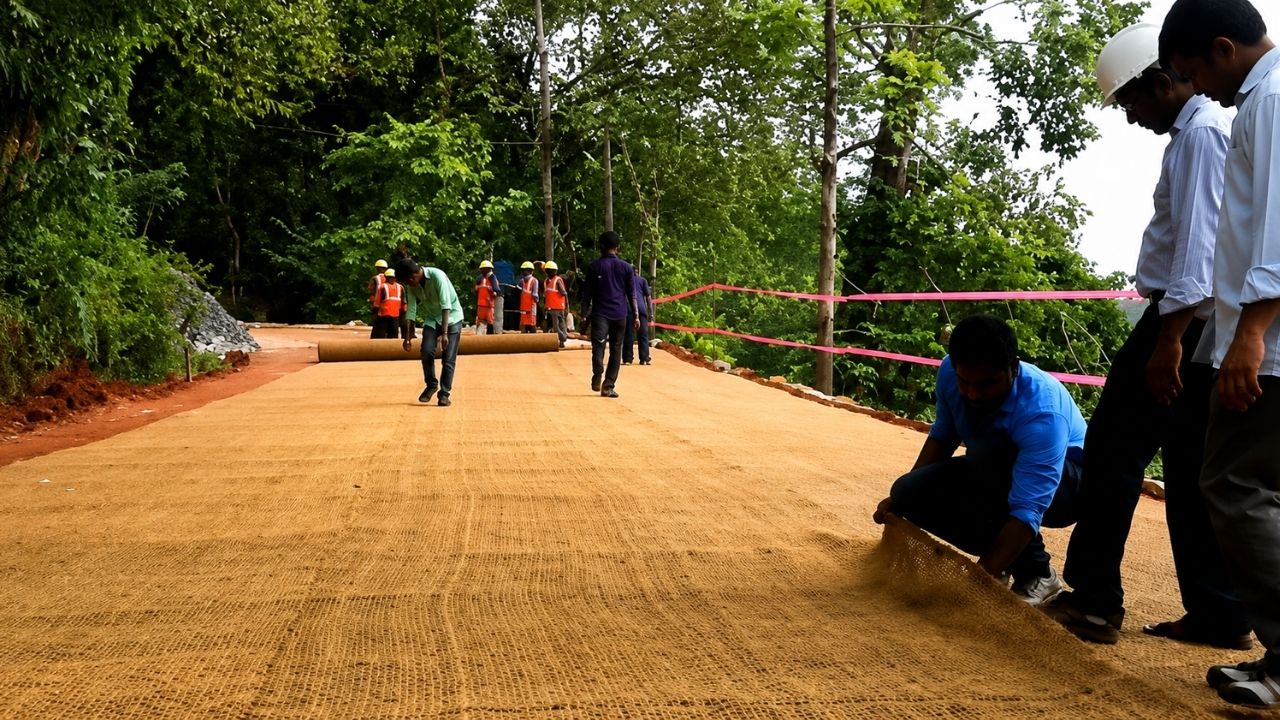
Before installing the mat, the subgrade needs to be leveled and compacted. Sharp stones, irregularities, and loose points can compromise the integrity of the material and reduce its efficiency.
Then, the rolls of geotextile are extended over the road base, with overlap at the edges. The continuity of the mat is essential to avoid failures, folds, and rupture points during compaction.
Gravel and Crushed Stone Come After the Mat
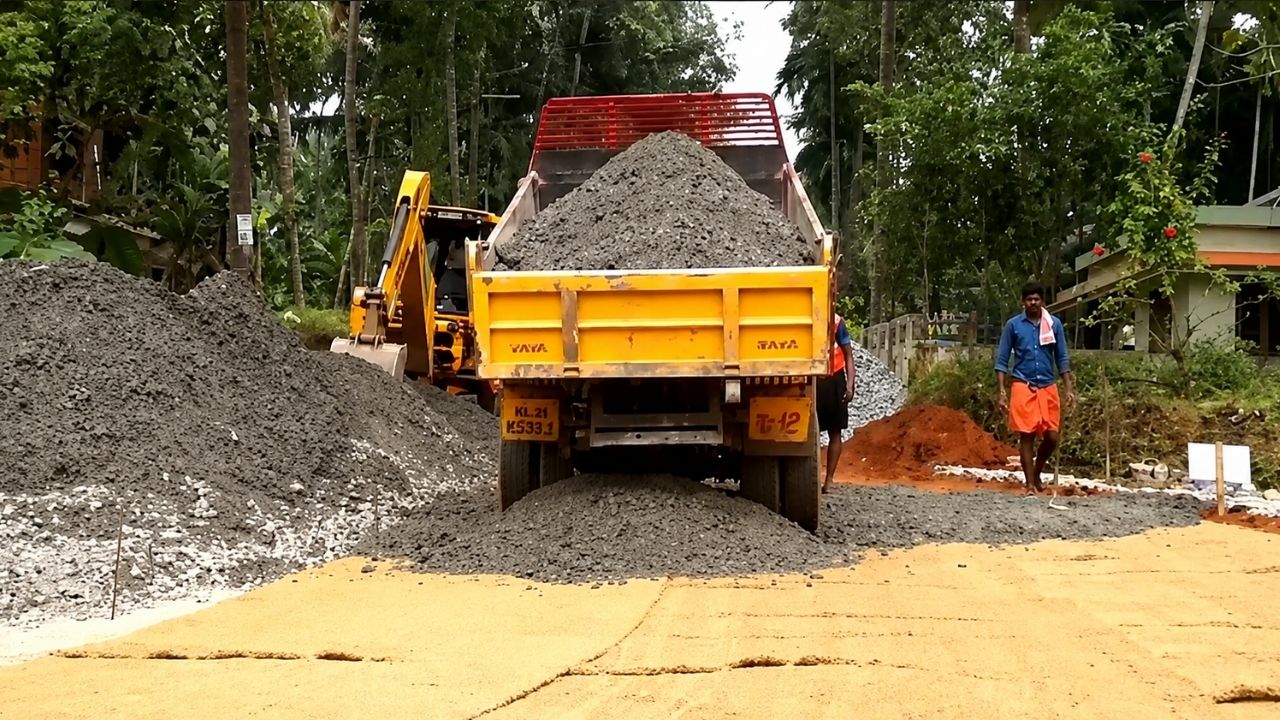
With the geotextile in place, layers of gravel, selected soil, and crushed stone are added. Machines compact this set before the final paving stage, creating a more stable base for the asphalt.
The coconut shell remains hidden but continues to perform a structural function. It acts as a silent layer, preventing material mixing and helping to keep the road more resistant to vehicle weight.
Heavy Trucks Make Reinforcement More Important
Rural roads do not only carry light cars. In agricultural areas, trucks, tractors, machines, and vehicles loaded with products repeatedly press the pavement.
This heavy traffic accelerates cracks when the base is not well stabilized. Therefore, reinforcing the soil beneath the asphalt can be as important as improving the visible layer of the road.
Solution Connects with Rural Economy
The use of coconut fiber also creates a link between agriculture and infrastructure. The same cultivation that supplies food, oil, and coconut water chains can provide raw materials for road works.
This integration has an economic effect. When an agricultural residue becomes a technical input, producers, processors, and rural communities can participate in a broader value chain.
India Has the Scale to Use the Material
India combines three important factors for this application: large coconut production, the need to expand rural roads, and climate challenges related to heavy rains and vulnerable soils.
This combination makes the coconut shell a strategic alternative. The country is not just testing a curious material but trying to adapt an abundant raw material to the real demands of road engineering.
Biodegradable Does Not Mean Fragile
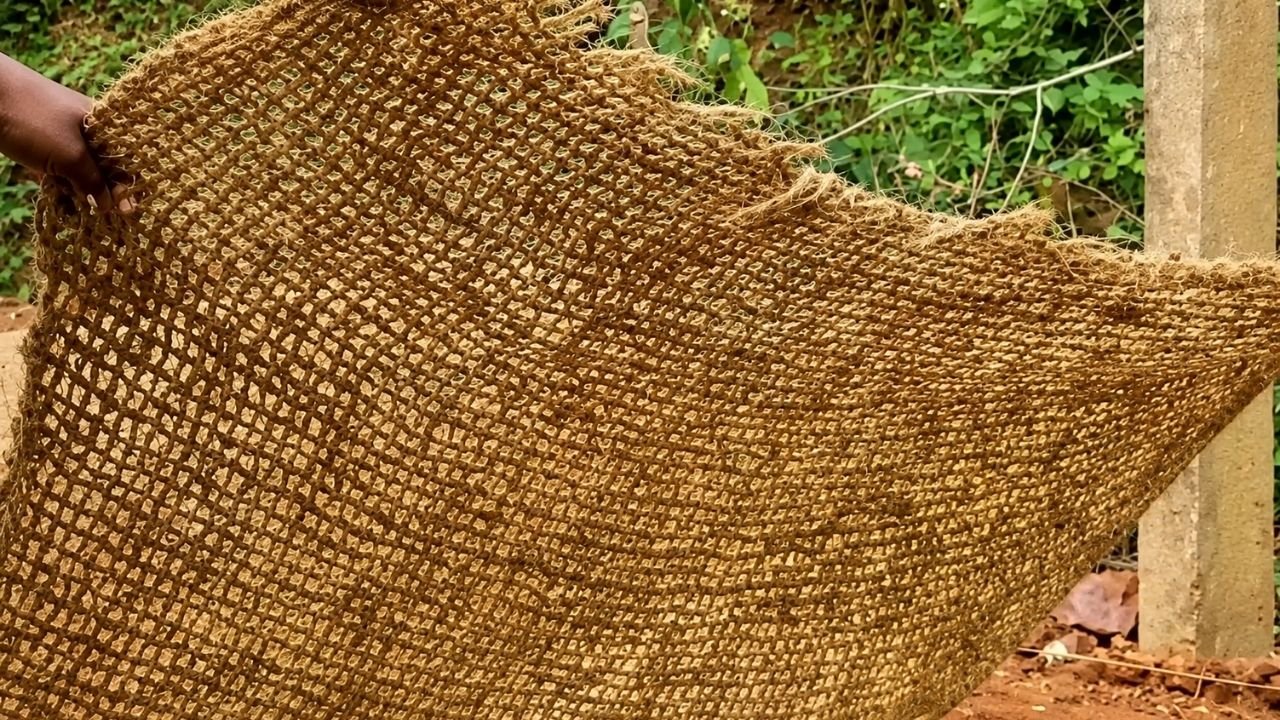
A common mistake is to imagine that all biodegradable material is weak. In the case of coconut fiber, the presence of natural lignin helps increase strength and durability in humid environments.
The mat does not replace the entire road structure but reinforces a specific stage of the project. Its strength lies in acting at the right point: between the unstable soil and the layers that need to support the traffic.
Petroleum derivatives lose exclusivity
The adoption of natural fibers in geotextiles shows a broader shift in civil construction. For decades, synthetic polymers dominated reinforcement, drainage, and soil separation solutions.
Now, biological materials are gaining ground in specific applications. The coconut shell shows that engineering can reduce dependence on petroleum without sacrificing technical performance in certain conditions.
Not every road can use the same solution
Despite the potential, the coconut fiber mat should not be seen as a universal answer for any construction. Each road requires analysis of soil, climate, traffic, drainage, and expected lifespan.
This caution is important to avoid exaggerations. The innovation is not in replacing everything with natural fiber, but in choosing the right material for sections where its properties truly help.
Technology brings field and infrastructure closer


The Indian case shows that the infrastructure of the future can arise from resources already present in the field. A discarded shell, when processed correctly, can become a technical component of a road.
This logic opens up space for other agricultural crops with resistant fibers. Instead of seeing waste as a problem, engineering begins to treat it as raw material for more sustainable constructions.
What supports the road doesn’t always appear
The story of the coconut shell used under asphalt in India shows that the most important part of a road often remains invisible. The biodegradable mat does not attract attention like a bridge, viaduct, or new road, but it acts where the structure really begins: in the soil.
By transforming agricultural waste into reinforcement for rural roads, India shows a path where construction, agriculture, and sustainability can intersect. Do you believe that natural fibers can replace some petroleum derivatives in Brazilian projects, or is there still a lack of confidence in this type of material? Share your opinion.