






 Portuguese
  Spanish


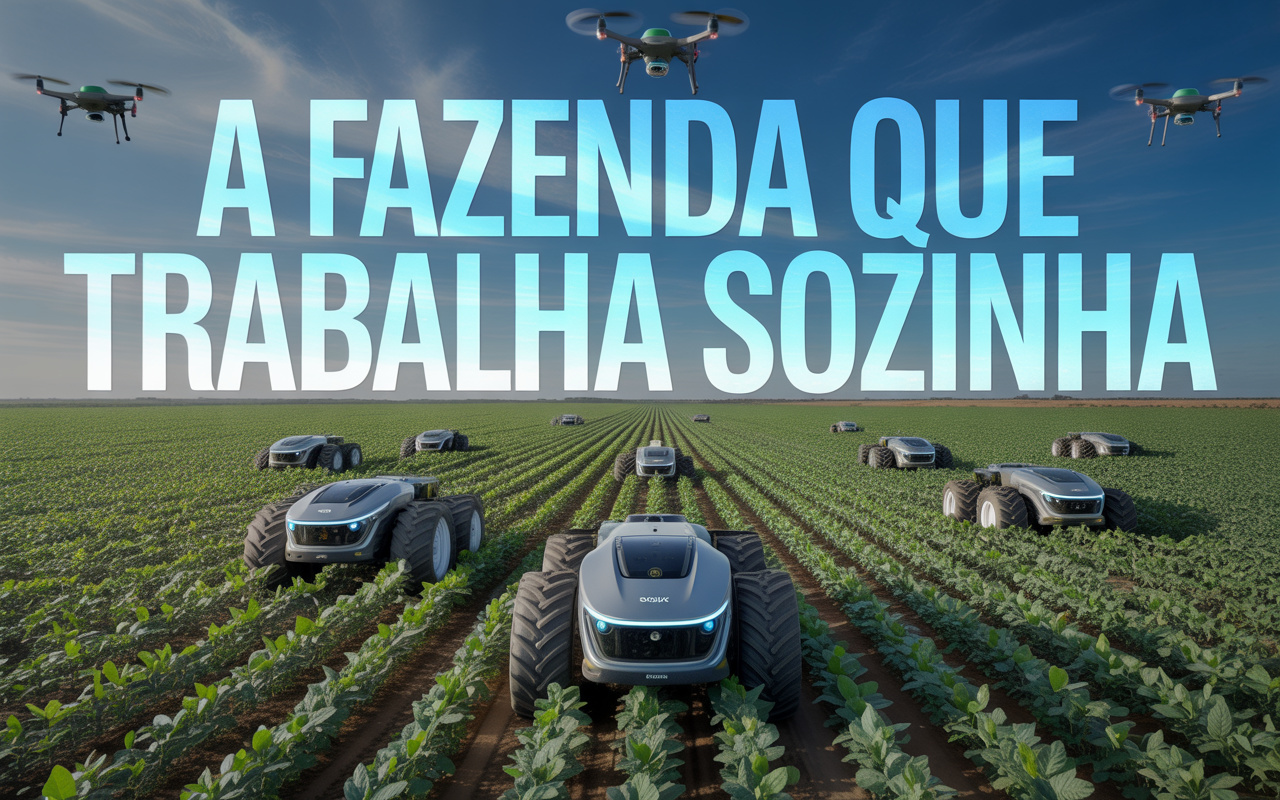


First 100% Robotic Farm in Brazil Announced in Goiás: 10 Solix Robots to Operate on 13,000 Hectares, Increasing Productivity and Reducing Costs in Agriculture.
In the second half of 2025, Brazil will witness the birth of something that seemed reserved for the distant future: the first fully autonomous robotic farm on national soil. Solinftec, a Brazilian giant in artificial intelligence and robotics for agriculture, announced it will start operations of a unit in Goiás with 13,000 hectares completely automated, featuring 10 Solix robots controlling crops from the start, without human intervention.
The initiative marks not only a technological milestone but also a structural transformation in the way food is produced in Brazil, promising efficiency gains, cost savings on inputs, and a new scale dimension for Brazilian agriculture.
What is This Robotic Farm and How Will It Operate
The unit is located in Goiás and will begin fully autonomous operations as early as September 2025. The Solix robots will handle everything from planting, spraying, and management to desiccation and pre-planting operations, generating data, monitoring, and productivity without relying on traditional labor.
-
California’s Almond Industry Consumes Over 4 Trillion Liters of Water Annually Amid Drought, Relies on Trucked-In Bees for Pollination

-
India’s Sugar Export Cuts and Ethanol Shift Amid El Niño Threat Could Impact Global Prices and Stocks

-
Quarantine Pest Threatening Palm Trees Puts Brazilian Authorities on Alert, Prompts Monitoring at University of Taubaté and Potential Control Measures Across São Paulo
-
Global Alert: Report Finds 159 Pesticides in Coffee Beans Sold in Europe, Posing Serious Risks to Millions of Farm Workers



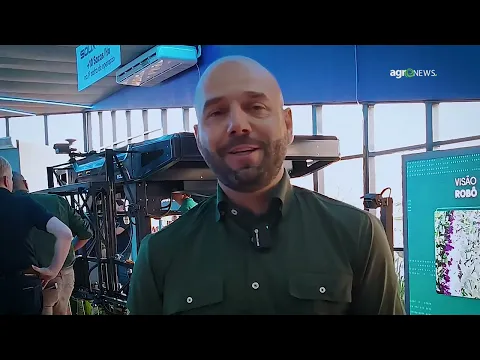

In an interview, Emerson Crepaldi, COO for South America at Solinftec, stated that there are currently 40 Solix robots operating in grains and 10 designated for sugarcane, and that by the end of the year, the forecast is to expand by another 40 robots in Brazil and 40 more in the United States.
The partner company for this project is the Baumgart Group, which is investing in this technological revolution to scale robot gains.
Demonstrated Gains and Expected Results
Previous tests with Solix in grain crops have shown promising results:
- Reduction of over 90% in the use of herbicides in post-emergence, desiccation, and pre-planting operations.
- In sugarcane crops, the robot managed to reduce the herbicide volume by 45% in post-emergence applications.
- In grains, the company reports that using this system resulted in an average of 10 bags per hectare more compared to conventional spraying, along with a decrease of about 85% in the use of chemical products.
These numbers already demonstrate that the technology is not only futuristic but has a real impact on costs, productivity, and sustainability.

Financing, Credit, and Scalability
To enable this farm, traditional and agricultural credit lines will be used: Safra Plan, BNDES Finame, or financing from banks such as Banco do Brasil and private partners are among the alternatives mentioned.
This financial arrangement is essential to enable the scaling of automation in Brazilian agribusiness, especially to allow small and medium producers to adopt the futuristic model.
Challenges, Risks, and Implications
Even with the promises, many challenges need to be overcome:
- Maintenance and repair of robots in rural areas still depend on complex logistics.
- The transition to full robotics requires high initial investments, which may make the model unviable for smaller producers.
- There is a risk of unemployment in the traditional agricultural sector, with dislocation of the manual workforce.
- Regulations, safety, network infrastructure, sensors, and local energy are requirements that need to be aligned to not compromise autonomous operation.
The Impact on the Future of Brazilian Agribusiness
If this unit proves sustainable and scalable, Brazil could become a global haven for automated food production, with a competitive advantage in costs, precision, and scale.
Moreover, models like this help to:
- Reduce the use of chemical inputs, contributing to regenerative and sustainable agriculture;
- Mitigate climate and labor risks by relying on robots in remote areas;
- Attract capital and international interest in Brazilian technology in the field.
A Historic Milestone in Brazilian Agriculture
With the inauguration of the first 100% robotic farm in Latin America, Brazil takes a prominent role in the global race for agricultural automation.
The combination of artificial intelligence, high-precision sensors, and field robotics makes the Goiás farm a living laboratory of the future of agribusiness.
The era of manual labor may not have ended, but what is being born now is a new paradigm — where the field moves through algorithms, cameras, and robots that operate day and night with efficiency impossible for human effort.


