Portuguese
  Spanish


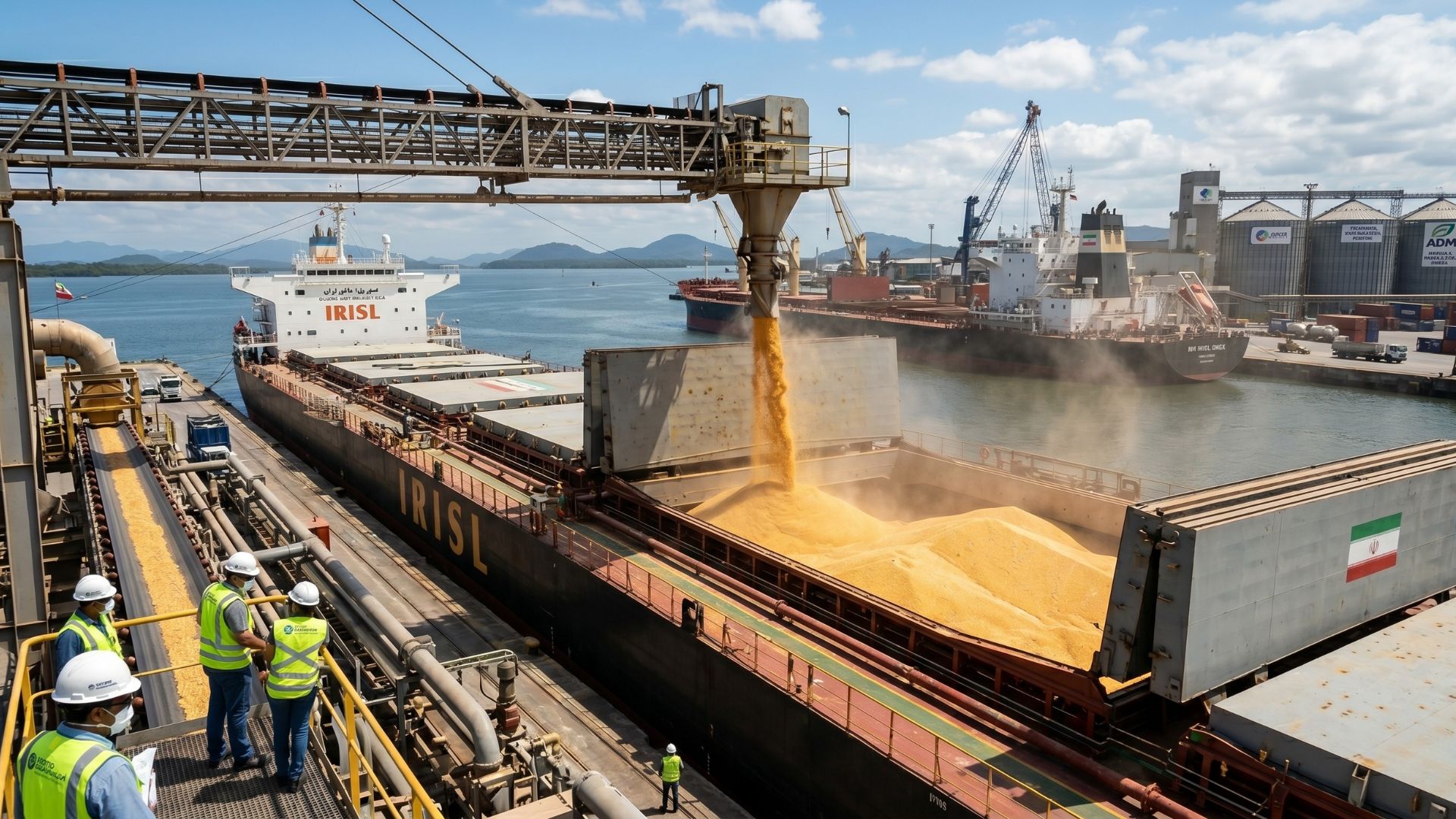

Iran bought 9.1 million tons of Brazilian corn in 2025, but war, fertilizers, and the Strait of Hormuz create risks for national agriculture.
Brazilian agribusiness has found in Iran one of its most important markets for corn in recent years. In 2025, the Middle Eastern country became the largest individual buyer of Brazilian cereal, purchasing about 9.1 million tons, a volume higher than that imported by many of Brazil’s traditional trading partners. The data was reported by Reuters on March 5.
The problem is that this giant buyer is located in one of the most sensitive regions on the planet. Military tensions, economic sanctions, logistical risks, and the strategic importance of the Strait of Hormuz place Brazilian agricultural trade in a scenario of uncertainty that goes far beyond the simple relationship between exporter and importer.
Iran bought more Brazilian corn than several traditional markets and became a key player for exports
The numbers show the extent of the dependency created in recent years. International trade data indicates that Iran imported approximately 9.1 million tons of Brazilian corn in 2025, becoming the main individual destination for the national cereal. The volume represented about 20% to 22% of all Brazilian corn exports during the period.
-
India’s Sugar Export Cuts and Ethanol Shift Amid El Niño Threat Could Impact Global Prices and Stocks

-
Quarantine Pest Threatening Palm Trees Puts Brazilian Authorities on Alert, Prompts Monitoring at University of Taubaté and Potential Control Measures Across São Paulo
-
Global Alert: Report Finds 159 Pesticides in Coffee Beans Sold in Europe, Posing Serious Risks to Millions of Farm Workers
-
Low-Demand Brazilian Beef Offal Gains Popularity Abroad: Indonesia Purchases $19.5 Million, Boosting Revenue and Reducing Waste



In some months, Iran’s importance was even more evident. The Middle East bought 12.9 million tons of Brazilian corn in 2025, and Iran alone accounted for more than 9 million tons of this total.
Besides corn, the country also buys Brazilian soybeans and derivatives, establishing itself as one of the main partners of national agriculture outside Asia. In 2025, corn and soybeans represented almost 90% of Brazilian exports destined for the Iranian market.
The Strait of Hormuz has become one of the biggest points of concern for Brazilian agribusiness
A large part of the sector’s apprehension is linked to the Strait of Hormuz, a strategic maritime corridor located between Iran and Oman.
The passage is one of the most important routes in world trade and directly influences not only agricultural shipments but also the movement of energy and fertilizers.
Conflicts in the region have raised maritime insurance costs, increased logistical uncertainties, and created risks for ships operating in the Persian Gulf.
Industry experts state that any prolonged disruption in this route could cause delays, cargo redirection, and increased export costs for Brazilian companies.
The same conflict that threatens corn could also affect the fertilizers used in the next harvest
The risk is not just in the sale of corn. Brazil heavily depends on imported fertilizers. According to data cited by Reuters, the country imported 100% of the urea used in 2025, and about 41% of this volume passed through the Strait of Hormuz before reaching Brazilian ports.

Urea is one of the most important nitrogen fertilizers for crops such as corn, wheat, and other large-scale plantations. With escalating tensions in the region, prices have skyrocketed, and suppliers have temporarily suspended negotiations due to market uncertainty.
The Brazilian Ministry of Agriculture has expressed concern about possible cost increases for farmers if logistical problems persist.
War, sanctions, and a weakened economy could reduce Iran’s purchasing power
Another factor observed by exporters is Iran’s future purchasing capacity. Grain sector analysts assess that the economic impacts caused by recent conflicts could reduce the country’s financial strength to maintain the same import pace recorded in 2025.
The market is already monitoring the possibility of lower Iranian demand in upcoming commercial cycles.
If this happens, Brazil may face more intense competition in other international markets, especially in light of the expected increase in corn exports from the United States, Argentina, and Ukraine.
Alternative ports and new routes attempt to avoid a disruption in exports
Despite the risks, trade has not stopped. Companies and logistics operators have been adapting routes to maintain the region’s supply.
Authorities and industry representatives state that Iran has increased the use of ports located outside the more sensitive area of the Strait of Hormuz, in addition to strengthening land connections with neighboring countries.
Data from 2026 show that Iranian purchases of Brazilian agricultural products remained significant, with shipments of corn, soybeans, and meal maintaining an important share in the trade agenda between the two countries.
The largest buyer of Brazilian corn has also become one of the biggest risk factors for the national agriculture
Few markets have grown as rapidly for Brazilian corn as Iran. The country became a strategic client precisely when Brazil was expanding its production and gaining new spaces in global trade.
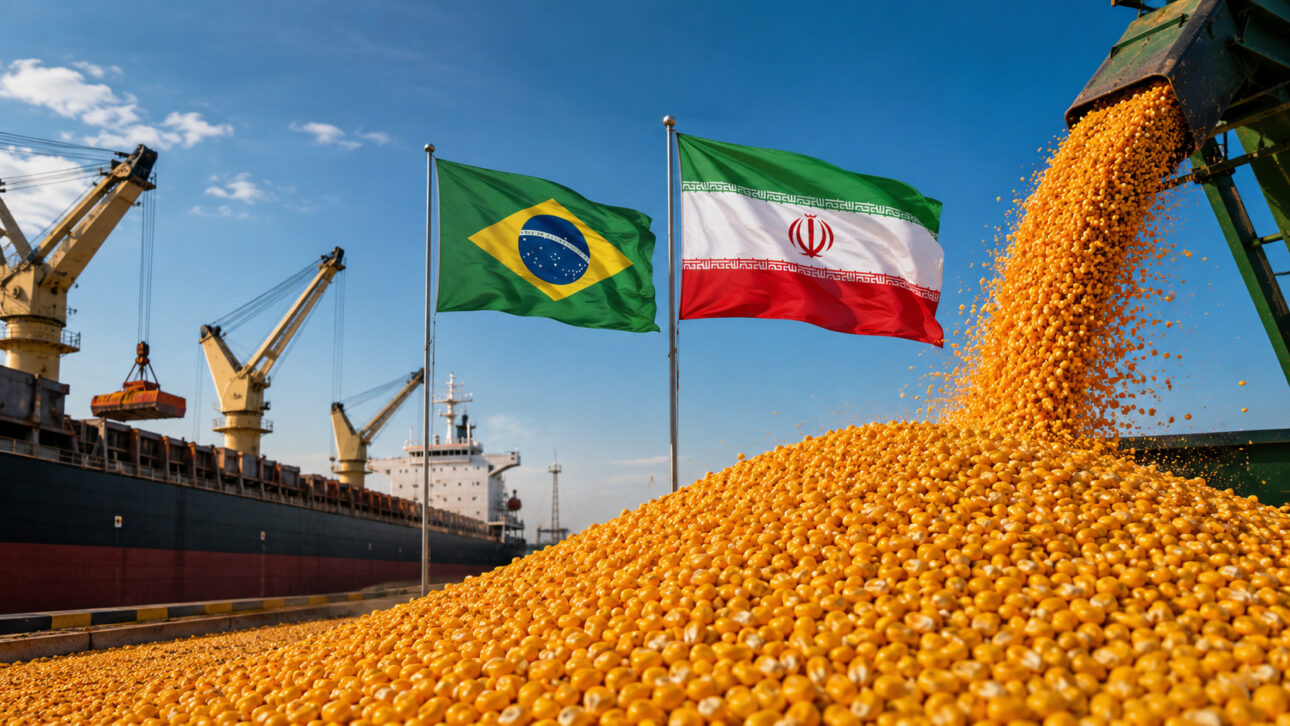
But this same dependency now exposes a significant vulnerability. The largest buyer of Brazilian cereal is located in a region that simultaneously influences agricultural exports, fertilizers, maritime freight, and production costs.
For national agriculture, the next harvest may depend not only on the weather and crop productivity but also on the stability of one of the most sensitive areas on the planet.