





 Portuguese
  English
  Spanish
  3 min of reading
  0 comments


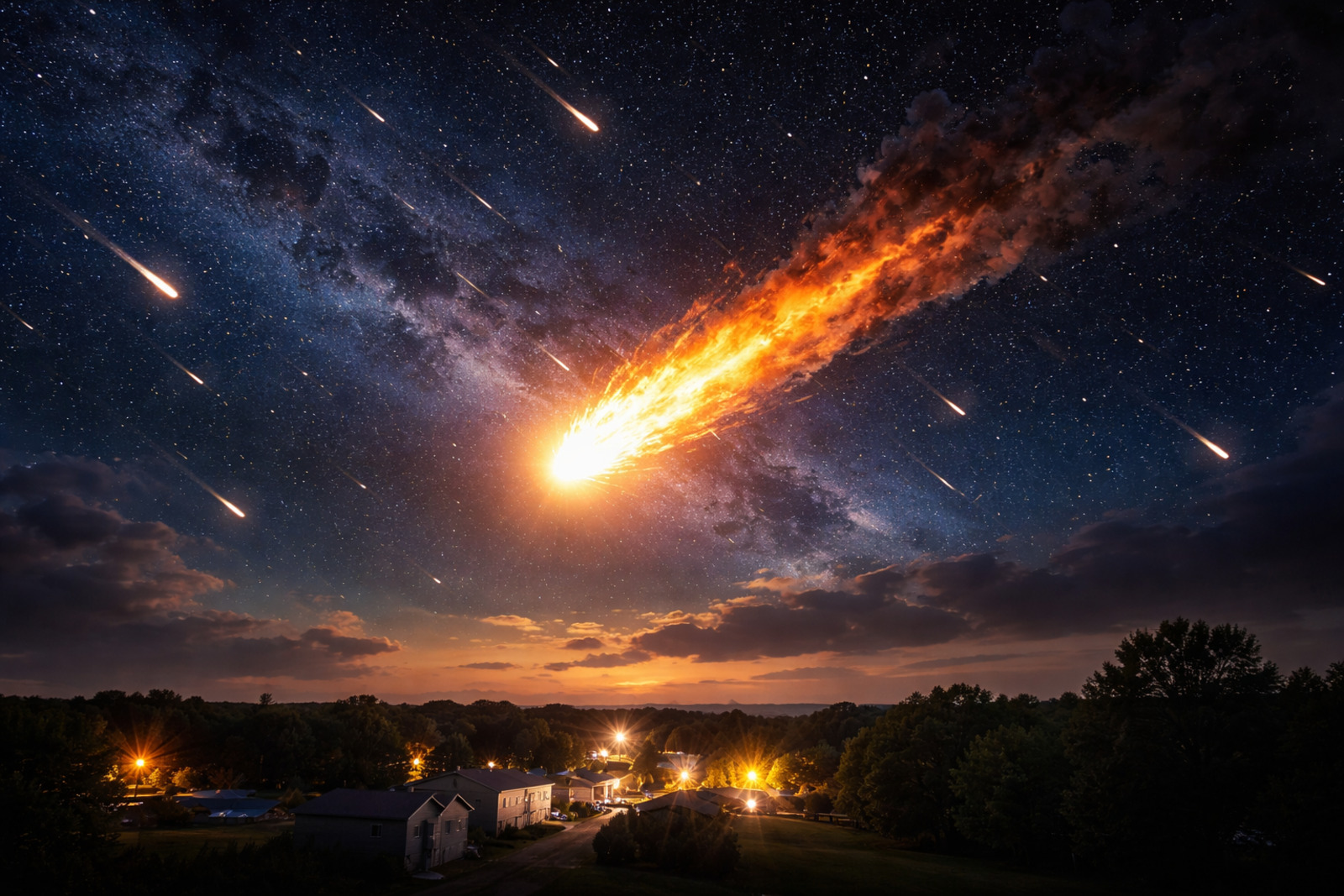
United States experience unprecedented surge of fireballs in March 2026, with sightings in multiple states, sonic booms, and meteorites recovered in a few days
The United States recorded, in March 2026, an unprecedented spike in fireball reports, following sightings from Ohio to Texas and a meteor that exploded over Texas, with a fragment hitting a house, raising questions about meteoric activity.
Surge in reports
The increase in reports led scientists to discuss whether Earth is going through an abnormal meteoric period or if other factors explain the wave of sightings.
Between January and March 2026, reports of fireballs in the United States rose from 1,587 to over 2,369, according to data cited from the American Meteor Society and published by Space.com.
-
Goodbye squeegee and cloth on the window: robot cleans windows by itself for up to 110 minutes, covers 55 m² per charge, and uses 12 layers of protection to prevent falling during cleaning.

-
NASA reveals plan for a permanent base on the Moon with hundreds of square kilometers, rovers, drones, and its own energy, as the US tries to accelerate a new space race and pave the way for a human mission to Mars in the 2030s.
-
The most famous space telescope of humanity will cross the sky of Brazil this Wednesday (27) in just four minutes, the Hubble passes at an altitude of 537 kilometers and can be seen with the naked eye, but the observation window is tiny.

-
Nvidia wants to spend up to $150 billion annually in Taiwan, employ 4,000 people, and transform the new headquarters into a key piece of AI expansion.




Nick Moskovitz stated that the central question is whether there has been a real increase in meteoric activity or just more awareness and notifications following major events.
He said that the scenario combines slightly elevated meteoric activity, still within statistical expectations, and greater public and media attention.

Identified factors
Experts indicate that the increase in reports may result from a combination of factors, rather than a single cause.
Bill Cooke, from NASA’s Meteoroid Environment Office, stated that spring is the time for bright meteors.
He said that, for reasons not yet fully understood, the rate of very bright meteors increases by 10% to 30% in the weeks leading up to the spring equinox.
The combination of Earth’s orbit and the presence of more large debris during this period can enhance visibility.
Recent fireball events have also been larger and more energetic than usual.
Recoveries and impact
Mike Hankey, lead researcher at AMS, stated that about 10 meteorite recoveries can be seen worldwide each year.
According to him, there were three recoveries in one week or ten days, a number considered unusual in recent tracking.
This data suggests that the meteorites linked to recent episodes may be larger and more substantial than typical space rocks.

Technology expands records
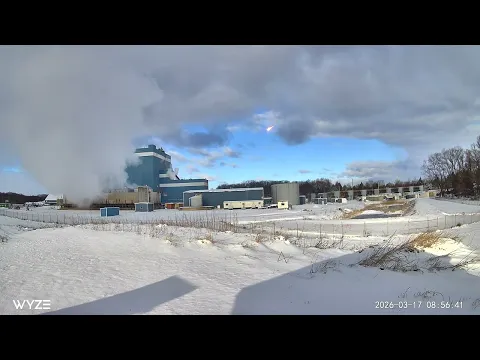
The expansion of vehicle cameras, Ring doorbells, and security cameras has played an important role in the growth of fireball reports.
Moskovitz highlighted that it is not just about random captures, but also the greater accessibility of these devices in the last 10 years, making them viable for scientific uses.
Automated systems, such as the Global Meteor Network, have also increased the volume of data available to researchers.
However, Moskovitz noted that high-luminosity events often saturate detectors and may go unnoticed, causing reports sent by citizens to AMS to require manual verification by professionals.
Records have rapidly increased in the country.
Sonic booms and duration
Nearly 80% of the larger fireballs at the beginning of 2026 produced audible sonic booms, a percentage described by AMS as well above average.
Hankey stated that meteors with trajectories of hundreds of kilometers are more likely to be seen by more people.
This helps explain part of the increase in reports, as some of these phenomena can remain visible for up to 14 seconds or more.
Smaller and shorter meteors, on the other hand, may go unnoticed, even when they are also relevant for studies.
No alarm
Despite the increase in records and the occasional impacts of meteorites, experts say there is no reason for panic.
Moskovitz stated that the increase may reflect natural variability, a temporary clustering of debris, or a still poorly understood characteristic of the near-Earth environment.
He added that, whatever the explanation, these objects remain small on a cosmic scale and pose little risk beyond localized damage.
With information from Daily Galaxy.






-

1 person reacted to this.