





 Portuguese
  English
  Spanish
  3 min of reading
  0 comments


Below this point, however, the environment changes dramatically. The oxygen level drops sharply, creating a hostile environment for most marine life.
Despite the lack of oxygen, the deeper layers of the Dragon Hole are not devoid of life. Microorganisms adapted to extreme conditions thrive in these depths, offering scientists a unique opportunity to study life in one of the most challenging environments on Earth.
The Dragon Hole’s unique combination of depth, isolation, and extreme conditions makes it a fascinating subject for scientific research, as it challenges our understanding of marine ecosystems and the adaptability of life.
-
More than 3,200 nanosatellites have already been launched into space, almost 3,000 of which are CubeSats, and the new space race has become smaller, cheaper, and much more crowded around the Earth.

-
Agro 5.0 invades the interior of SP with solar-powered robots, an app that monitors 11,000 cattle, and a curious promise to cut waste by up to 90%.
-
100% pure hydrogen engine enters Spain’s power grid for the first time in the world and demonstrates how excess solar and wind energy can be converted into clean electricity during high demand periods.
-
While lunar missions are deploying increasingly larger robots, Japan has bet on a small SORA-Q the size of a palm, which transformed on the Moon and photographed the SLIM landing.


This initial layer may give the impression of a common marine environment, visually clear and lively. The change occurs on the descent, when dissolved oxygen begins to drop rapidly.
Between 80 and 100 meters, the Dragon Hole enters a transition zone. From about 100 meters, the interior is described as anoxic, with an almost total loss of oxygen.
This condition makes the deep layers hostile to fish and other common marine animals. At the bottom, life depends mainly on microorganisms capable of surviving without free oxygen.
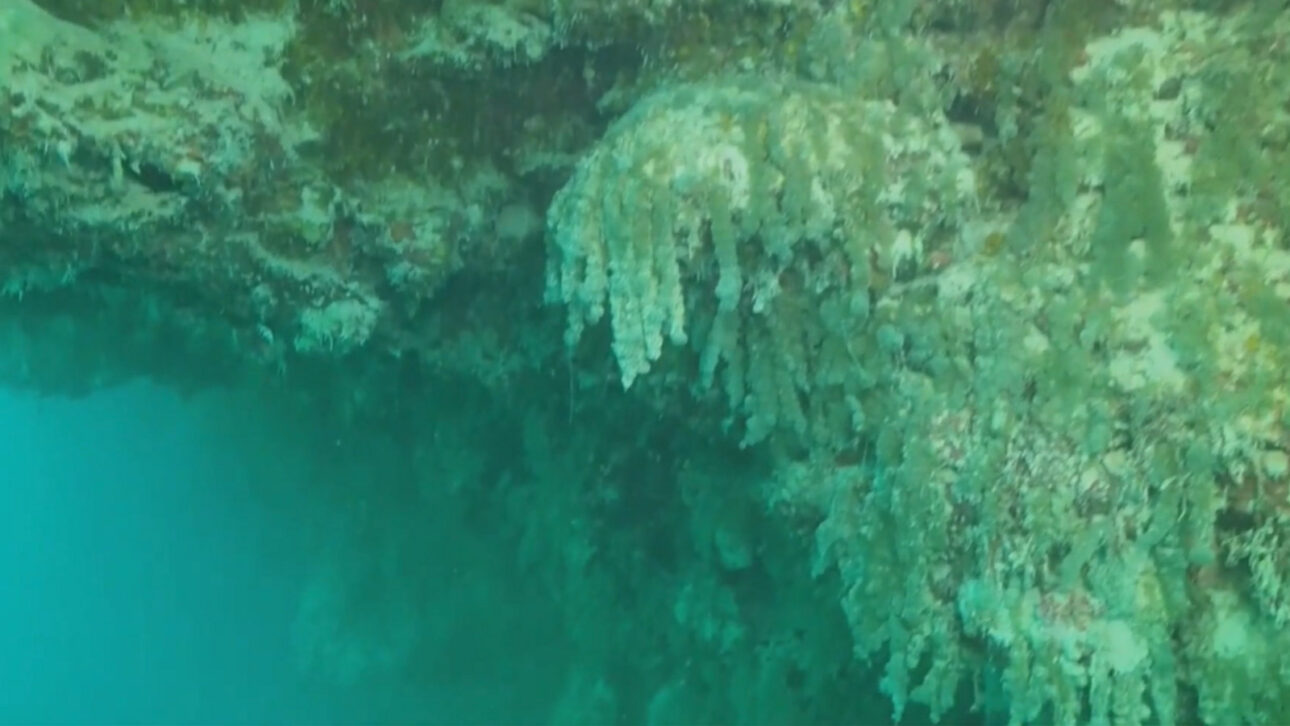
Layers explain contrast between life and extreme environment
The stratification of the water helps to understand why the same blue hole contains such different environments. The formation can be divided into three main zones, as light, oxygen, and chemical conditions change.
The oxygenated zone goes from 0 to about 80 meters. It is the most illuminated part, with the presence of common marine life and conditions closer to shallow waters.
The transition zone is between 80 and 100 meters. In this section, oxygen drops sharply, preparing the passage to the more isolated layers.
The deep anoxic zone extends from approximately 100 meters to 301 meters. There, the oxygen-free water and extreme chemical compounds begin to dominate the environment.
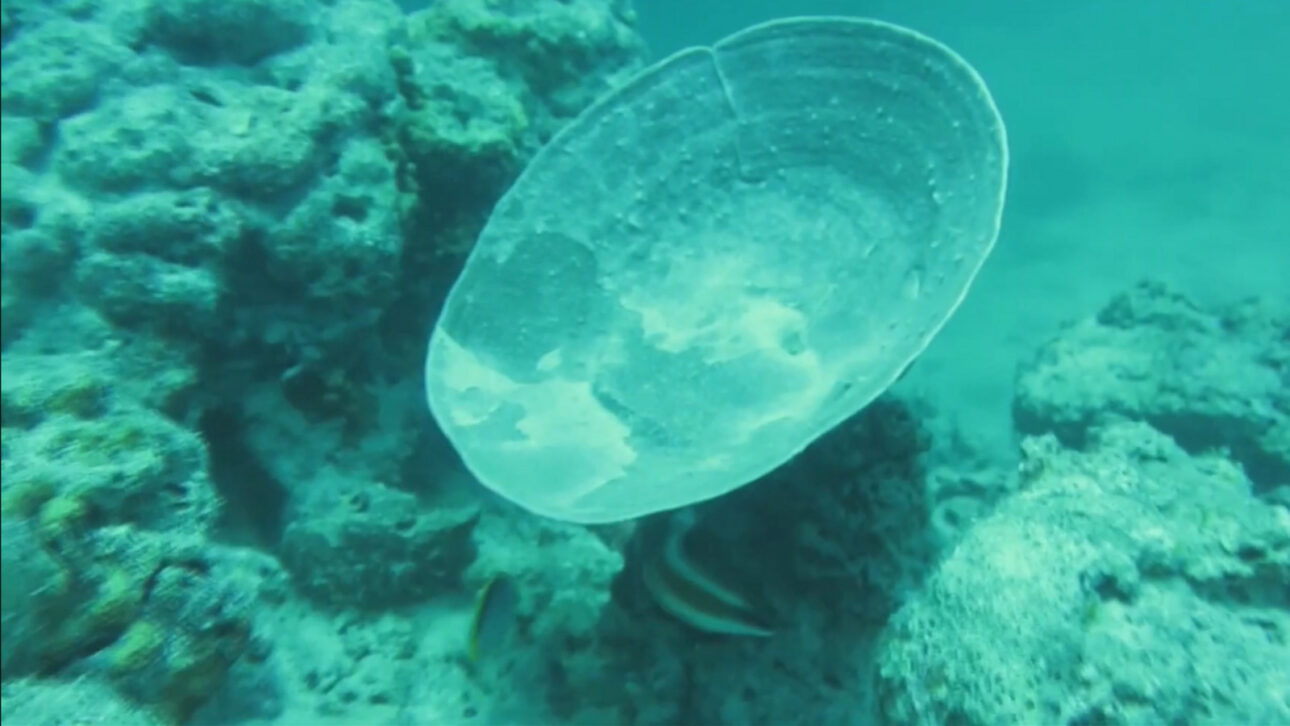
Microorganisms dominate where fish do not survive
In the deep layers of the Dragon Hole, fish and more complex organisms cannot survive. Even so, the environment is not empty. Microscopic life finds alternative ways to exist.
Among the organisms associated with this type of environment are anaerobic bacteria and archaea. These microorganisms are adapted to extreme conditions and can use chemical reactions that do not depend on free oxygen.
Also mentioned are sulfur and methane-based metabolisms, common in severe environments. These isolated microbial communities are of interest to science as they help study adaptation, evolution, and the limits of life.
The absence of oxygen also reduces the decomposition of materials that sink into the formation.
With less action from aerobic bacteria, sediments and organic structures can remain preserved for longer.
Therefore, the Dragon Hole is also important for studies on paleoclimate, ancient sea level variations, and environmental changes recorded on the seabed. Its interior functions as a natural archive of oceanic history.
The relevance of the Dragon Hole is not just in its depth. What makes this formation important is the combination of isolation, extreme chemistry, and resilient microscopic life, in an environment that shows what happens when oxygen disappears from the deep layers.
This article was prepared based on information from the page about the Dragon Hole and the Guinness World Records, with data, numbers, and statements preserved as per the consulted material.


Be the first to react!