Portuguese
  Spanish


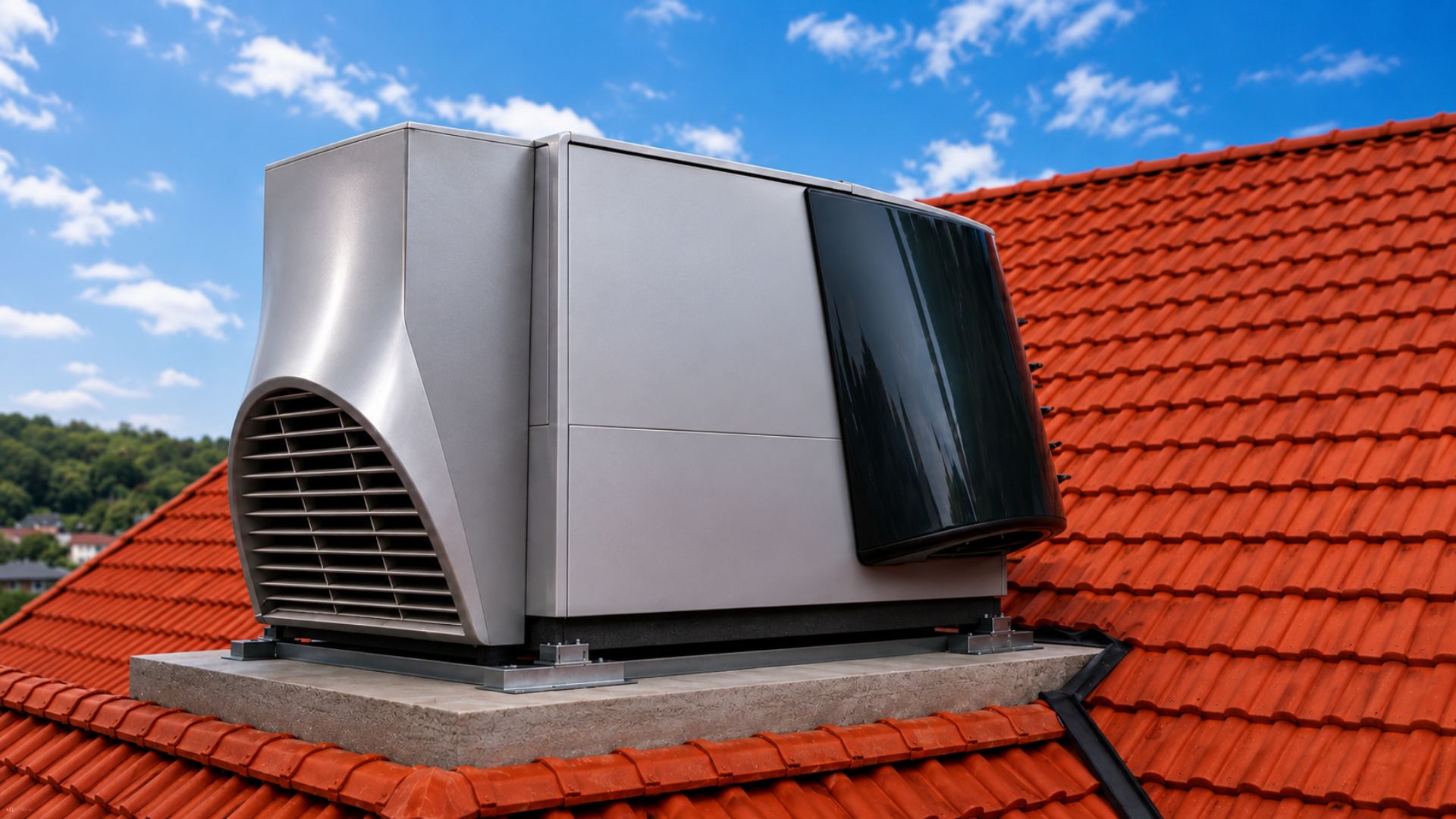

Without steel towers, without large offshore plants, and with quick installation, these systems attempt to reduce the cost of wind, sun, and waves. Most are still in the prototype or demonstration phase, and the promise of low cost needs to be confirmed in practice.
A set of new renewable energy technologies tries to solve the same problem, namely, reducing the cost of generating electricity from wind, sun, and sea. The proposals range from kites replacing wind turbines to solar parks that fit inside a container and buoys that convert wave motion into energy. The common point is to forgo the giant and expensive structures that mark traditional plants, in search of faster and cheaper installation.
Before detailing each of these technologies, a methodological warning is needed, as most are still at the prototype or demonstration stage. Many of these systems operate in pilot projects and promise low costs in the future, but commercial viability on a large scale still depends on tests and time. Therefore, the power and efficiency numbers mentioned should be read as goals and initial results reported by the companies themselves, and not as consolidated market performance.
Kites instead of steel towers
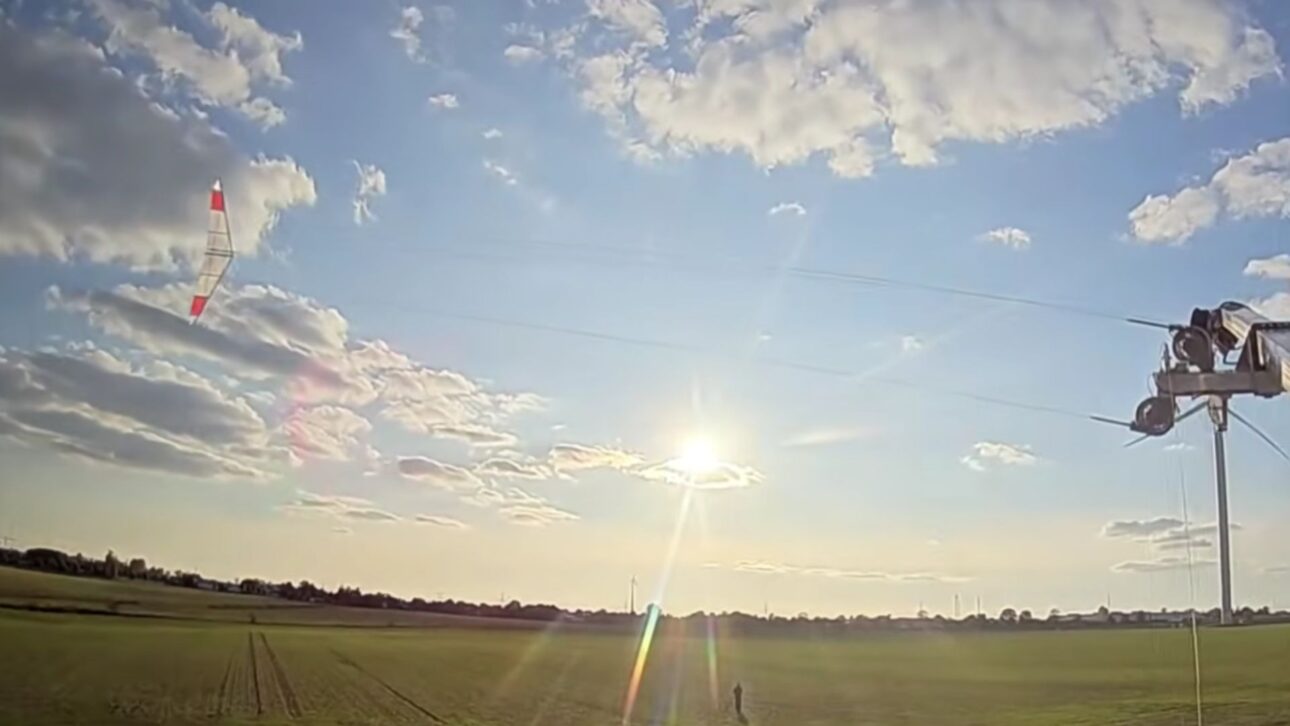
The German company EnerKíte is developing a system where a high-performance kite, made of carbon fiber, is launched from a mast installed on a truck or container.
-
Climate Scientist Who “Proved” Humanity Is Warming the Earth

-
NASA Targets Saturn’s Icy Moon Titan as a Waystation for Interplanetary Travel, Utilizing Its Resources for Fuel and Astronaut Support

-
Researchers Revolutionize Nanotechnology with Rocket-Inspired Modular Nanorobot for Efficient Microscopic Missions
-
Farmer in Ireland Discovers Intact Bronze Age Tomb While Moving Stone on His Land





The kite rises to altitudes of about 200 to 300 meters, where the wind is stronger and more constant than near the ground, a range that the source transcription translates to something between 660 and 980 feet.
Instead of hovering stationary, the kite traces figure-eight trajectories in the air, which increases the traction force on the cables.
This movement pulls cables connected to drums at a ground station, and the rotation drives a generator that produces electricity.
When the cable reaches its limit, the kite returns and the cycle begins again.
According to EnerKíte, the concept saves about 90 percent of the steel and concrete of a common turbine and can operate in a much larger area, as it does not require a tower.
A solar park inside a container
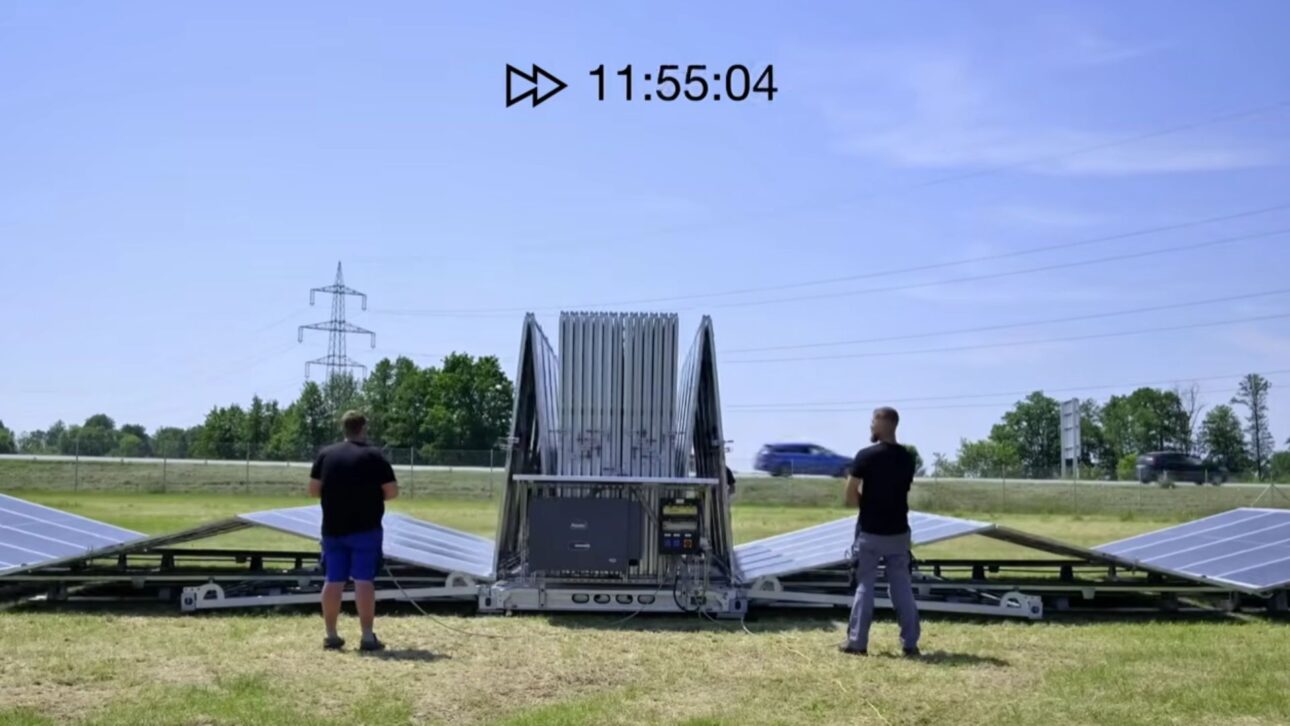
The system fits in a 20-foot container, about 2.4 meters wide, and unfolds at the destination via rails, extending the solar panels one after the other along a prepared strip.
Assembled, the set transforms into a compact solar park, in a process that, according to the developers, takes a few hours from arrival to full operation.
The main advantage lies in mobility and speed of installation, useful for remote sites, emergencies, and temporary operations.
According to the disclosed specifications, a fully open unit houses hundreds of photovoltaic modules and can generate around 140 kilowatts.
It is a modest power compared to a fixed plant, but designed for situations where setting up a permanent structure would be expensive or unfeasible, and where deployment speed is more valuable than size.
Waves that turn into electricity on the coast
In the field of wave energy, one of the most talked-about approaches is by the Israeli company Eco Wave Power, which brings the system to the coast.
Instead of installing generators kilometers offshore, where maintenance and storms increase costs, the company attaches floaters to existing maritime structures, such as breakwaters and piers.
The buoys rise and fall with the waves, compressing hydraulic pistons that push a biodegradable fluid to accumulators installed onshore.
The accumulated pressure drives a hydraulic motor that moves a generator, and the electricity reaches the grid through an inverter.
Eco Wave Power inaugurated in September 2025 the first onshore wave energy project in the United States, at the Port of Los Angeles, with an installed capacity of 100 kilowatts and seven floaters attached to an existing jetty.
The company itself describes the project as a demonstration to validate the technology in real conditions before moving on to larger plants.
The artificial blowhole that breathes with the sea


Another solution for the waves mimics a natural phenomenon, the blowhole, that coastal opening through which the sea expels air and water.
Australian company Wave Swell Energy created the UniWave, a concrete structure with a hollow chamber built along the coast.
When the waves come in and out, the water rises and falls inside the chamber and pushes the trapped air through a turbine, which spins and generates electricity, using the principle known as oscillating water column.
The equipment was tested for twelve months on King Island, Tasmania, providing up to 200 kilowatts to the local grid.
The company reports high efficiency and performance above expectations, although caution is needed when comparing the efficiency of a wave converter with that of solar panels, as the measurements have different bases.
It is also worth noting that this specific unit was a demonstration and was removed from the site in 2023, after fulfilling its role as a proof of concept.
Storing energy under the sea
As wind and sun do not always coincide with peak consumption times, part of the new technologies focuses on energy storage.
One idea is to use bags or tanks submerged at great depths, where the natural pressure of the water helps to keep the air compressed.
When there is excess wind energy, a compressor fills these bags with pressurized air, and the water at the seabed itself does part of the compression work without extra cost.
When the demand for electricity rises, the stored air is released, heated, and driven through a turbine connected to a generator.
The concept, known as compressed air energy storage, is presented by its advocates as a cheaper alternative to batteries for storing energy for long periods.
Even so, it is an approach in development, whose costs and durability in the marine environment are still under evaluation, as is the case with most of these technologies.
What to separate between promise and reality
Looking at this set of inventions requires a balance between enthusiasm and technical prudence.
Wave energy, in particular, has been studied for decades and has not yet established itself commercially, precisely because of the costs, corrosion, and the difficulty of surviving storms.
Many of the numbers released come from the companies themselves and refer to prototypes, which does not guarantee they will be repeated when the system is produced on an industrial scale.
Even so, there is real value in these technologies, which is to diversify sources and tackle the cost of clean energy from new angles.
Mobile solutions, installed on existing structures or that do not require large towers, tend to reduce installation and maintenance expenses.
The path to maturity is usually long, but each successful prototype helps show whether the next generation of renewable energy can, in fact, become cheaper and more accessible.
Kites, solar containers, and wave buoys show that innovation in renewable energy goes far beyond rooftop panels and traditional wind farms.
These are technologies that attempt to lower the cost of clean generation by rethinking where and how to capture wind, sun, and waves, but that still need to prove their value outside of pilot projects.
The enthusiasm is justified, as long as it is accompanied by the awareness that a promising prototype and a consolidated product are different things.
And you, which of these technologies would you bet on to lower renewable energy costs in the coming years? Comment on which idea you found most promising, whether you believe wave energy will finally take off, and how Brazil, with its vast coastline and strong sun, could benefit from such solutions. The conversation is open to all who are interested in innovation and the future of energy.