






 Portuguese
  Spanish


Started in June 2026 in Yichang, Hubei province, the project adds a five-stage lock and double line next to the current one and also modernizes the Gezhouba dam. China foresees more than nine years of construction in the first major project of its new five-year plan.
On June 8, 2026, China began construction of a new waterway on the Yangtze River, which includes what is expected to become the largest river lock in the world. The launch ceremony took place in Yichang, in the central province of Hubei, where the Three Gorges Dam, the largest hydroelectric plant on the planet, is located. The goal is to meet the growing demand for cargo transportation on the Yangtze, the third longest river in the world.
The megaproject has an estimated investment of 77.2 billion yuan, about 11.3 billion dollars or approximately 58 billion reais. According to the Chinese state agency Xinhua, the project has two fronts, a new five-stage lock and double line north of the current one, at the Three Gorges, designed for ships of 10,000 tons, and the modernization of the Gezhouba dam, downstream. It is the first major national project launched in the 15th Chinese Five-Year Plan, valid from 2026 to 2030.
Why China decided to build a new lock
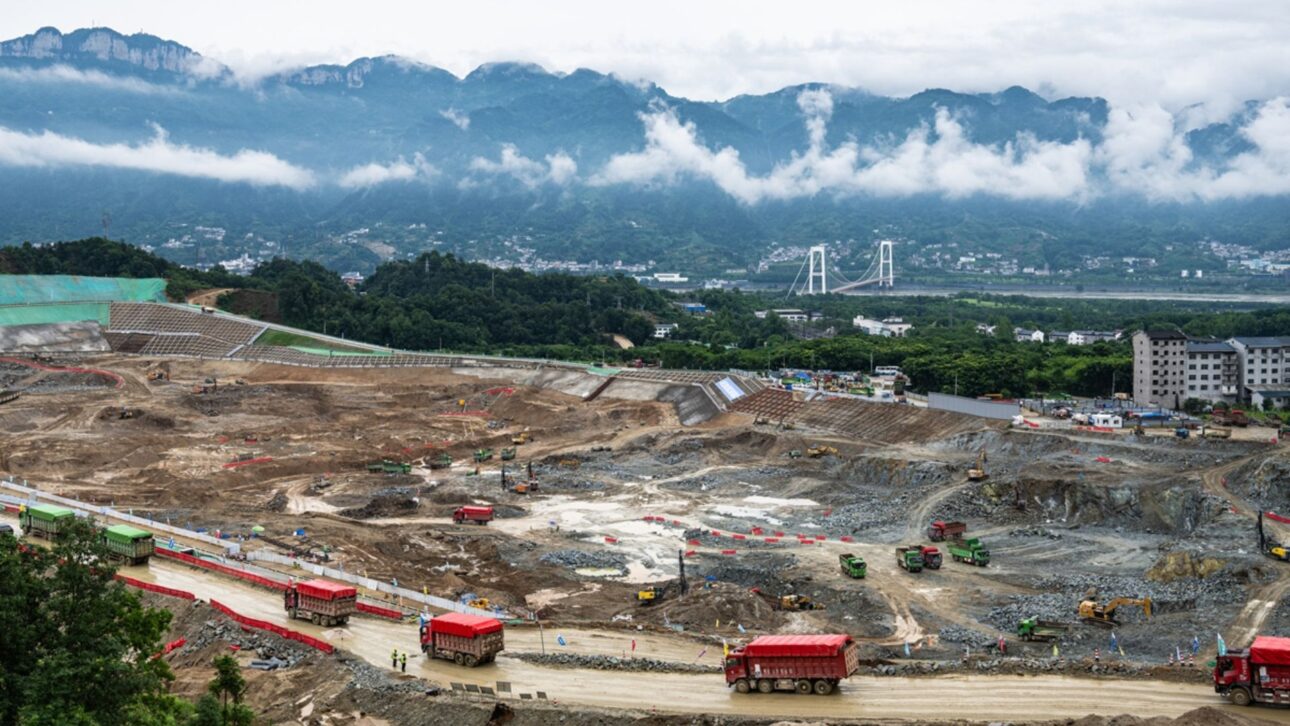
Since the Three Gorges lock came into operation in 2003, cargo traffic has skyrocketed far beyond expectations.
-
Tired of Seeing Homelessness, New Westminster in Canada to Open Region’s First Tiny Home Village: 30 Container Homes with Central Kitchen, Meals, and Facilities

-
Brazil’s Santa Catarina Port Drives 770 Tons of Steel Piles into the Sea, Reaches Midpoint of $100 Million Project to Dock Two Ships Simultaneously by October
-
Expanded Polystyrene Gains Ground as a Lightweight Alternative to Traditional Masonry in Construction
-
Abandoned Brazilian Coastal Stadium, Once Hosting Major Soccer Matches, to Be Demolished for $10 Million NASCAR-Inspired Racetrack


According to official data, the annual flow jumped from 13.77 million tons in 2003 to 173 million tons in 2025, and the infrastructure, designed for 100 million tons per year, reached this mark almost two decades ahead of schedule.
The practical result is an increasingly longer queue of vessels.
With the volume of cargo rising year after year, the average waiting time for ships to cross the dam has increased, and more vessels accumulate each day.
Behind this pressure is the Yangtze economic belt, which comprises eleven provincial-level regions and accounts for more than 40% of China’s population and economic output.
What the world’s largest river lock will be like
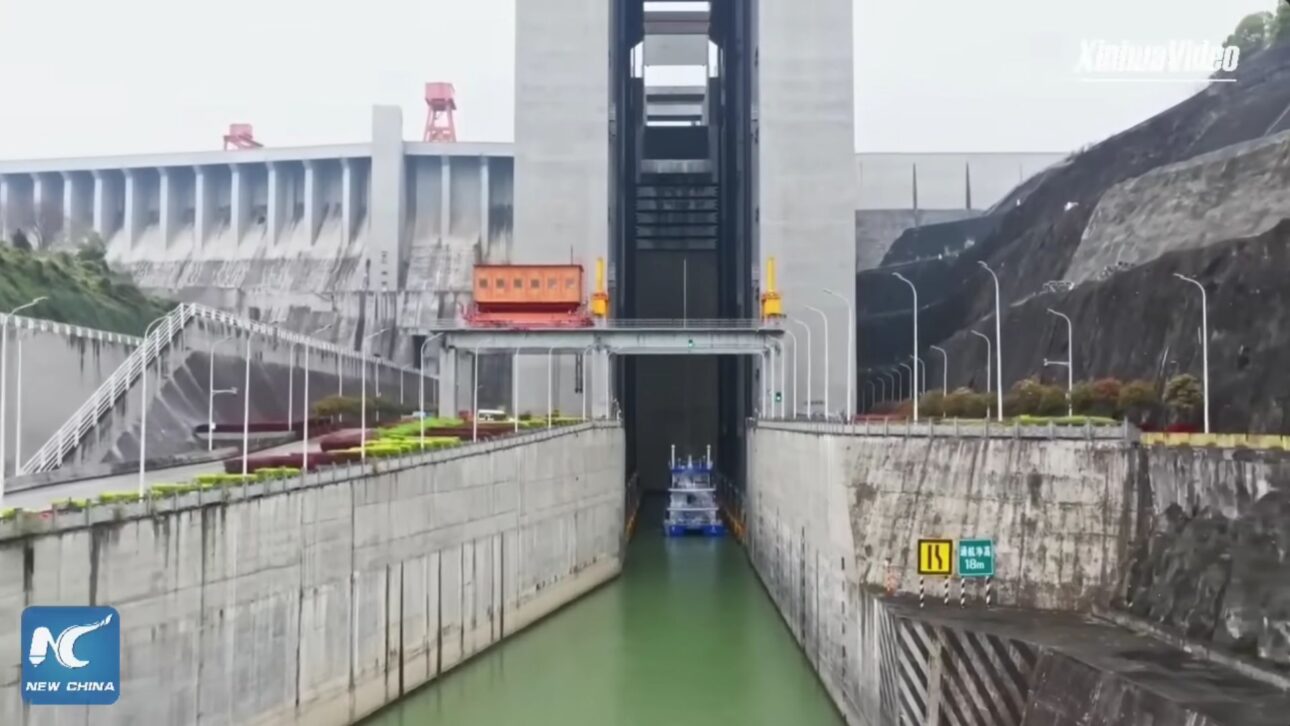
Designed to accommodate ships of up to 10,000 tons, it and its access channels will total about 6,680 meters, making it one of China’s largest navigation projects.
According to Xinhua, the complex is expected to take 112 months to complete, including one year of preparation, which places the completion more than nine years away.
The project also has a second front, downstream, at the Gezhouba Dam.
There, gate number 3 will be demolished and replaced by two new single-stage locks, in work expected to take about 95 months.
According to Niu Xinqiang, an academic from the Chinese Academy of Engineering cited by state media, the project is expected to set world records for river lock construction in terms of vessel size, chamber size, and excavation volume, supporting the expectation that it will become the largest of its kind on the planet.
How ships ascend the dam, between the lock and the elevator
To overcome the height difference of a giant dam, there are two main methods.
The first is the lock, which functions like a water staircase, filling and emptying chambers so the ship can ascend or descend step by step.
The second is the ship lift, based on mechanical principles, which raises the vessel all at once, like a regular elevator.
The Three Gorges already has a five-stage lock and a lift of this type.
With the expansion, the system’s capacity takes a leap.
According to Xinhua, upon completion of the works, the Three Gorges Dam will have four lock lines plus the ship lift, with a total annual capacity of 336 million tons, while Gezhouba will have four lock lines and a capacity of 360 million tons per year.
In practice, Chinese authorities project more than doubling the current transport capacity in the corridor, one of the busiest in China.
More cargo, lower costs, and the environmental issue


The expected gains go beyond the transported volume.
The official expectation is that the new route will reduce logistics costs and improve efficiency, allowing upstream regions in China’s interior, such as Sichuan, Chongqing, and Yunnan, to connect more smoothly with the coast and international markets.
However, as it is the beginning of construction, these benefits are long-term projections, not results already achieved.
The project also attempts to address environmental criticisms surrounding large dams.
According to the state press, the design includes dedicated passages for fish and construction methods that aim to reduce the impact on aquatic species.
Authorities state that the construction of the new route will not interrupt the operation of the current locks, although passage through a channel in the Gezhouba region will be subject to controls during construction, with localized impacts on navigation.
The new Yangtze canal shows the scale with which China approaches its river transport infrastructure.
If projections are confirmed, the country will have the largest river lock in the world and a corridor capable of moving hundreds of millions of tons of cargo per year, linking the interior to the coast.
For now, however, what exists is the beginning of a project of almost a decade, with numbers yet to be proven in practice.
And you, did you imagine the size of the navigation operation that passes through a dam like the Three Gorges? Do you think Brazil, with its large rivers, should invest more in waterways and locks to transport production? Leave your opinion in the comments, respecting different views, and share this article with those interested in engineering and infrastructure.


