Portuguese
  Spanish


The HYBRIT Project Produces Steel Without Coal Using Green Hydrogen. It Has Already Supplied Material to Volvo and Promises to Eliminate Millions of Tons of CO₂ by 2030.
Steel is the material that underpins modern civilization. It can be found in skyscrapers, cars, ships, railways, appliances, and even satellites. But behind its importance lies a colossal problem: steel production is one of the most polluting activities on the planet, responsible for about 7 to 8% of global CO₂ emissions. The reason is simple: blast furnaces use coal to transform iron ore into pig iron, releasing huge amounts of greenhouse gases.
Now, a pioneering initiative shows that it is possible to break this logic. In Sweden, HYBRIT (Hydrogen Breakthrough Ironmaking Technology) was born, the first project in the world to produce steel on a pilot scale without using coal. Instead, green hydrogen is used, obtained through the electrolysis of water with renewable energy. The result is revolutionary: the process releases only water vapor instead of CO₂.
Who Is Behind This Revolution

HYBRIT was created in 2016, resulting from a partnership among three Swedish giants:
-
Brazilian Researcher Develops Protein Supplement from Tilapia Waste, Combining Innovation and Sustainability with Economic Potential

-
Women in São Paulo Unknowingly Tracked by Coin-Sized Tags Hidden in Cars and Belongings, Raising Stalking Concerns
-
Near a $750 million AI data center in Brazil, a resident’s well runs dry, leaving her unable to afford the $25,000 needed for repairs.

-
16-Year-Old from Brazil’s Sertão Wins Young Scientist Award for AI Predicting Rainfall with 94.5% Accuracy to Aid Farmers


- SSAB – the leading steelmaker in Scandinavia;
- LKAB – one of the largest iron ore mining companies in Europe;
- Vattenfall – state-owned energy company, responsible for providing renewable electricity for hydrogen production.
Together, they formed a consortium with support from the Swedish government and the European Union, who saw in the project a chance to position the country at the forefront of industrial decarbonization.
According to Martin Pei, technical director of SSAB and one of the project’s founders, “if we want to tackle the climate crisis, we need to cut emissions where it hurts the most: at the base of heavy industry.”
How Steel Is Made Today — And Why It Is So Polluting
To understand the impact of HYBRIT, one must compare the methods.
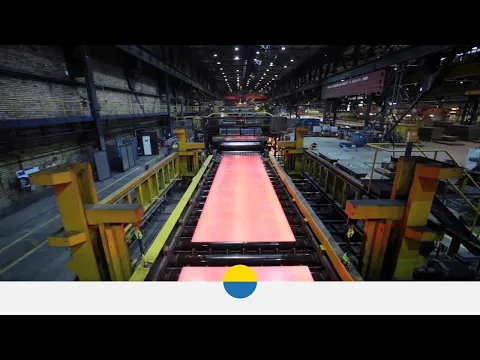
- Traditional Method (Blast Furnace): coke coal reacts with the oxygen in iron ore (hematite and magnetite). The process reduces iron, but releases CO₂ in large volumes.
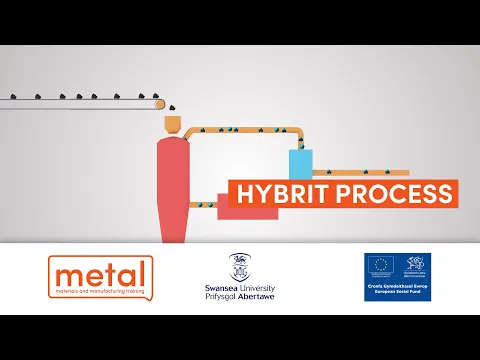
- HYBRIT Method (Green Hydrogen): hydrogen reacts with the oxygen in the ore, forming only H₂O. The obtained iron is then melted in electric furnaces to be transformed into high-quality steel.
The contrast is brutal: each ton of traditional steel emits an average of 1.9 tons of CO₂; in the HYBRIT process, direct emissions drop to almost zero.
Project Timeline
- 2016: official creation of the HYBRIT consortium.
- 2018: inauguration of the pilot plant in Luleå, in northern Sweden.
- 2020: initial tests confirm the technical feasibility of using hydrogen to reduce iron ore.
- 2021: historic milestone — SSAB delivers the world’s first shipment of green steel to Volvo. A few months later, Volvo presents the first truck on the planet made with fossil-free steel.
- 2022–2023: expansion of the pilot plant, producing increasingly larger volumes.
- 2026: expected inauguration of the first large-scale industrial unit.
- 2030: SSAB’s goal to completely eliminate the use of coal in its blast furnaces, becoming the planet’s first major carbon-zero steelmaker.
Gigantic Climate Impacts
The potential of this technology is immense:
- Just SSAB, by replacing its processes, could reduce 10% of all emissions in Sweden.
- Globally, if the method is replicated, it could avoid hundreds of millions of tons of CO₂ per year, equivalent to removing millions of cars from the roads.
- The European Union is already studying incentives for other steelmakers to adopt the model, with plans of US$ 10 billion in investments in the coming years to decarbonize the sector.
To get an idea, the global steel industry produces 1.8 billion tons annually. If each ton were made with hydrogen, the planet would avoid emissions comparable to those of all of India in a year.
Current Status of the Project
Today, HYBRIT is already functioning on a pilot scale in Luleå, producing steel for selected customers like Volvo, Mercedes-Benz, and other companies that want to reduce their carbon footprint in their supply chains.
Meanwhile, an industrial unit is under construction in the city of Gällivare, which is expected to start operations in 2026. There, the plan is to gradually replace coal blast furnaces with hydrogen-powered furnaces.
According to LKAB, the new unit will have an initial capacity to produce 1.3 million tons of sponge iron per year, sufficient to supply part of the European automotive industry.
Obstacles Still in the Way
Despite the success, the challenges are significant:
- Large-Scale Renewable Energy – producing green hydrogen requires abundant clean electricity. For each ton of steel, thousands of kWh of energy are needed.
- Cost – currently, green steel is more expensive than conventional steel. However, it is expected that, with scale and carbon regulation, prices will converge by 2030.
- Infrastructure – adapting mines, plants, and logistics is an expensive and time-consuming process.
Still, experts believe it is only a matter of time. According to Andreas Regnell from Vattenfall, “green steel will be competitive not because it is clean, but because soon dirty steel will be too expensive.”
Green Steel as a Symbol of a New Era
HYBRIT is not just a Swedish project: it is a global model. Germany, Canada, and Japan have already started similar programs. China, the largest steel producer in the world, is also testing hydrogen in its blast furnaces.
But the fact is that the Swedes are ahead. HYBRIT has already delivered real products, proving that the most polluting industry on the planet can be reinvented.
More than a technological innovation, this steel is a symbol of the energy transition: a reminder that even the most basic materials of civilization can be recreated with less environmental impact.
If in the 19th century steel powered the Industrial Revolution, in the 21st century green steel could drive the Climate Revolution.