






 Portuguese
  Spanish


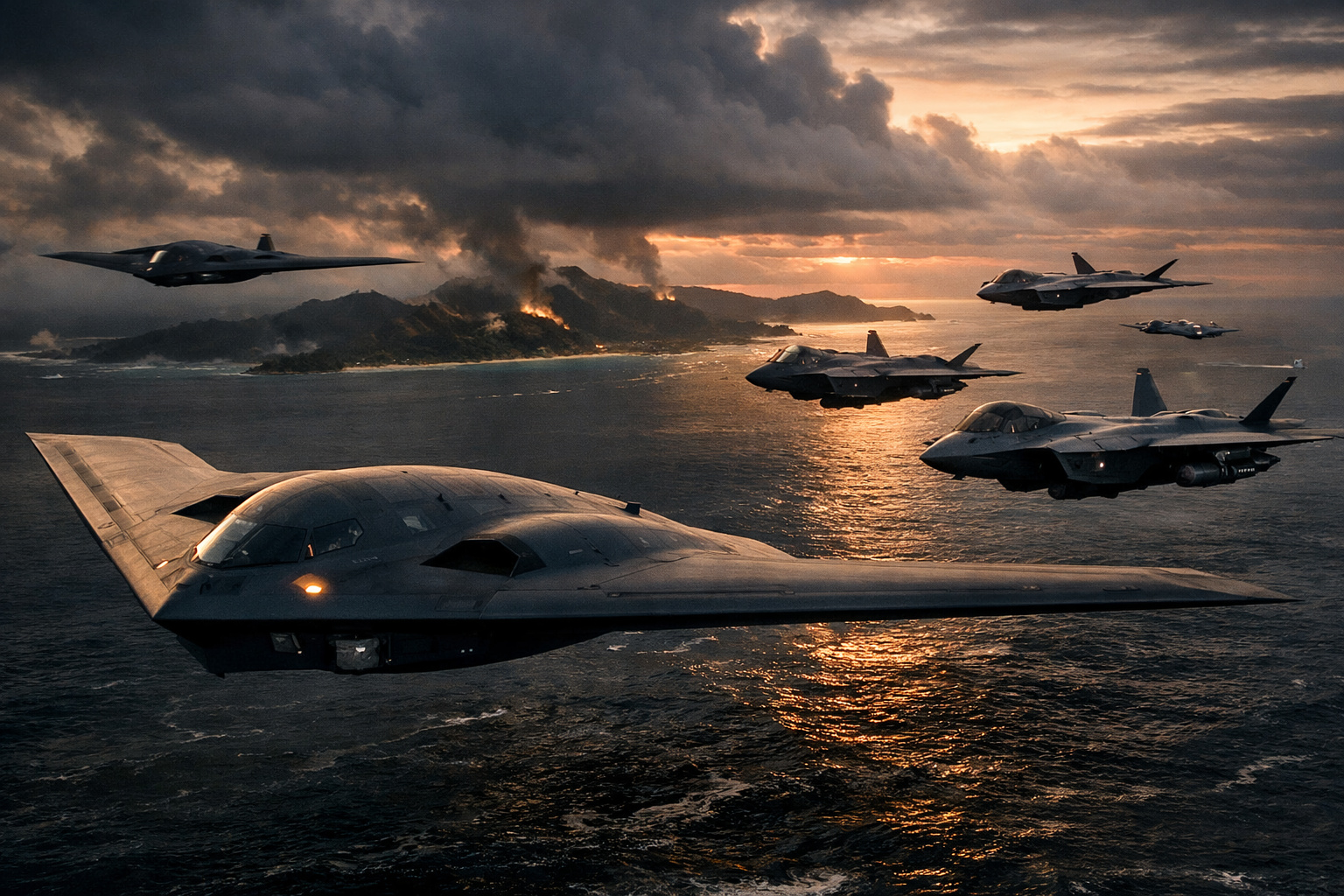


Independent Study Warns That Current U.S. Military Aviation Modernization Plans Do Not Ensure Sufficient Scale to Maintain Continuous Pressure on Chinese Logistics and Command Bases in a High-Intensity Conflict Involving Taiwan
A new strategic report has reignited the debate about the real capabilities of the United States Air Force to face a high-intensity conflict in the Indo-Pacific. The information was released by the Mitchell Institute for Aerospace Studies, an institution linked to the Air & Space Forces Association, and points out that current plans of the United States Air Force are insufficient to deny China safe areas — the so-called “sanctuaries” — from which Beijing could launch airstrikes and missile barrages in a crisis involving Taiwan.
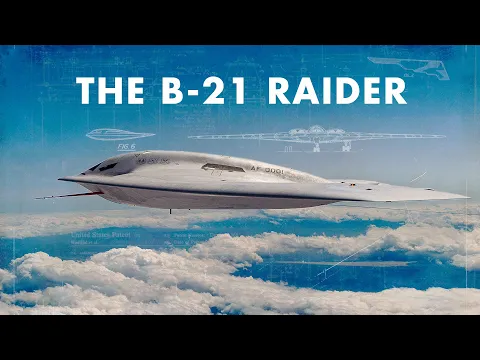
Signed by Heather Penney and retired Colonel Mark A. Gunzinger, the study states that to sustain a prolonged air campaign against a technologically equivalent adversary like China, the U.S. Air Force would need to operate at least 200 B-21 Raider stealth bombers and around 300 sixth-generation F-47 fighters. According to the authors, only this scale would allow continuous operations “from inside to outside” enemy defenses, maintaining pressure over time and absorbing losses without collapsing military efforts.
Currently, the USAF declares its intention to acquire “at least” 100 B-21s and approximately 185 F-47s. For the Mitchell Institute, this number may be sufficient for high-impact, pinpoint attacks, but not for a sustained campaign in a vast and highly contested theater like the Indo-Pacific.
-
U.S. Military Intervention Risk in Brazil Raises Alarm, Highlights National Sovereignty Amid Tensions Over Washington’s Terrorist Designation of PCC and Comando Vermelho

-
Brazilian Air Force’s Sole KC-30 Aircraft Completes Strategic Mission to Spain for 105mm Anti-Tank Ammunition for Leopard 1A5 Tanks

-
Brazilian Air Force Seeks to Acquire More Gripen Fighter Jets
-
U.S. Air Force Launches Air-to-Air Missile Project with Range of Up to 1,850 km for Indo-Pacific Operations



The Logic of Sanctuary Denial and the Role of the B-21 and F-47

According to the report, the so-called sanctuary denial strategy is based on the principle that the adversary cannot have safe areas within its own territory to reorganize forces, launch attacks, and sustain the war effort. To achieve this, it would be necessary to continuously target air bases, logistics centers, command and control nodes, and critical infrastructure deeply embedded in hostile territory.
In this context, bombers like the B-21 Raider are described as central pieces. Capable of operating at intercontinental ranges, penetrating advanced air defenses, and carrying large payloads, these platforms could be repurposed for multiple missions throughout a prolonged conflict. Furthermore, their stealth would significantly increase survivability in densely defended environments.
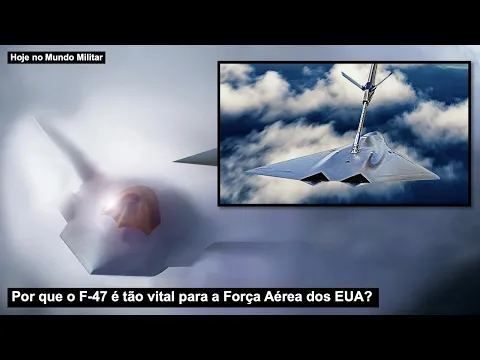
The sixth-generation F-47 fighters, in turn, would operate in close integration with the bombers, providing escort, suppression of enemy air defenses, and precision strikes. According to the authors, only a large fleet of these platforms would allow for a high operational tempo, which is considered essential to break China’s ability to sustain military operations over time.
Limitations of Current Plans and the Impact of Nuclear Deterrence
Despite the technological advancements represented by the B-21 and F-47, the study is categorical in stating that scale matters as much as sophistication. Penney describes the currently planned force as adequate for a one-off incursion, but incapable of maintaining constant pressure during weeks or months of intense combat.
This issue, according to the report, is exacerbated by the fact that a significant portion of the bomber fleet needs to remain dedicated to strategic nuclear deterrence and the defense of the continental United States. In practice, this further reduces the number of aircraft effectively available for long-range offensive operations in the Indo-Pacific.
In light of this scenario, the Mitchell Institute recommends doubled the B-21 fleet to at least 200 aircraft and increasing the number of F-47s to around 300 units. In this configuration, the Air Force would have greater resilience, the capacity to absorb losses, and the conditions to sustain a prolonged air campaign against an equivalent military power.
Stand-Off Versus Stand-In: Cost, Vulnerability, and Operational Flexibility
Another central point of the report is the criticism of the excessive emphasis on “stand-off” attack capabilities, based on long-range missiles launched from safe distances. Although these systems reduce the direct exposure of aircraft, the authors warn that they are extremely expensive and vulnerable to cyber, space, and electronic interferences.
Hypersonic missiles, for example, can cost tens of millions of dollars per shot, quickly making a sustained effort that relies solely on such weaponry to target hundreds or thousands of targets throughout the conflict prohibitively expensive. Additionally, complex chains of sensors and communications can be degraded or disrupted in a highly contested environment.
In contrast, “stand-in” forces, composed of stealth aircraft capable of penetrating advanced air defenses, offer greater flexibility and a better cost-benefit over time. Reusable bombers like the B-21 can concentrate significant firepower, operate repeatedly, and adapt to the evolution of the operational scenario, something disposable missiles cannot equal in extensive campaigns.
Intermediate Measures and Washington’s Strategic Dilemma
While the expansion of the B-21 and F-47 fleets has not materialized — a process that may take a decade or more — the report recommends intermediate measures. Among them are avoiding the premature retirement of the still-active B-2 bombers and increasing the acquisition of F-35 fighters, preserving penetration capability in highly contested environments in the short and medium term.
The authors also remind that the total inventory of bombers and fighters in the United States has decreased drastically since the end of the Cold War. Many current programs tend to replace aging platforms, like the B-1 and F-22, rather than effectively increasing the available combat mass. For Penney, this limitation reflects less real operational needs and more budgetary constraints that ultimately shape long-term strategic decisions.
In the end, the study presents a clear choice for Washington: accept a modern but numerically limited force suitable only for lower-intensity scenarios, or heavily invest in capacity and scale to conduct sustained air campaigns against an equivalent power. In the assessment of the Mitchell Institute, denying adversaries sanctuaries from the first days of a conflict is not just desirable but essential — and this will require far more stealth aircraft than those currently projected in the official plans of the United States Air Force.
Source: Cavok



Provavelmente este relatório tenha brotado da cabeça de um **** que se alimenta de capim…
Na teoria é fácil, na prática o bicho pega.
ESSES ESTRATEGISTAS SÃO IGUAIS AOS VIDENTES QUE PROFETIZAM O FIM DO MUNDO TODOS OS ANOS…KKK
Vc é o sabichão