






 Portuguese
  Spanish
  4 min of reading
  1 comment


US Air Force Unveils New Bomb Capable of Sinking Ships Almost Instantaneously Effectively and at a Distance. Meet the New US Bomb – Quick Sink That Leaves China on Alert.
US Air Force Reveals New Bomb: The rising tension in the Indo-Pacific region, fueled by the increasing military presence of the United States and China, has reached a new level with the unveiling of a revolutionary weapon by the US Air Force. It is the “Quick Sink,” a new bomb capable of sinking ships with lethal precision and unprecedented efficiency. This new technology promises to transform naval warfare dynamics, introducing disruptive strategies and presenting significant challenges for both allied forces and strategic adversaries.
With the ability to be launched from conventional aircraft and equipped with advanced guidance systems, the “Quick Sink” is a weapon designed to maximize impact at reduced cost compared to traditional naval attack methods, such as cruise missiles. Furthermore, its introduction comes at a critical time, marked by heightened military exercises and territorial disputes in the South China Sea, further raising concerns about a potential military escalation between the two largest global powers.
The revelation of this technology not only highlights US advancements in armament but also pressures rivals like China to rethink their maritime strategies, including the use of their growing fleet of aircraft carriers and destroyers. This scenario intensifies the competition for military superiority in the region and raises questions about how the introduction of weapons like the “Quick Sink” could alter the balance of power in the Indo-Pacific.
-
Ukraine launches largest drone attack on Moscow since 2022, Russia claims to have intercepted nearly 200 aircraft near the capital, Kapotnya refinery targeted again, and offensive reignites alert about war reaching the Russian energy heart just a few kilometers from the Kremlin.

-
Truck drivers, freight, and fines from 2022 take center stage in politics: Chamber approves MP with amnesty, mandatory tracking by CIOT, million-dollar penalties, and new minimum wage for those who spend more than 24 hours on the road.

-
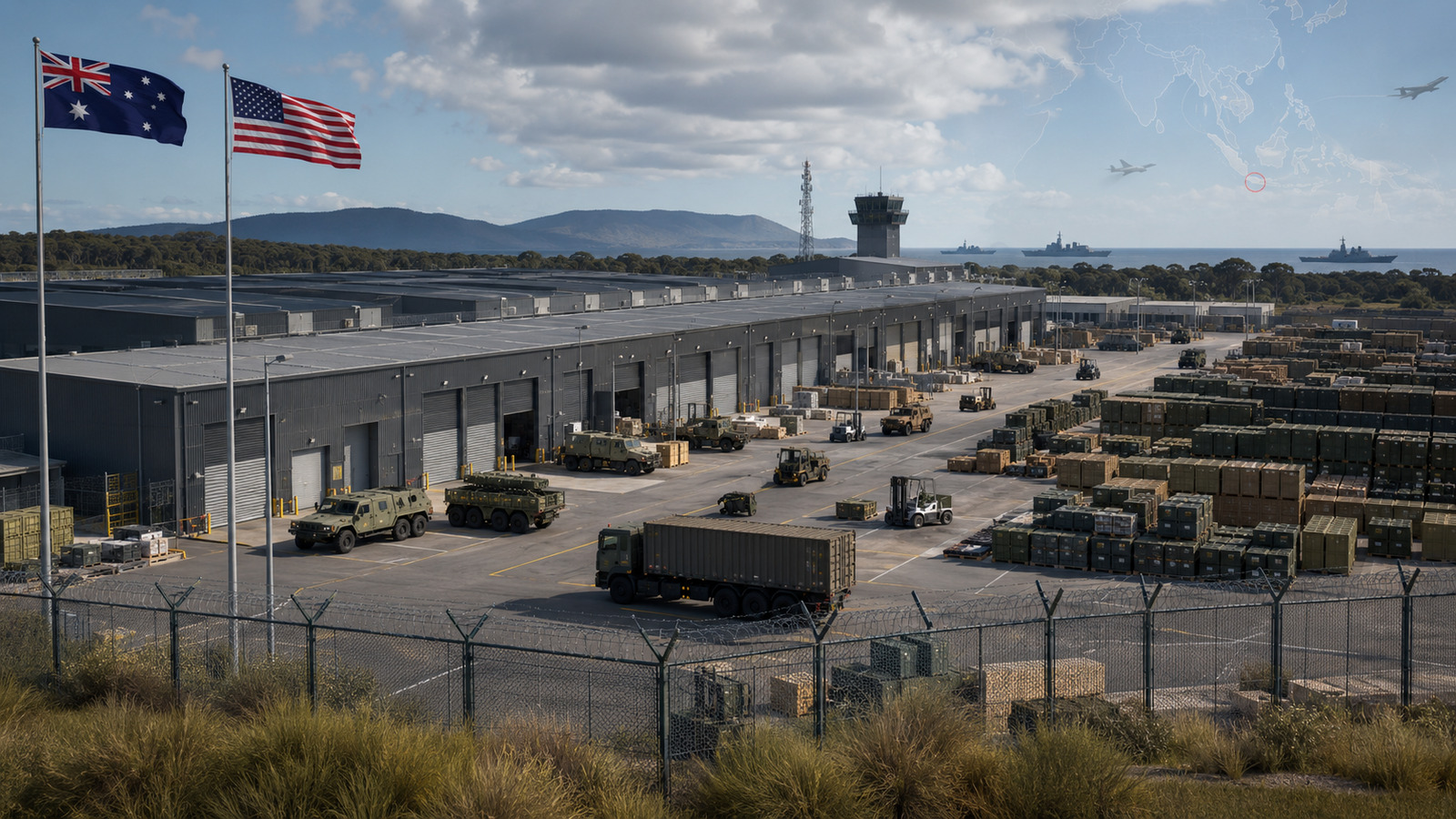
China off the radar: US plans mega $30 million weapons depot in Australia, out of reach of most Chinese missiles, with full capacity expected by 2028

-
Trump’s wall advances at a rapid pace: government promises to complete a barrier of over 3,000 km by 2027 while drones and cartels turn the US border into a new field of technological dispute



Understand How the New US Bomb Works
During the 2024 Pacific Maritime Exercise, the country showcased its new bomb capable of sinking ships, a rapid-sinking technology developed by the US Air Force to neutralize large and crucial ships, like aircraft carriers, quickly and efficiently. This bomb, launched from stealth bombers such as the B-2 Spirit, can reach vulnerable points on enemy vessels with high precision and destructive power.
Equipped with JDAM guidance kits (Joint Direct Attack Munition), the new US bomb was designed to autonomously navigate to the target, identify vulnerable points of the ship (below the waterline), and explode, generating an effect similar to that of a heavy torpedo. This feature of the new ship-sinking bomb from the Air Force allows a stealthy aircraft like the B-2 to sink large ships without needing direct contact.
During the exercise, the amphibious ship USS Tarawa was used as a training target. Built in the 1970s and decommissioned in 2009, it became a sort of “punching bag” for US military testing.
A single shot from the new US bomb, launched from a B-2 Spirit, was enough to sink it, sending a clear message: with this technology, the US Air Force can neutralize large targets in minutes.
New Bomb Capable of Sinking Ships May Threaten China?
China has heavily invested in its navy, with a rapidly expanding fleet that includes three aircraft carriers and another in development, aiming to have five operational by 2036. With the development of its fleet, the country seeks to expand its presence and influence in the Indo-Pacific, a region crucial for China’s national security due to its dependence on maritime routes for trade.
However, the new US anti-ship bomb adds a significant obstacle to China’s plans. The flexibility of Quick Sink, a low-cost and high-precision weapon, creates a scenario in which Chinese aircraft carriers could be swiftly destroyed from a distance, complicating their operations and threatening the security of Chinese military vessels in conflict areas.
Understand the Impacts of the New US Bomb
The introduction of the new ship-sinking bomb from the US Air Force alters the balance of power in the Indo-Pacific, generating new considerations for both sides.
For China, naval expansion now faces a real threat, demanding new defensive strategies to protect its fleet. On the other hand, the new US bomb for long-range attacks from a hard-to-detect aircraft consolidates its position in defending allies and interests in the region, such as Taiwan.
With a larger fleet of B-21 Raider stealth bombers expected in the next decade, the US Air Force will have an even more robust presence capable of quickly responding to regional crises and containing military advances from China. This situation could create a deterrent effect, as the risk of significant losses of naval assets could discourage aggressive actions.







Logo terá a bomba anti bomba.