





 Portuguese
  English
  Spanish
  4 min of reading
  70 comments


Air Assaults, River Crossings, and Urban Combat: Operation Perseus Brings Extreme Challenges and Tests the Brazilian Army in an Impressive Demonstration of Military Strength and Strategy
The Brazilian Army, through the Southeastern Military Command, has initiated Operation Perseus, one of the largest military exercises of 2024, in the Vale do Paraíba. This mobilization involves around 7,700 military personnel and aims to enhance operational readiness and the response capability of Brazil’s Armed Forces in defense and combat situations.
Planned to last 10 days, the operation takes place from November 25 to December 4, involving meticulous planning and the integration of troops, vehicles, and aircraft.
The exercise stands out for applying modern doctrines in an environment that realistically simulates combat and defense scenarios. Thus, the Operation Perseus becomes one of the most comprehensive tests of military preparedness today, putting the troops’ knowledge into practice in an environment close to real combat.
-
The Sad End of the Brazilian Marine Corps’ Combat Vehicles: SK-105 Fleet Has Few Vehicles Running, Cannibalized Parts, and Scrap Taken to Auction

-
The Brazilian Army has just unveiled a silent arsenal of drones armed with rifles, grenade launchers, and nuclear sensors capable of operating nearly 300 km away, and this is just a preview of what will be showcased in Rio in the coming months with 33 companies.

-
Brazilian Army presents Force 40 and unveils the strategic plan that aims to revolutionize national defense with artificial intelligence, drones, multidomain warfare, and advanced military power by 2040.
-
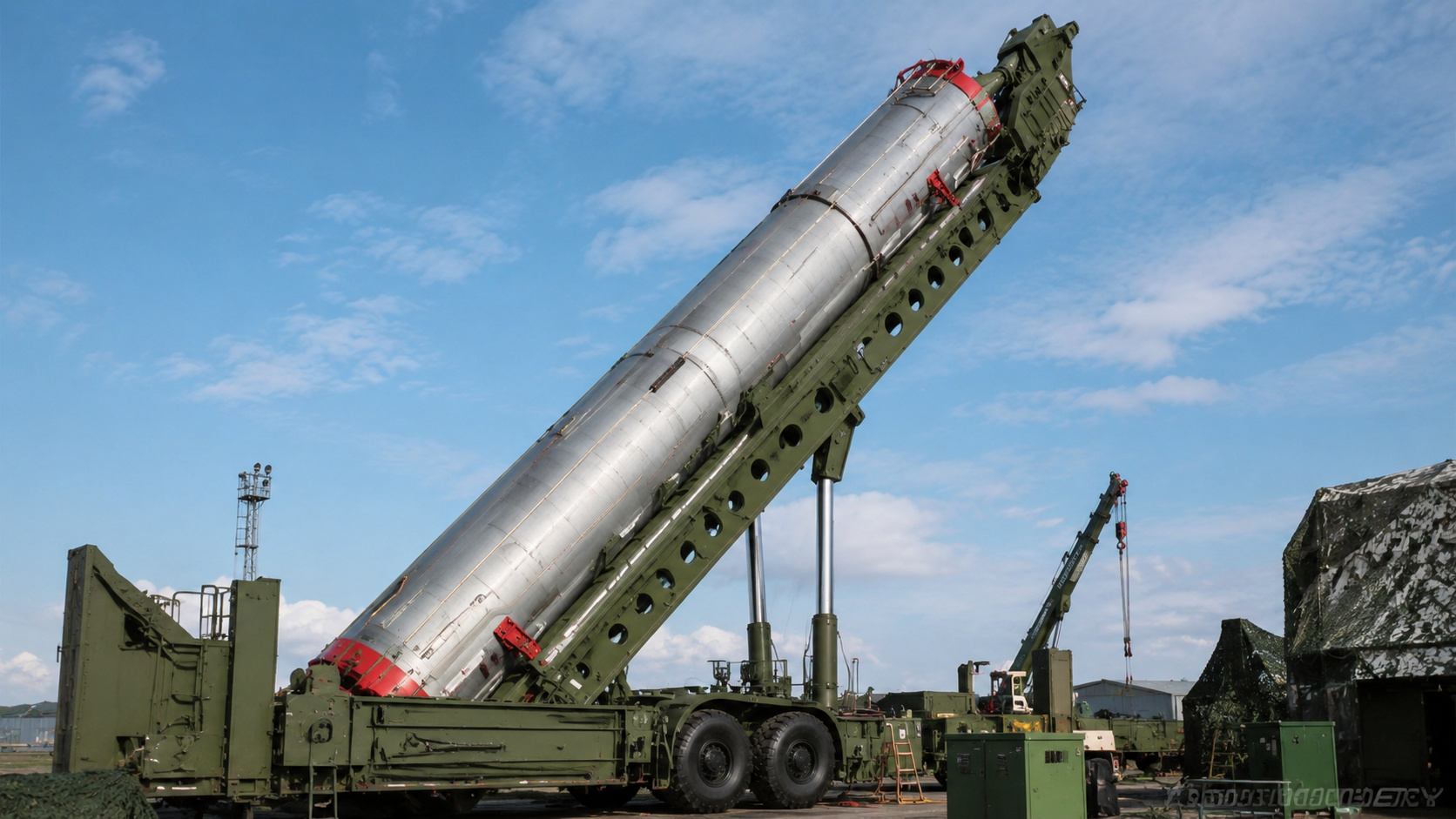
Russia has put into operation the Avangard, a nearly 2-ton nuclear hypersonic glide vehicle launched by an intercontinental missile, capable of exceeding Mach 27, reaching over 6,000 km, and maneuvering within the atmosphere before impact; a weapon presented by Putin as a response to U.S. missile defense shields.


High-End Equipment: 51 Armored Vehicles, 433 Unarmored Vehicles, and 15 Aircraft
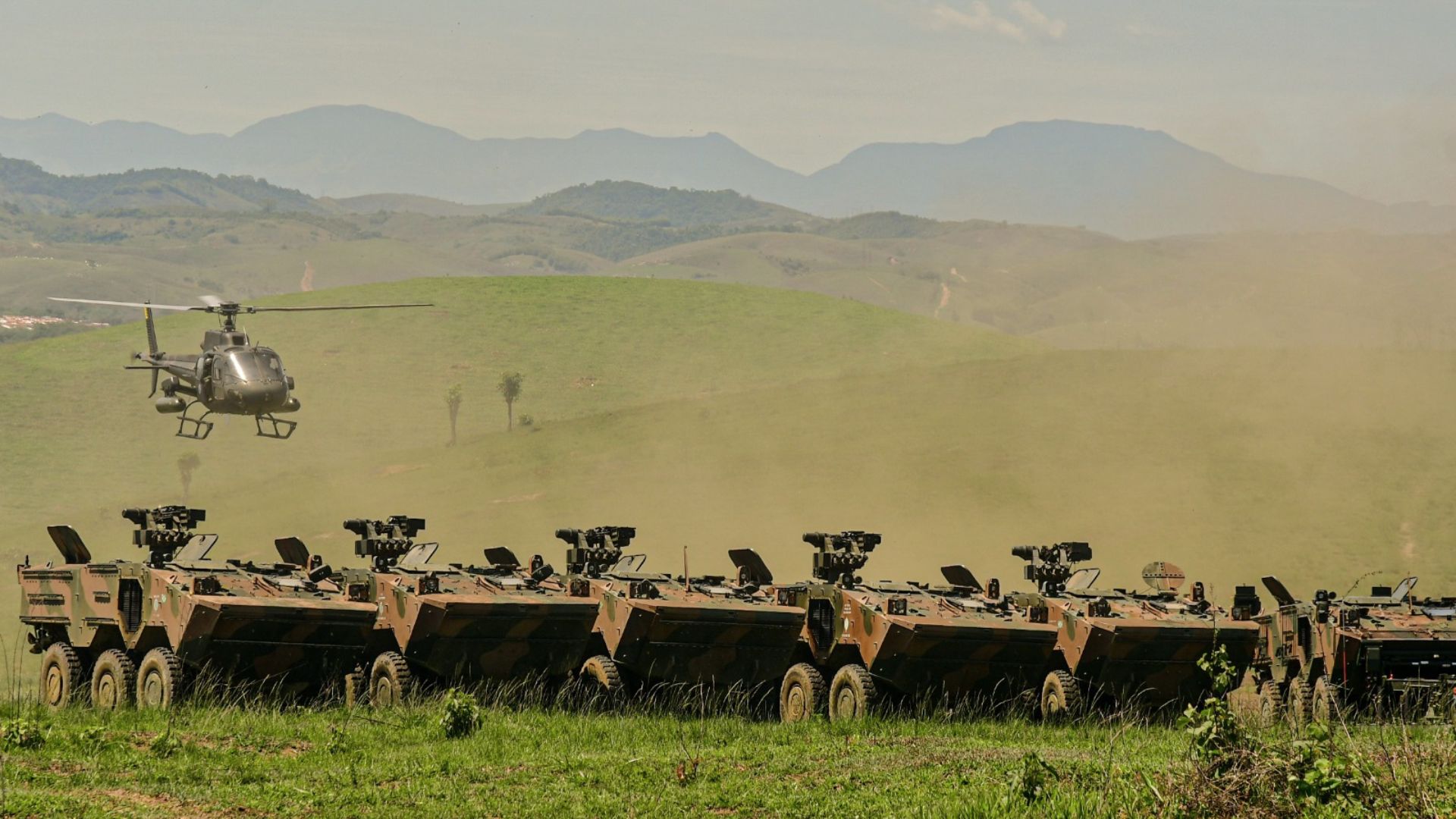
During the exercise, 51 armored vehicles, 433 unarmored vehicles, and 15 aircraft are employed, distributed over a vast operational area encompassing nine cities. Among the locations hosting the training are Caçapava, Taubaté, Pindamonhangaba, Lorena, Cachoeira Paulista, Cruzeiro, Silveiras, Areias, and Resende, in the state of Rio de Janeiro.
The Brazilian Army emphasizes that the purpose of the exercise is to train and equip the troops to ensure they are ready to respond to homeland defense situations and external support operations. The use of this diverse array of equipment reinforces the preparedness and adaptability of the Brazilian armed forces, contributing to improved training in different types of terrain and situations.
Operation Perseus: Brazilian Army Begins Strategic Inspection and Air Mobile Assault in Preparation for Realistic Combat
Operation Perseus officially begins on November 25 at the facilities of the Army Aviation Command (Cavex) in Taubaté. Initially, the Southeastern Military Commander conducts a rigorous inspection, evaluating in detail the readiness of the troops and the operational conditions of the vehicles and aircraft that will participate in the simulations.
This initial phase is attended by civil and military authorities, a gesture that symbolizes the strategic importance of the exercise for national defense and for the Brazilian Army as a whole.
On November 27, training intensifies in Cruzeiro with an air mobile assault. In this specific operation, the troops conduct an infiltration into simulated enemy territory, supported by aircraft from Cavex.
This aerial infiltration exercise is essential to test the troops’ skills in reconnaissance, security, and rapid incursions, which are fundamental in conflict operations.
Brazilian Army Faces Extreme Challenge: Guarani Armored Vehicles Cross the Paraíba do Sul River in Realistic Combat Simulation
On November 28, the operation reaches one of its most challenging moments, with the crossing of the Paraíba do Sul River in Lorena. To cross the river, the Army uses Guarani armored vehicles, a national vehicle that represents the modernization of military operations in Brazil.
This moment requires, in addition to the strength of the armored vehicles, the support of engineering equipment to overcome natural obstacles, enabling a safe crossing and maintaining the combat capability of the troops.
This type of exercise strengthens the Army’s ability to conduct operations in varied environments, from overcoming aquatic barriers to mastering urban terrains. On November 29, the troops move to Silveiras and Areias, where they conduct combat simulations in built-up areas, preparing to face possible conflict situations in cities.
The practice of urban combat demands precision and refined technique, as troops need to develop specific skills to deal with complex and adverse scenarios.
According to the Brazilian Army, these urban environment trainings are designed to ensure that the troops are equipped to employ suitable tactics in future operations, increasing effectiveness and safety during combat.
Demonstration of Force: Operation Perseus Concludes with Air/Ground Assault and Display of Military Might in Resende
After the training in urban areas, Operation Perseus moves to Resende, where the troops conduct strategic exercises in combat and defense against irregular forces, preparing for asymmetric conflict situations. On December 4, the conclusion of the training is scheduled with an impressive demonstration of military might.
This final stage includes aviation fire, field artillery, and air defense at the Military Academy of Black Needles (AMAN), demonstrating the precision and attack capabilities of the Brazilian troops. This moment concludes the operation with a public display, allowing the audience to closely observe the strength of the Brazilian Army in major operations.
One of the highlights of the operation will be on November 30, at the Funil Reservoir in Itatiaia (RJ), featuring an air/land assault and air mobility. For these maneuvers, paratrooper troops and equipment will be deployed in a simulated attack on hostile territory, supported by the Brazilian Air Force. Meanwhile, the air mobile assault, conducted by Cavex helicopters, will ensure the insertion of troops at strategic points for ground actions.
This crucial phase highlights the flexibility and agility of the Brazilian Armed Forces, reinforcing their mobilization capacity and readiness for different defense and combat missions, essential aspects for the current military context.







Kkkkkkk onde está precisando pintar meio fio?
Melancias, comportem-se direitinho. O nove dedos quer meter a mão suja em suas aposentadorias. Continuem brincando de “pou-pou” em simulações de banquinho, enquanto isso, em Brasília…
Eu confio nas forças armadas de Brasil ainda a esperanças brigadeiros do pais vc e a vós do povo hora dignidade e disciplina