






 Portuguese
  Spanish


Ford Prepares Strategic Shift to Return to Passenger Car Market, Evaluates Expanding Partnership with Volkswagen and May Bet on Combustion Engines Again After Years Prioritizing Trucks, SUVs, and Electric Vehicles.
Ford is working on a new strategy to reintroduce passenger cars into its global portfolio and is considering expanding cooperation with Volkswagen beyond electric vehicle projects.
The signal came from William Clay Ford Jr., great-grandson of Henry Ford and executive chairman since 2006, in an interview with Autocar.
Plans Confirmed by William Clay Ford Jr.
The executive acknowledged that the brand’s automobile offerings have shrunk after the retirement of Ka, Fiesta, Focus, and Fusion, leaving the range focused on trucks, SUVs, and vans.
-
Volkswagen to Cut Production by 1 Million Cars by 2030, Reducing Jobs and Platforms, Focusing on More Profitable Models

-
Toyota Launches First 100% Electric Car in Brazil: bZ4X with 343 HP, All-Wheel Drive, 361 km Range, Priced at $419,990 BRL, Limited to 99 Units

-
Chinese SUV Achieves 24.4 km/l, Outperforms Toyota Yaris Cross in Real-World Tests with 224 hp Hybrid System, Offers 51-Liter Tank for Greater Range, and Costs Up to R$ 5,000 Less.
-
Uber Black Revamps Fleet, Drops Ten Car Models and Sets Deadline for Electric BYD Dolphin


“On the passenger car side, we recognize that we are not as robust as we need to be,” he said.
According to him, there is a plan in development to address this gap. “We are working on our future strategy now. But I think you will be pleasantly surprised by what is to come.”
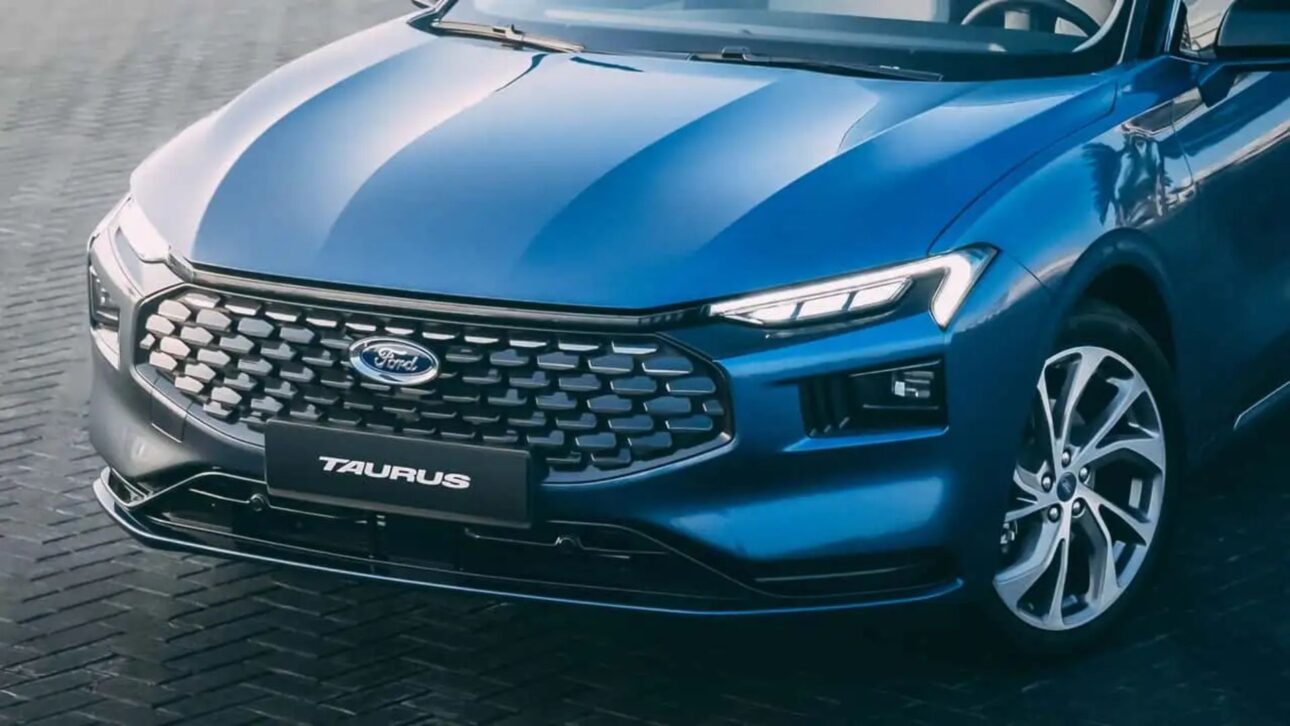
Markets and Timeline Still Undefined
The company did not specify markets or dates for upcoming launches.
There are unconfirmed internal reports about a possible four-door Mustang sedan, nicknamed “Mach 4,” but the automaker has not commented on the matter.
For now, the declared priority is to restore diversity to the passenger car line without compromising the financial discipline initiated in recent years.
Europe Back on the Radar with Combustion Engines
In Europe, dealers have been informed about the arrival of new models, according to a recent report from Automobilwoche.
The revision of the goal to sell only electric vehicles on the continent starting in 2030 opens the door for products with combustion engines, in a context where Explorer and Capri electric models face limited demand.
The decision reduces pressure on electrification timelines and allows the manufacturer to calibrate its offerings according to market response.
Partnership with Volkswagen May Advance
The collaboration between Ford and Volkswagen currently encompasses the production of the European Amarok based on the Ranger and the development of platforms for electric vehicles.
Members of both companies indicate that the agreement may expand.
Martin Sanders, head of sales and marketing at VW and former leader of Ford Europe, stated that the industry should not “dismiss future opportunities to share technology again.”
There was no specification on whether the reference is limited to VW’s MEB platform for electric vehicles or if it includes the MQB architecture for gasoline vehicles.
Course Adjustment Regarding 2024
This move represents a shift in tone from CEO Jim Farley‘s remarks last year when he said Ford was “getting out of the boring car business and entering the iconic vehicles space.”
At that time, he noted that these models had a loyal customer base but consumed capital without enough return, unlike the commercial vehicles lines.
Now, management admits that the brand needs to strengthen its automotive side and is seeking a path that balances profitability and portfolio breadth.
What to Expect Next
Without announcing specific products, the manufacturer signals that industrial partnership is a possible lever to accelerate projects and reduce costs.
If the agreement with VW moves forward for combustion models, the move would revive the cooperation logic that marked Autolatina in the late 1980s and mid-1990s when the brands shared platforms and components.
In the meantime, product areas are working on a launch agenda that will reposition Ford in segments beyond trucks, SUVs, and vans.
The results of this turnaround should start appearing as each market receives its own definition of mix and technology.
How the First Honda Hybrid is Doing After Driving More Than 1.5 Million Kilometers
American Daisy Rue, from Pennsylvania (USA), showed the odometer of her 2002 Honda Insight reading 985,000 miles — a little over 1,585,200 kilometers — a rare mark for a first-generation hybrid.
The case was shared in a Facebook group, along with images of the dashboard and the overall condition of the car.
Odometer Near 1 Million Miles
According to the owner, she is the third owner of the vehicle.
In the shared photos, the hatchback appears well-preserved inside and out.
The digital dashboard, common today, was a differential in the late 1990s and early 2000s.
The Insight was designed for maximum efficiency: it has only two seats and a body with aerodynamic solutions, such as partial wheel covers.
Hybrid System and Fuel Consumption
The model combines a 1.0 three-cylinder gasoline engine (naturally aspirated) with 67 hp and around 10.9 kgfm with an electric motor that adds 13 hp.
The transmission is a CVT. In Honda’s original system, the electric part assists the combustion engine, without acting independently as the main traction.
At the time, the brand reported fuel consumption in American standards at around 29.7 km/l.
Relevant Maintenances Throughout Its Life
According to the current owner, the hatchback has maintained its original engine, but it needed a head gasket replacement after exceeding 1.5 million kilometers.
The car is on its third battery pack of 144 V and its third CVT.
Additionally, she mentioned that the rear brakes remain original, a consequence of moderate use and the assistance of regenerative braking in some situations.
Pioneer Among Hybrids
Before the Toyota Prius gained global scale, the Insight launched Honda’s hybrid solution in the United States between 1999 and 2006.
The project focused on low weight, refined aerodynamics, and control electronics to reduce consumption.
This combination yielded impressive efficiency numbers, and as the shared case shows, durability when maintenance is up to date and wear components are replaced according to use.
What the Case Reveals
The record of high mileage helps to understand how older hybrids perform after decades.
Even with significant replacements — batteries and CVT — the system has remained functional enough to exceed the mark of almost 1 million miles.
For consumers seeking low consumption and controlled costs, stories like this serve as a reference for service life and maintenance planning.
In light of the possible return of passenger cars from Ford and the resilience of a pioneering hybrid like the Insight, which of these agendas weighs more for you today: diversifying the model offerings or extending the lifespan of what’s already on the streets?







Depois de dar uma penca de ba na na pros clientes eu nunca mais compro Ford. Retorno triunfal? Que fracasse e vá a falência.
Gosto muito dos carros da Ford, tive corcel 77, Delrey 82, Escort europeu, apollo autolatina e uma Ecosport e por último um Ford Ka 3 cilindros, pena q saiu do Brasil, mas tenho boas lembranças
Só comprimento carros produzidos no Brasil.