Portuguese
  Spanish


Experimental section on BR-459 uses recycled plastic in federal paving, reuses PET waste in an unprecedented asphalt mixture for this type of road and will be technically monitored before possible expansion to other Brazilian highways.
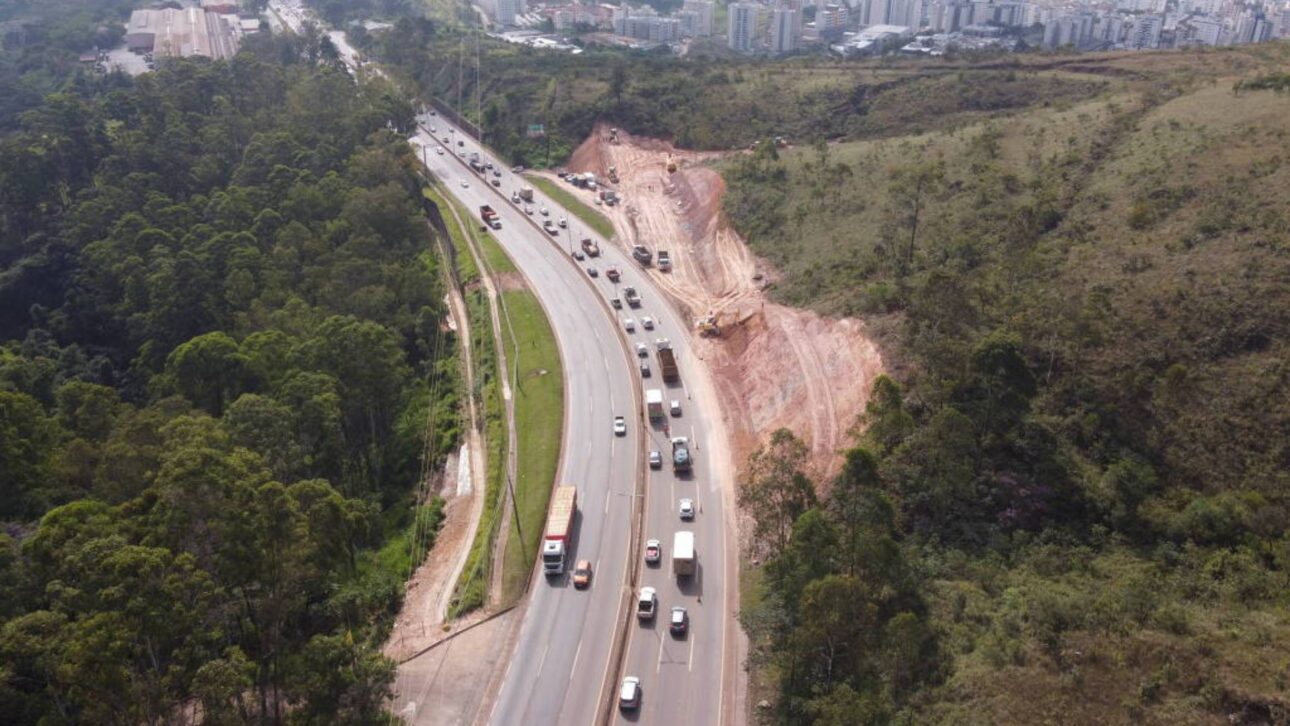
A section of 968 meters of BR-459, in Pouso Alegre, in the south of Minas Gerais, received an asphalt mixture with recycled plastic and has been presented by the companies involved as the first application of this type on a Brazilian federal highway.
The intervention was carried out between kilometers 110 and 111 of the highway, under concession from EPR Sul de Minas, and incorporated into the pavement the equivalent of 87,120 1.5-liter PET bottles, an estimated volume of about 2.6 tons of recycled plastic.
The work was executed by Eco Asfalto, a startup from the interior of São Paulo responsible for developing Caet, an acronym for Ecological Thermoplastic Asphalt Concrete, a technology that uses post-consumer recycled material and processed industrial waste in the pavement composition.
-
Award-Winning Japanese Restaurant Reveals It Has Preserved Part of the Same Frying Oil for 66 Years

-
American Youth Transforms from Severe Obesity to U.S. Air Force Enlistment, Losing 90 Kilograms in Two Years
-
11-Year-Old Entrepreneur Sells 60 Homemade Sweets Daily, Mastering Cost Calculation, Social Media Promotion, and Client Negotiation Since Age 7

-
Peruvian Mountain’s 5,200 Aligned Holes May Unveil Ancient Indigenous Market for Corn and Cotton


Asphalt with recycled plastic arrives at BR-459
The implementation on BR-459 represents a new stage of technology application because, until then, the uses reported by the company had occurred on municipal roads, urban streets, a local route, and sections managed under other concession models.
In the Minas section, the solution will be used as a technical test to evaluate the possible adoption of the material in the network operated by EPR Sul de Minas, which monitors the pavement’s performance before deciding on new applications.
BR-459 crosses the Serra da Mantiqueira region and integrates the connection between municipalities in the south of Minas, allowing observation of the recycled asphalt’s behavior under real traffic, climate, and wear conditions.
How Caet works in paving
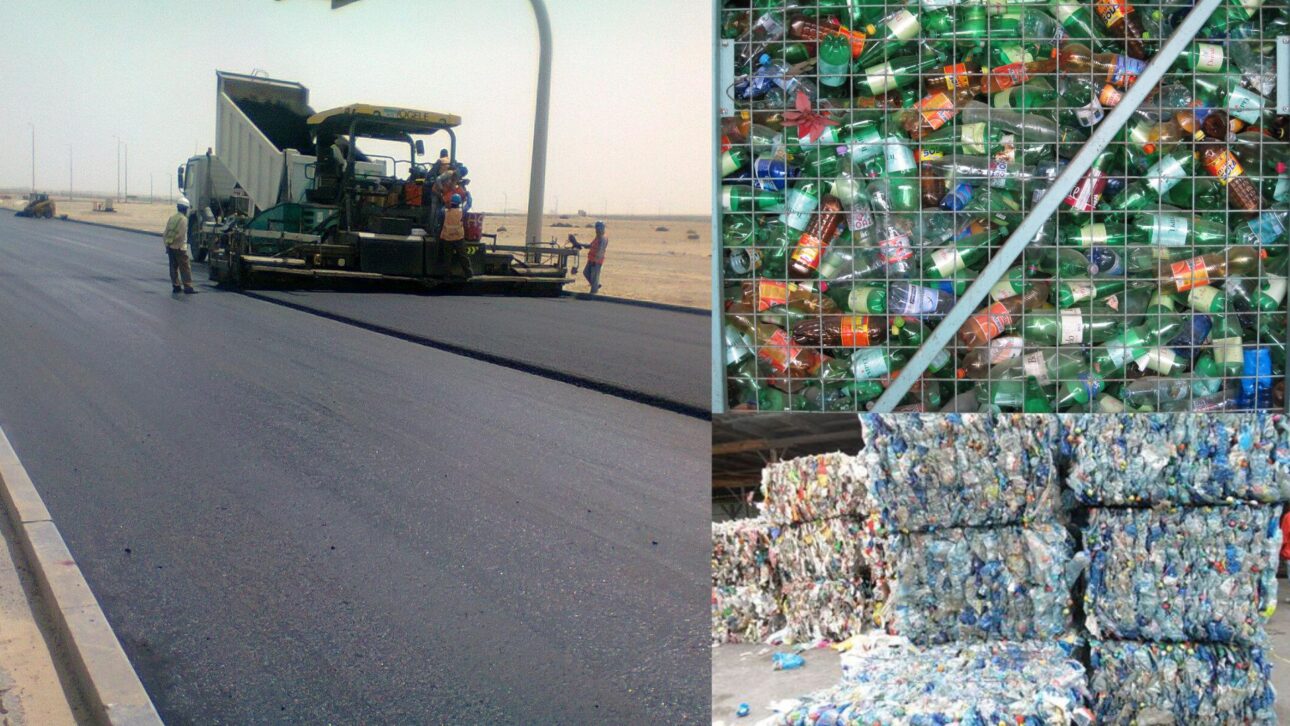
The mixture applied on the highway incorporates the polymeric active TM-250/A, formulated from post-consumer recycled plastic and treated industrial waste, according to information released by the companies responsible for the technology.
This material is included in the composition of asphalt concrete to improve the mechanical properties of the pavement, according to Eco Asfalto, which presents the solution as an alternative to reduce dependence on conventional inputs.
In practice, the technology seeks to enhance the performance of the asphalt layer and reduce the use of petroleum-derived binder, but the substitution occurs partially, according to the technical description provided by the companies involved.
For this reason, it is not a composition entirely free of inputs linked to the petroleum chain, but rather a pavement that incorporates plastic waste to proportionally reduce the presence of conventional binder.
Technical monitoring on the federal highway
After application, the section entered a phase of technical monitoring, with evaluations scheduled in 30, 60, and 90 days to monitor the behavior of the pavement and gather data on resistance, adhesion, and performance of the solution.
The results of this monitoring will be used by Eco Asfalto in a technical dossier to be presented to Dnit, the National Department of Transport Infrastructure, as part of the national approval process of the technology.
According to the information released, the material’s protocol is scheduled to occur by August 17, 2026, a necessary step for the solution to advance in analyses aimed at use on federal highways.
Without this approval, large-scale application on federal roads depends on additional evaluations and formal acceptance by the agencies responsible for road infrastructure, according to the technical procedures required for this type of work.
Previous applications in São Paulo
Before the application on BR-459, Eco Asfalto had already used the technology on a local road in Matão, in the interior of São Paulo, as well as streets in Cabreúva and two municipal works in the capital of São Paulo.
There is also a record of application on a section linked to the Rota das Bandeiras concession, managed by CCR in the state of São Paulo, an experience that preceded the use of the mixture on a federal highway.
With the work in Minas Gerais, the technology is now observed in a road environment with specific technical control requirements, vehicle flow, and conservation parameters, factors considered in monitoring the pavement’s performance.
Technology may advance for new concessions
Eco Asfalto states that its goal is to apply Caet on federal highways and concessions in different regions of the country before the end of 2026, in addition to starting the export of the technology to Latin America from 2027.
The expansion of use, however, depends on the technical validation of the experimental section and the progress of the approval process, as well as the analysis by concessionaires and public agencies on performance, costs, and operational safety.
Until these results are consolidated, the experience on BR-459 remains a pilot project to verify if the reuse of recycled plastic can be applied on a larger scale in road paving.
Environmental impact of PET reuse
The use of plastic waste in road works allows for a new destination for post-consumer materials, according to the proposal presented by the companies responsible for the technology applied on the BR-459 section.
In the case of the Minas Gerais highway, the disclosed equivalence points to more than 87,000 PET bottles reused in less than one kilometer of pavement, a number used by the companies to gauge the volume of material incorporated into the mixture.
The evaluation of this type of solution, however, depends on technical criteria such as durability, maintenance, safety, cost per kilometer, and material behavior over time, points that will be observed during monitoring.
The partial replacement of the petroleum-derived binder can reduce the participation of conventional inputs, but does not mean the complete removal of these components from the composition of the pavement applied on the federal highway.
Pavement performance will be decisive
The technical monitoring planned for the coming months should indicate whether the mixture maintains adequate performance under real traffic and whether it presents conditions for use in sections similar to BR-459.
The analysis may also provide comparative data for future evaluations on the use of Caet on federal highways and concessions, if the results are accepted by the agencies responsible for transport infrastructure.
For now, the section between kilometers 110 and 111 of BR-459 functions as a real-scale test area for the concessionaire, the startup, and the authorities involved in the analysis of the technology.
Based on the data gathered from the monitoring, it will be possible to assess whether recycled plastic has the technical conditions to gain ground in Brazilian paving without altering the safety and performance criteria required for federal highways.