






 Portuguese
  Spanish


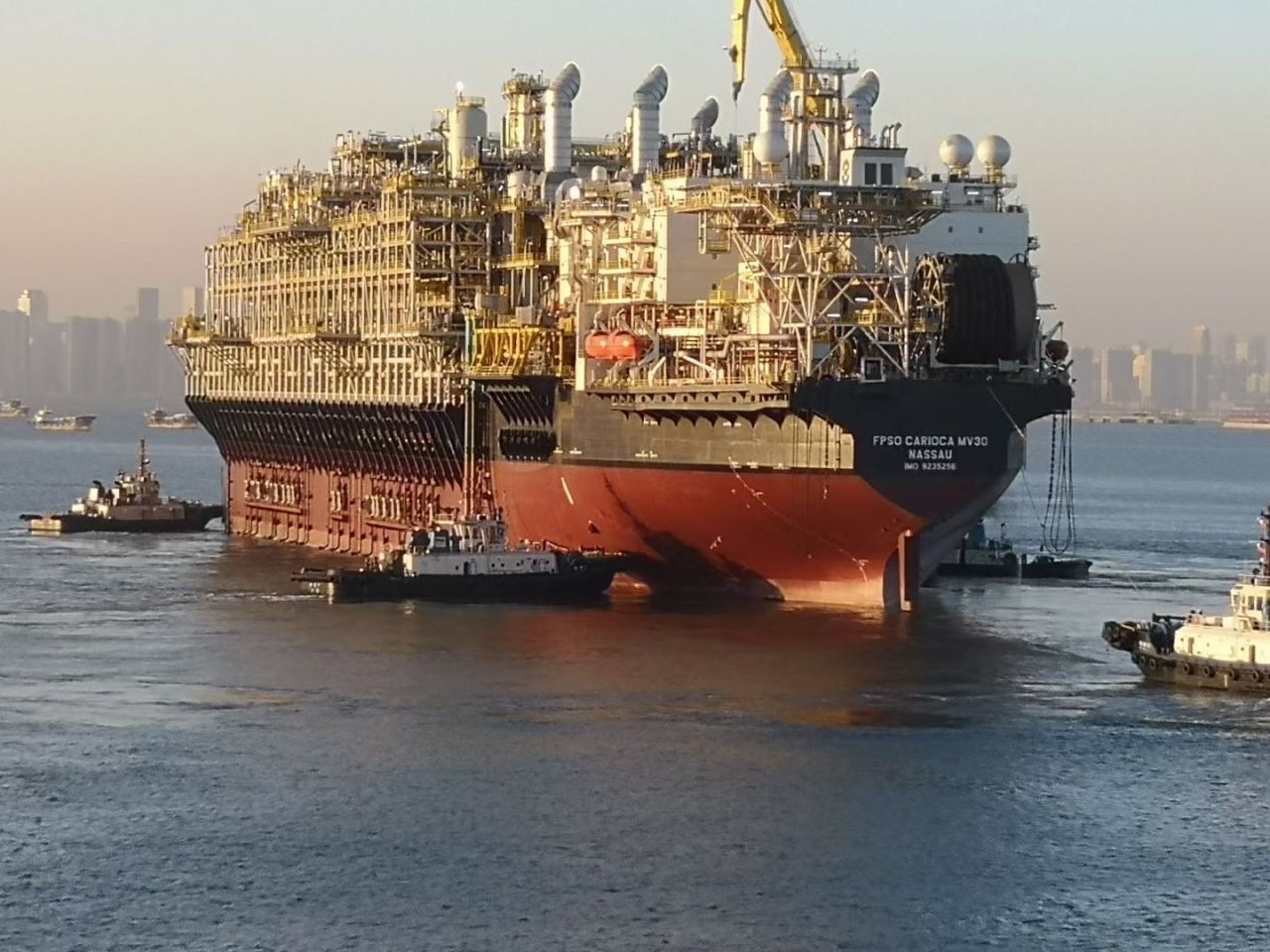

The MV30 Will Be Operated by Petrobras in the Sépia Field, in the Pre-Salt of the Santos Basin, and Will Start Producing and Generating Jobs in 2021
The giants Petrobras and Modec are close to putting another FPSO oil platform into operation in 2021. The MV30 departed from China (Cosco Dalian shipyard) yesterday (14) heading to Brazil to operate in the Sépia field but first, it WILL LIKELY HAVE to go to the Brasfels shipyard, a subsidiary of the Keppel group in Brazil that historically, carries out the assembly of modules and topsides for Modec, which would include part of the services related to local content. (still not confirmed)
Named “FPSO CARIOCA”, the MV30 was a VLCC ship from the Belgian Euronave that was sold and converted, optimizing costs and time in the construction of the FPSO. The value of the ship purchase was USD 45 million in 2017. From bow to stern, the unit measures 332 meters.
According to Petrobras and Modec, the production parameters of the FPSO are as follows:
- Production of 180,000 barrels of oil daily
- 212 million/m³ of natural gas per day
- Capacity to inject 240,000 barrels of water
- Its crude oil storage hovers around 1 million and 400 thousand barrels


This contract that Modec signed was closed in October 2017 with the Brazilian state-owned company. A very precise alignment was necessary between the Chinese Cosco Dalian shipyard, which was converting the ship, and the Brasfels shipyard, which was fabricating the modules and topsides.
-
Brazil’s ANP Opens 86 New Oil Blocks in the Equatorial Margin, Expanding the Amazon River Mouth Frontier

-
Abandoned Factory in Rio’s North Zone Becomes Urban Hazard with Standing Water and Debris

-
The U.S. Navy Conducts Submarine Tests in Idaho Lake to Detect Underwater Noises Hidden by the Ocean

-
British Factory Transitions from Mechanical Parts to Producing 420,000 Electric Power Units Annually, Supplying 70% of Ford’s Electric Cars Sold in Europe


It is important to remember that the Brasfels shipyard won the contract to manufacture the topsides of the MV30 in 2018 and that was reported exclusively by Click Petróleo e Gás (CPG) at the time. Other companies involved are:
- SOFEC – is responsible for the design and acquisition of a mooring and anchoring system for the FPSO Carioca
- McDermott – will design, inspect, supply, install, and pre-commission rigid piping, jumpers, buoyancy modules, hangers, and monitoring systems for seven branch well risers
More Than 2 Decades of Operations in Sépia and Job Generation Are Guaranteed
According to Petrobras, the FPSO Carioca is expected to enter operation in 2021 and will continue producing in the pre-salt of the Sépia field for 21 years (2042). The daily cost of this platform will be around S $ 720,000 (almost 4 million reais at today’s exchange rate). Pretty cheap, isn’t it?
In 2019, Modec projected the opening of about 800 job vacancies in Brazil in 2020, a fact that has been confirmed more and more each day, and you can check it by accessing the latest news and opportunities published by CPG here. The Japanese company usually hires technicians, engineers, and other administrative positions, as well as posting internship and trainee programs in RJ.


