Portuguese
  Spanish


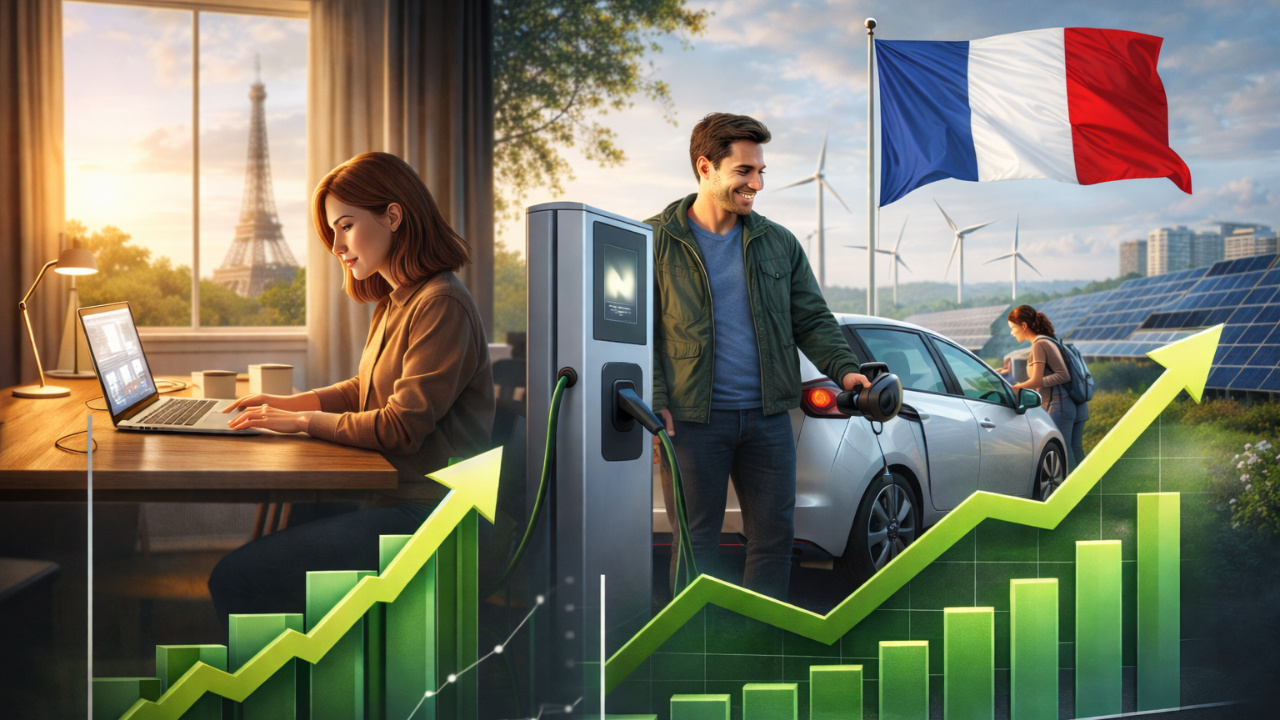

France Generates More Electricity Than It Consumes, Reduces Emissions, and Creates a Favorable Scenario for Electrification, Economic Growth, and Change in Electricity Consumption.
The electricity consumption in France has entered a new cycle. After years of partial dependence on external production, the country has started to generate more electricity than it consumes. This movement represents a significant shift in French energy policy and repositions the country in the European debate on energy transition and supply security.
In 2024, electricity production saw strong growth, driven by the recovery of nuclear generation and the expansion of renewable sources. As a result, exports hit record levels, and the carbon intensity of the electrical system fell to historically low levels.
This new scenario, however, requires adjustments in system management. In several European countries, the surplus supply has caused abrupt drops in electricity prices, even resulting in negative values at certain times of the day.
-
USP researcher creates thesis to attract international funds for the country’s electric energy sector

-
Trafigura receives authorization from ANEEL to trade electricity in Brazil and expands its operations in the largest energy market in Latin America.
-
Mobile solar panels promised to share space with corn crops, but the 20% to 25% shade reduced production by an average of 7.7% and opened a new dispute between energy and food.
-
More than 80 million kilometers of wires need to be replaced by 2040: the energy transition doesn’t just depend on panels and electric cars, but on a colossal race for copper, aluminum, transformers, and recycling of old cables.


Europe Faces Supply Exceeding Demand
The phenomenon is not exclusive to France. Germany started the year with negative electricity prices at certain times. The reason was the installation of solar capacity outpacing consumer demand growth.
With more supply than demand, the market reacts with temporary price distortions. This context pressures operators and regulators to adapt rules and encourage new uses for the available energy.
France is now facing a similar challenge. After nearly a decade of producing less electricity than it consumed, the country has reversed this trend.
French Electrical Production Recovers After Years of Decline
The decline in production began around 2015. During that period, the reduction in nuclear contribution weakened installed capacity. Subsequently, the Covid-19 pandemic aggravated the situation, delaying maintenance and strategic infrastructure projects.
In 2024, this picture changed. Nuclear production returned to levels close to those observed before the health crisis. Meanwhile, renewable energies expanded their presence in the system.
Just in the past year, solar and wind added about 7 gigawatts to the installed capacity. This advancement was decisive for the turnaround in the balance between production and electricity consumption.
Electrical System Advances Toward Decarbonization
Currently, the electricity generated in France is about 95% free of carbon. This performance positions the country among the cleanest electrical systems in Europe.
Exports have also grown significantly. In 2024, France exported approximately 89 terawatt-hours, the highest volume ever recorded.
Despite this, the country still imports about 60% of the energy it consumes when considering the entire energy matrix. According to RTE, the national grid operator, this imbalance costs between €50 and €70 billion per year.
Fossil Fuels Still Weigh on Final Consumption
Even with a highly decarbonized electricity sector, fossil fuels continue to dominate final energy consumption. They represent approximately 60% of the energy used in the country.
This figure highlights a structural difference between electrical generation and total energy consumption. Transport, heating, and part of the industry still heavily rely on fossil sources.
Therefore, the French climate strategy sets a goal to reduce greenhouse gas emissions by half by 2035. To achieve this, it will be necessary to cut the share of fossil fuels to about 30%.
Energy Efficiency and Electrification Alter Electricity Consumption
Two instruments have been central to this strategy. The first was the strengthening of energy efficiency policies. The second was the electrification of sectors that previously depended on fossil fuels.
Between 2017 and 2023, these measures began to yield concrete results. The increase in electricity prices also influenced consumer behavior, encouraging a reduction in consumption.
During this period, the annual savings were estimated at around 30 terawatt-hours, directly contributing to the current surplus of electricity.
New Demand Should Absorb Energy Surplus
With more electricity available, France has started to see opportunities to accelerate the energy transition. “France is in a favorable position to accelerate electrification,” wrote RTE in its forecasts for the period from 2025 to 2035.
The expectation is that the growth in electricity consumption will come mainly from new applications. Electric vehicles are expected to add about 17 TWh annually by 2030.
Another relevant vector is green hydrogen production by electrolysis, which should increase demand by approximately 15 TWh. Additionally, the electrification of industrial processes can add another 13 TWh to consumption.
Datacenters Pressure Consumption in the Coming Years
The expansion of digital infrastructures will also have a significant impact. Datacenters, driven by cloud services and artificial intelligence, are expected to consistently increase electricity consumption.
According to projections from RTE, consumption in these centers is expected to triple between 2025 and 2030. The volume may increase from 5 to 15 terawatt-hours in just five years.
This growth reinforces the importance of planning to ensure system stability and efficient utilization of available energy.
Economic Growth and Climate Go Hand in Hand
The existence of surplus capacity offers France a strategic advantage. The country reduces the dilemma between economic growth and environmental protection.
According to estimates from RTE, accelerated decarbonization could boost GDP growth by about 1.1% per year.
This scenario explains why the current balance between electricity production and consumption has been positively received by both economists and environmentalists, who see electrification as a lever for sustainable development.