The country sends almost all the juice the planet drinks, but an incurable disease has devastated the harvest and driven prices to unprecedented levels
The orange juice that fills breakfast glasses in Europe, the United States, and Japan is, overwhelmingly, Brazilian. The country dominates the global market for this beverage in an almost monopolistic way, but now faces a paradox: the product has never been so valuable, and it has never been so difficult to produce.
The price of orange juice has skyrocketed to record levels, with the ton reaching US$ 8,000 in the international market. The reason is cruel: an incurable plague called greening is destroying orchards in Brazil and worldwide, reducing the supply precisely from those who supply the planet.
70% of the world’s orange juice is Brazilian
The Brazilian dominance in this market is impressive. According to Notícias Agrícolas, based on projections from the United States Department of Agriculture, Brazil is expected to account for about 70% of all global exports of the beverage in the 2024/2025 harvest.
-
Brazilian Scientists Develop World’s First Tropical Wheat for Biscuit Production, Yielding Up to 150 Bags per Hectare and Highly Resistant to Common Crop Disease

-
El Niño may boost corn and soybean harvests in Brazil and Argentina, offering potential relief for global food prices.

-
Japanese Wagyu Gains International Fame for Its Intense Marbling, Tender Cuts, and High Prices in Brazil
-
Brazilian Farmers with Basic Education Create Backyard Machines That Win National Invention Contest, Beating 242 Projects


Few products have such a large concentration in a single country. When the world drinks industrialized juice, there is a huge chance that it came from a São Paulo orchard. Controlling 70% of a global market is a market power that few commodities offer Brazil, making the country a central piece in the global supply of this beverage.
The price that reached US$ 8,000 a ton
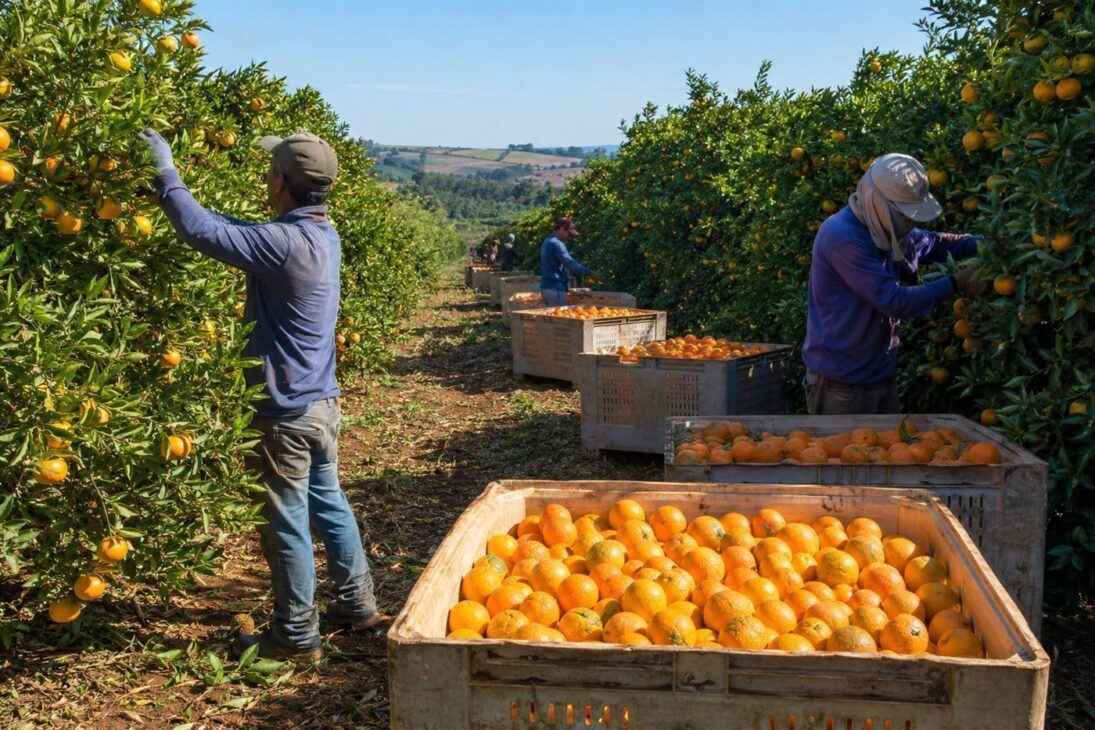
The price surge is the portrait of the crisis. According to AgFeed, the juice set new records and reached US$ 8,000 a ton in the international market, while the 40.8-kilogram box of fruit approached R$ 100 for the industry and R$ 140 for table fruit.
The jump is brutal: prices have practically doubled compared to a year ago. This movement benefits those who can still harvest, but pressures the industry and the final consumer. When the price of a product doubles in 12 months, it signals that something serious has happened with the supply, and in the case of oranges, this something has a name: greening.
Greening, the incurable plague that threatens orchards
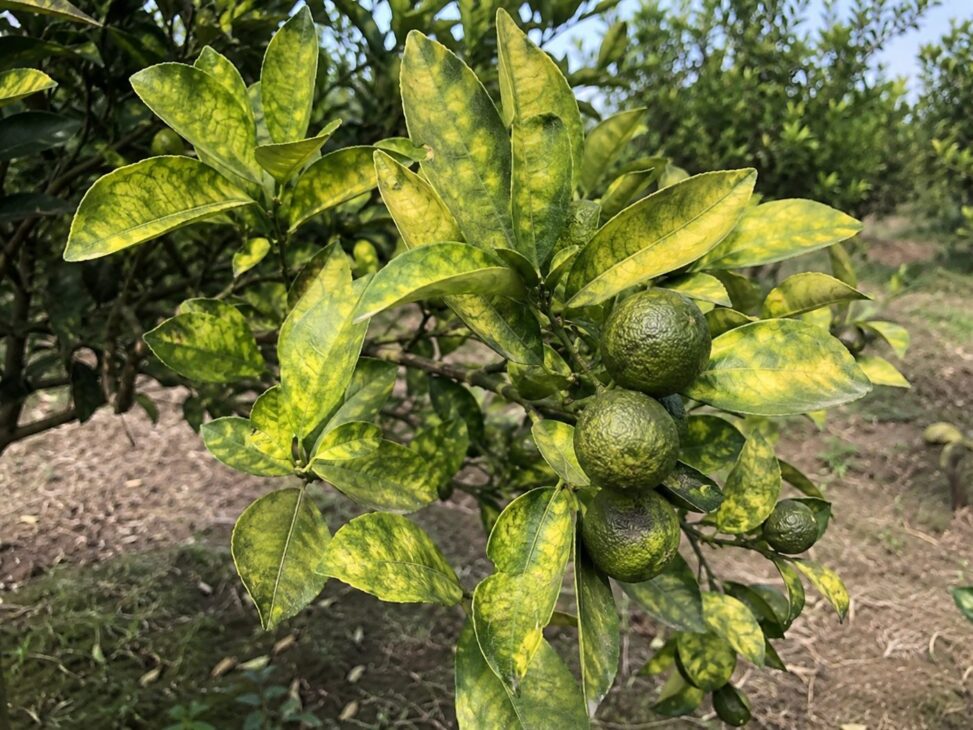
The villain of the story is a devastating disease. AgFeed explains that it is a incurable and difficult to manage disease, which reduces the number of trees and forces the eradication of entire orchards, as there is no way to save the sick plant.
The damage is not only Brazilian. In Florida, United States, production plummeted from 240 million boxes to just 15 million in the 2024/2025 season, according to AgFeed. In Brazil, the plague hit important citrus parks in São Paulo and Minas Gerais. A disease that has no cure and wipes out entire orchards is the worst possible news for those who live off citrus farming, and threatens Brazil’s own leadership.
The smallest orange harvest since 1988
The direct consequence appeared in the harvest. According to AgFeed, the 2024/2025 harvest was 223.14 million boxes, a drop of 27.4% compared to the previous season, which was 307.22 million. It is the smallest production since the 1988/1989 cycle.
Falling back to a level from almost four decades ago shows the severity of the problem. Brazil, accustomed to record harvests, saw production shrink drastically in just a few years. Returning to the production level of the 1980s is the extent of the fall that the plague caused, and explains why the market panicked over the supply.
Lower production, but 38% higher revenue
Here appears the economic paradox. Even with juice exports falling, Brazil earned more. According to Notícias Agrícolas, between July 2024 and January 2025 the country shipped about 519 thousand tons of juice, a 23% drop in volume, but revenue increased by 38%, reaching US$ 2.3 billion.
This happens because the price rose more than the volume fell. The scarcity made the product so expensive that, in the end, more money came in even by selling less. Earning more by selling less is the classic effect of a market lacking supply, but it is a dangerous balance because it depends on a crisis continuing.
Why the world depends on Brazilian orange groves
Brazil’s strength in this sector creates a delicate global dependency. As the country concentrates most of the exports, any setback in the São Paulo orchards reverberates in the juice price in supermarkets on the other side of the planet. The European breakfast literally depends on the health of Brazilian orange trees.
This centrality is both a strength and a fragility. In normal times, it guarantees foreign exchange and jobs. In times of plague, it turns a regional problem into a global supply crisis. Being the supplier of almost all the juice in the world means that Brazil’s problem becomes everyone’s problem, and that’s what’s at stake now.
Juice for one month and an off-season of three
The words of those in the sector summarize the squeeze. AgFeed brings the alert from Ibiapaba Netto, executive director of CitrusBR, who described the stock situation directly: there was juice for about one month of consumption, facing an off-season of three months.
This mismatch between what is in stock and the time until the next harvest is what keeps the market on alert. Without stock breathing room, any new crop disappointment pushes prices even higher. Working with an almost empty pantry is what makes the juice market so nervous, sensitive to every news of weather or disease in the orchards.
What this changes in your breakfast
In the end, the orange crisis reaches the consumer’s table. More expensive juice abroad means, sooner or later, more expensive juice also in Brazil, in addition to pressure on the industry that depends on the fruit. The plague in the orchards turns into extra cents on the supermarket packaging.
The question that remains is whether Brazilian citrus farming will find a way to coexist with the plague and maintain market dominance, or if it will open space for competitors. Did you know that the orange juice that much of the world drinks depends almost entirely on the health of the orchards in the interior of São Paulo?