Portuguese
  Spanish


Embrapa launched BRS Cracker, presented as the first tropical wheat from Embrapa, and in the world, created especially for making biscuits: the cultivar yields up to 150 sacks per hectare in the Cerrado, has an early cycle, and is highly resistant to blast, the disease that most attacks wheat crops.
Making wheat grow in the heat of the Cerrado was already difficult. Creating a tropical wheat tailor-made to become biscuits is something that had never been done in the world. That’s exactly what Embrapa announced: the BRS Cracker, presented as the first tropical wheat on the planet developed especially for the biscuit industry. The novelty was launched at the AgroBrasília 2026 fair. The cultivar yields up to 150 sacks per hectare and is highly resistant to blast, the disease that most afflicts wheat crops in Central Brazil.
The launch was announced by Embrapa itself. Embrapa’s tropical wheat was designed for irrigated cultivation in the hot and dry region of the Cerrado, combining an early cycle, high productivity, and disease resistance. It is not just any wheat adapted by force: it is a variety created from scratch for a specific climate and product.
The first wheat in the world made for biscuits
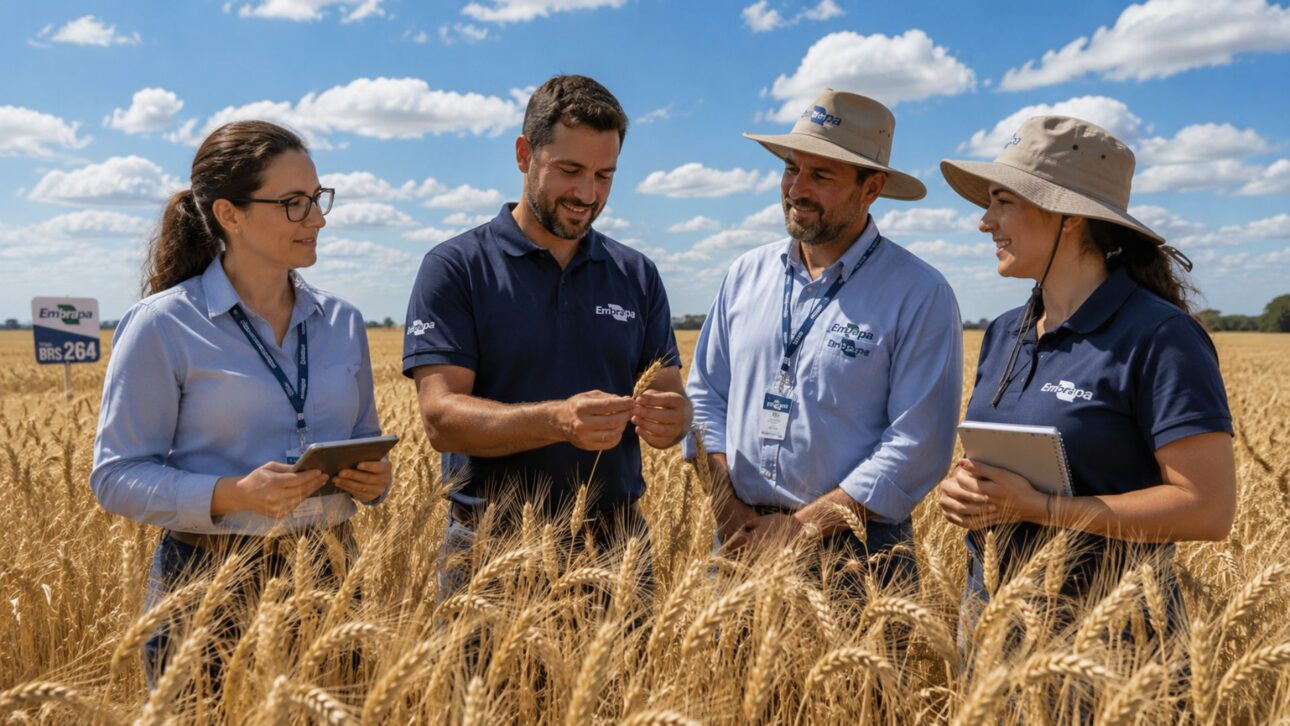
It is the first tropical wheat variety developed in the world especially for biscuit manufacturing.
-
El Niño may boost corn and soybean harvests in Brazil and Argentina, offering potential relief for global food prices.

-
Japanese Wagyu Gains International Fame for Its Intense Marbling, Tender Cuts, and High Prices in Brazil
-
Brazilian Farmers with Basic Education Create Backyard Machines That Win National Invention Contest, Beating 242 Projects

-
Brazilian Farm Innovates with Cage-Free Chickens, Producing 3,300 Odorless Eggs Daily


Instead of serving for bread or pasta, BRS Cracker was designed to deliver exactly the type of flour the biscuit industry needs. Mills were looking for wheat with specific characteristics for this market, and there was no tropical option.
Embrapa created this missing piece. Having a national wheat tailor-made for biscuits addresses a real demand in the industry.
Up to 150 bags per hectare in the Cerrado
The productivity of the new wheat impresses those who understand farming. The BRS Cracker can yield up to 150 bags per hectare, a high number for the crop.
This performance is valid for irrigated cultivation in the Cerrado, the hot and dry climate region where common wheat usually struggles. Add to this the early cycle, meaning the plant is ready to harvest faster, which helps the producer fit the harvest at the right time.
High production and quick harvest are exactly what the farmer is looking for. In the Cerrado, this can make room for wheat where other crops previously dominated.
Resistant to blast, the worst wheat disease
One of the greatest assets of the BRS Cracker is its defense against an old enemy. Blast is the disease that most attacks wheat crops in Central Brazil, capable of destroying a considerable part of the production.
The new wheat was developed with high resistance to blast, which reduces losses and the need for pesticides in the field. In hot and humid regions, this disease is a nightmare for the producer.
Having a variety that resists it changes the game of tropical wheat farming. Less blast means more guaranteed harvest and less cost with plant medicine.
Why cookies need a different wheat
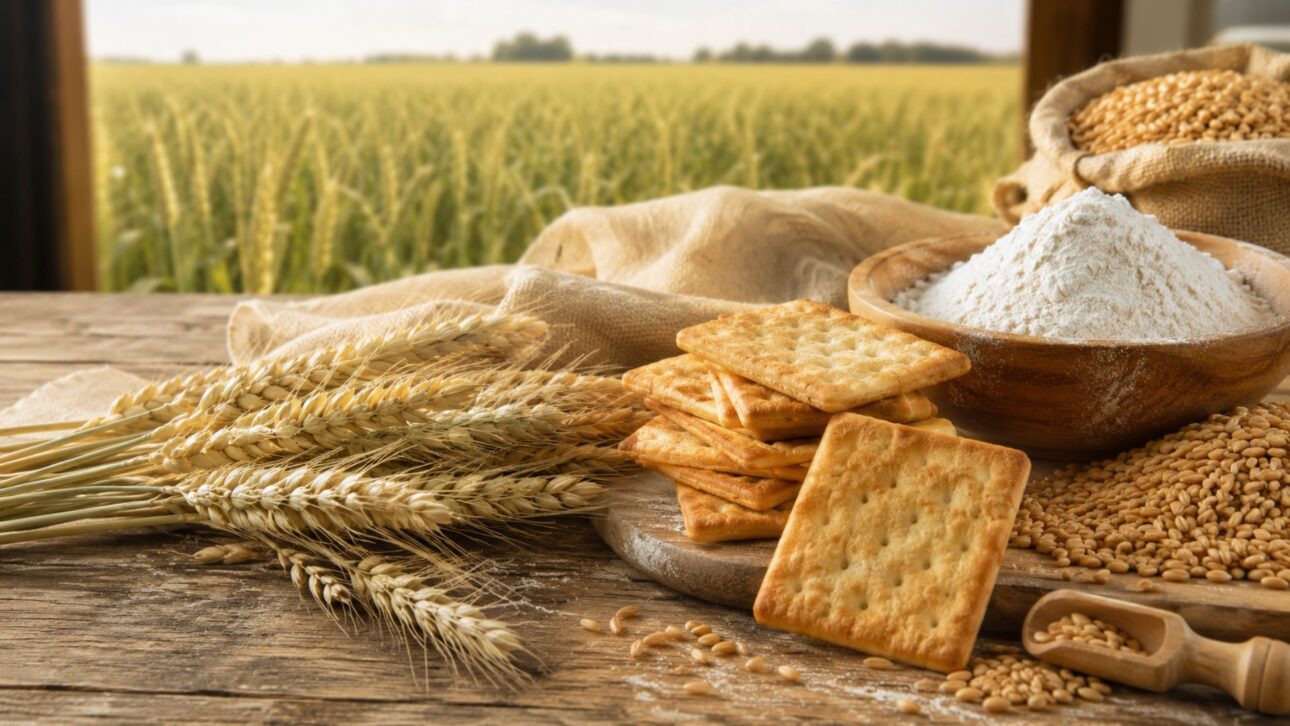
Cookies require a flour with low gluten strength, weaker, which gives that typical crumbly texture.
The wheat used for bread, on the other hand, needs strong gluten, so one flour does not substitute for the other. That’s why the cookie industry has always depended on a specific type of wheat.
Creating the BRS Cracker with the right gluten strength is delivering to the industry exactly what it asked for. It’s plant genetics adjusted for the result on the supermarket shelf.
40 years of Embrapa research
The BRS Cracker is the result of a scientific marathon. The cultivar was born from over 40 years of research, in a partnership between Embrapa Cerrados, in Planaltina, in the Federal District, and Embrapa Trigo, in Passo Fundo, in Rio Grande do Sul.
It took decades of crossbreeding and testing to develop an Embrapa tropical wheat that withstands heat, resists disease, and is suitable for biscuits, according to Canal Rural. The launch took place at AgroBrasília 2026, one of the largest agribusiness fairs.
It’s not luck, it’s long-term science. Embrapa’s tropical wheat carries the work of generations of researchers.
The bet on bringing wheat to the Cerrado
Behind the cultivar is a strategic plan for the country. Brazil still imports a large part of the wheat it consumes, and bringing the crop to the Cerrado is a way to reduce this dependency.
Embrapa aims to expand the area planted with wheat in the Cerrado from the current 400,000 hectares to about 1 million hectares in the next decade. Varieties like Embrapa’s tropical wheat are key to this, as they make cultivation viable in regions previously considered unsuitable.
More national wheat means less importation and more income in the countryside. The Cerrado could become a new wheat granary in Brazil.
What the BRS Cracker shows
The greatest lesson is the power of science applied to the field. The BRS Cracker shows that it is possible to create a tailor-made Embrapa tropical wheat, capable of high production, resisting blast disease, and still being suitable for biscuits.
Of course, it’s important to stay grounded. It’s a newly launched cultivar, aimed at irrigated cultivation, and the real gain depends on the producer adopting the variety and the climate cooperating, so expansion is a goal, not a certainty.
Even so, seeing Brazil create the world’s first wheat made for biscuits, with high productivity and disease resistance, is the kind of advancement that strengthens the national agribusiness. From Embrapa’s laboratory to the biscuit factory, the BRS Cracker connects science, farming, and shelves, and proves that innovation in the field can come from the most unlikely wheat: the one that grows in the heat of the Cerrado.
And you, did you imagine that the biscuit you eat could come from wheat specially created for the Cerrado? Tell us in the comments what you think of this Embrapa advancement.