Portuguese
  Spanish


The authorization was announced by the United States Department of State and includes 100 Stinger Block I missiles, as well as support equipment. In the Brazilian Army, the Stinger would replace the Russian Igla-S, with stock near the end. For now, it’s just a step, and the contract still depends on negotiation.
The United States government approved a possible sale of 100 portable Stinger anti-aircraft missiles to the Brazilian Army, in a package estimated at about 330 million dollars that still depends on negotiation between the two countries. According to the American Department of State, the agency formally published the official release statement on June 11, 2026. The operation involves FIM-92K Stinger Block I missiles and associated equipment. The value is an estimate, and the deal is not yet closed.
According to the official statement, Brazil requested the acquisition of 100 units of the FIM-92K Stinger Block I missile, in addition to various support items. The package includes launch devices, called gripstocks, engineering assistance, integration services, and technical, logistical, and maintenance support provided by the American government and contracted companies. The approval is a step in the foreign military sale process, and the completion depends on administrative procedures and negotiations between the governments.
What the Brazilian Army wants to buy from the United States
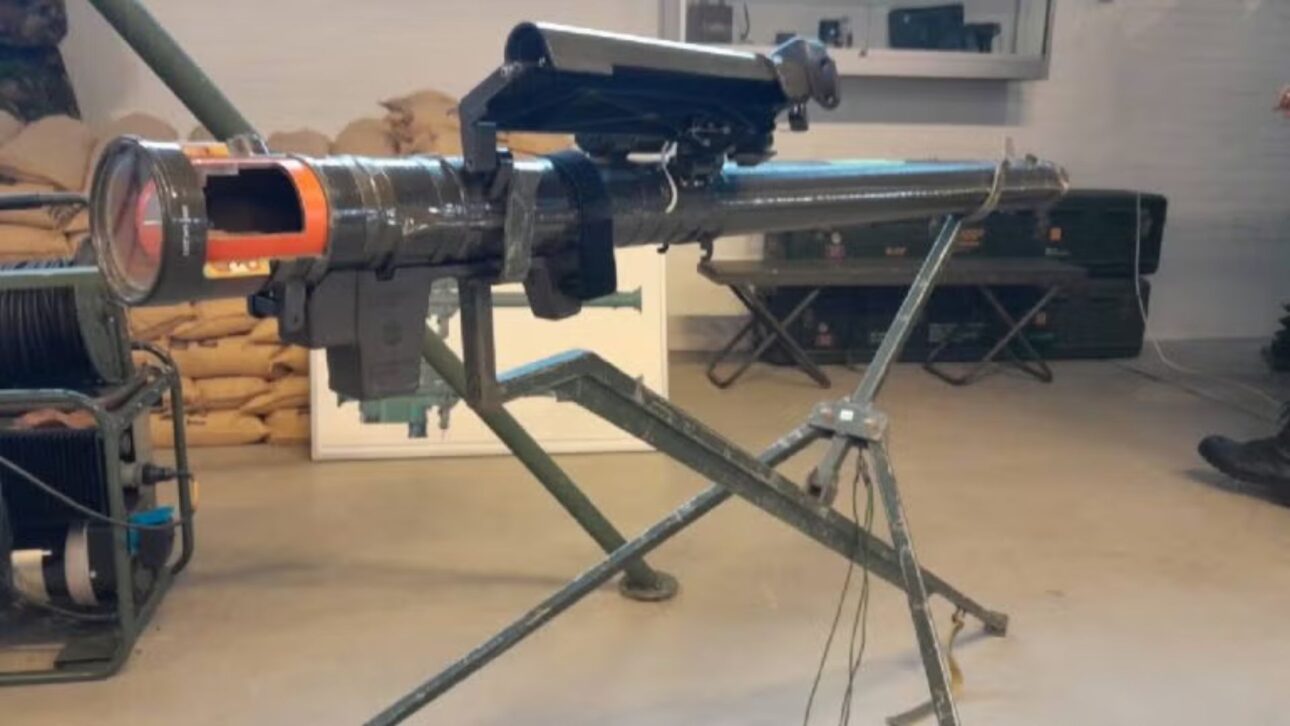
The focus of the announcement is the possible purchase of the Stinger missiles. According to the United States Department of State, the American government approved a possible military sale to Brazil with FIM-92K Stinger Block I anti-aircraft missiles and associated equipment, in an operation with a total estimated value of about US$ 330 million. The Brazilian Army requested 100 units, in addition to items to support the operation of the system.
-
Bruno Guimarães, 28, Misses Crucial Penalty Against Norway in World Cup After Replacing Vinicius Jr.

-
Inspired by a school lesson on Africa’s water crisis, a young boy raised money through chores to fund a well that transformed a Ugandan community.

-
U.S. Air Force Launches Air-to-Air Missile Project with Range of Up to 1,850 km for Indo-Pacific Operations

-
Brazilian Construction Worker Moves to France, Earns Up to €2,500 Monthly with Home Renovations, Gains Social Media Attention




The content of the package was detailed in the statement. According to the material, the launch devices, known as gripstocks, engineering assistance, integration services, and technical, logistical, and maintenance support provided by the United States government and contracted companies are included. It is important to highlight that this approval from the Department of State is just one step in the process, and the contract has not yet been signed.
Why the sale is not yet a done deal
The most important point is that nothing is concluded. According to the Department of State, the approval represents a step in the foreign military sales process conducted by the United States, and the $330 million is an estimate of the total value of the operation, not a final price. The finalization of the contract still depends on the completion of administrative procedures and negotiations between the two governments.
The justifications come from American authorities. According to the Department of State, the proposal aims to strengthen Brazil’s ability to protect its territory and combat illicit activities in its regional area of influence, including operations against drug trafficking. Authorities claim that the incorporation of the missiles should enhance the Brazilian Army’s air defense and that the acquisition is part of the modernization of the Armed Forces, with reinforcement of airspace surveillance in South America. These are the arguments presented by the American government.
The Stinger and the replacement of the Russian Igla-S
The Stinger is a short-range air defense weapon. According to the material, the FIM-92 Stinger is a portable missile widely used by military forces worldwide, designed to hit aircraft, helicopters, and other low-altitude targets, and is considered one of the main short-range air defense weapons in operation. In the Brazilian Army, it would replace the Russian Igla-S, which is nearing the end of its stock, with few units still in a limited number of Anti-Aircraft Artillery Groups (GAAE).
The replacement is related to the wear of the Russian equipment. According to the report, the Igla is considered outdated by the Brazilian Army itself, and Russian support, which was never satisfactory, worsened after Russia’s invasion of Ukraine in 2022. Therefore, the purchase of the Stinger missiles is presented as part of the replacement of an old system of Russian origin, whose maintenance has become more difficult.
How the Stinger fits alongside the RBS-70NG
The new missile would not arrive alone. According to the material, in the Brazilian Army, the Stinger would complement the RBS-70NG, manufactured by Saab, which has a greater range but requires a ground-fixed platform for launch. The idea is that the two systems perform different functions within air defense.
The practical difference lies in the way of operation. According to the report, the Stinger can be launched from the soldier’s shoulder, with the activation of a button followed by the trigger, making it more portable. Thus, the RBS-70NG would cover long-range defense in a fixed position, while the Stinger would provide the Brazilian Army with a mobile short-range option, should the negotiation progress and the contract be concluded.
The United States Department of State has approved a possible sale of 100 Stinger missiles to the Brazilian Army, for an estimated value of about $330 million, as a step to modernize the country’s short-range air defense. The missiles would replace the Russian Igla-S, with stock nearing its end, and complement the RBS-70NG, from Saab. Still, it is important to remember that the deal is not closed, that the value is an estimate, and that the contract depends on the completion of procedures and negotiations between the two governments.
And you, do you think the purchase of the Stinger missiles is a good investment for the Brazilian Army, or could the money have other priorities? Share your opinion and exchange ideas with other readers about the modernization of the Armed Forces, with respect for different views.