






 Portuguese
  Spanish


Os valores acima são uma média e podem variar conforme a região e a complexidade do trabalho. Além disso, é importante considerar que, em alguns casos, pode ser necessário realizar ajustes no telhado ou na estrutura da casa para garantir a correta instalação das calhas.
Por isso, é sempre recomendado solicitar um orçamento detalhado e, se possível, buscar referências de profissionais que já realizaram trabalhos semelhantes. Dessa forma, você garante um serviço de qualidade e evita surpresas desagradáveis durante a execução do projeto.
- Material: R$ 30 to R$ 40 per meter
- Material + installation: R$ 55 to R$ 75 per meter
Among the mentioned materials, galvanized steel stands out for combining structural resistance and relatively affordable cost, which is why it remains widely used.
-
China’s Engineered Bamboo: The “Material of the Future” Stronger Than Steel and a Sustainable Wood Alternative

-
Egypt’s “New Nile”: 170 km Artificial River Aims to Turn Desert into Farmland, but Water Supply Concerns Loom
-
Unable to secure a mortgage as a self-employed single mother, she designed her own floating home from a 20-meter boat and now lives “off-grid” with her two children and solar panels on an English canal.
-
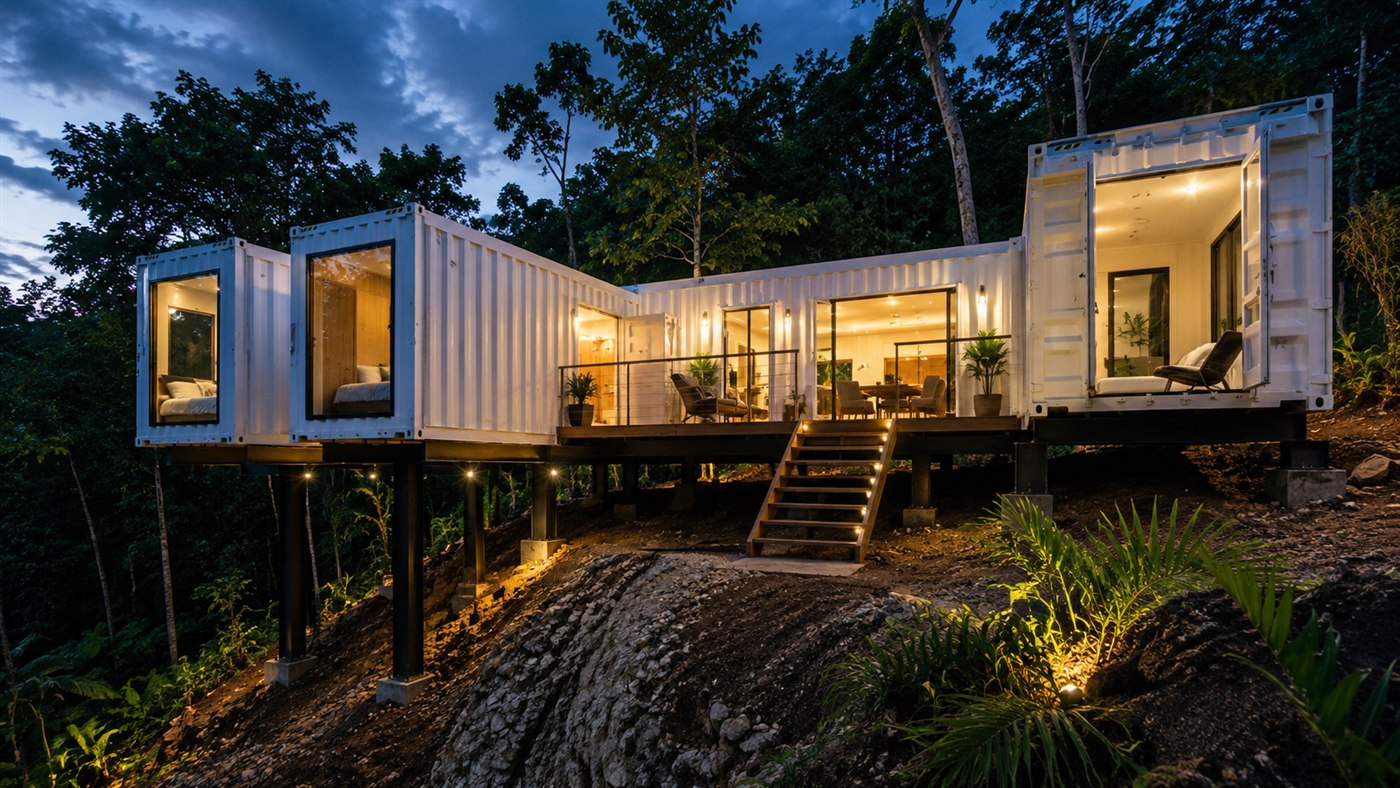
Man Transforms Rusty Shipping Container into Luxury Home with Insulated Walls, Large Windows, and Drywall Finish, Surprising Onlookers


Not every roof generates the same work for the roofer
Many people believe that the size of the house is the main factor in defining the budget. However, the shape of the roof often has a great influence on the service.
Roofs with many cutouts require constant adaptations of the metal pieces. Curves, changes in direction, and junctions between different parts of the roof increase the time needed for execution.
In these cases, the roofer needs to make specific cuts, create additional connections, and reinforce sealing at various points of the structure.
The elements that usually increase complexity include:
- Large number of corners and curves;
- High number of joints;
- Need for additional sealing;
- Installation of multiple downspouts;
- More labor-intensive fixing points.
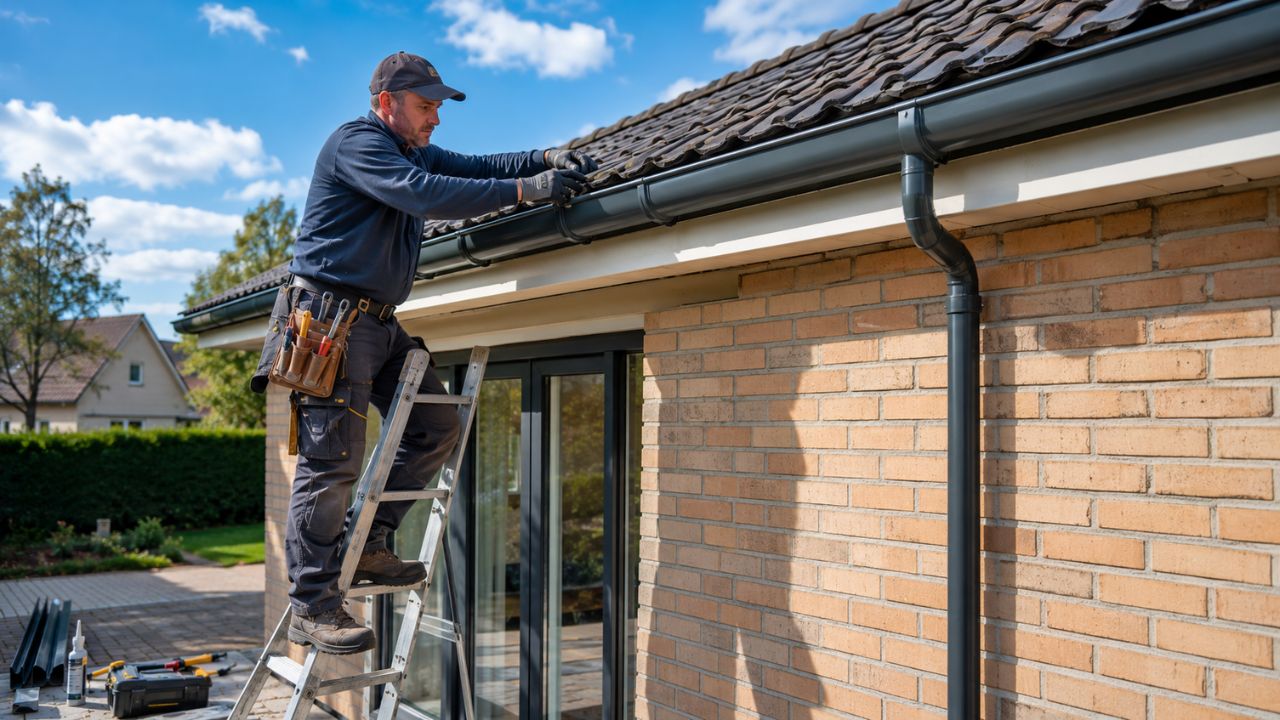
The importance of the correct gutter slope
Far beyond appearance, proper functioning depends on a practically invisible detail: the slope.
Professionals carefully calculate the necessary gradient for the water to naturally flow to the downspouts. When this slope is not respected, the system may accumulate water in certain sections.
According to the United States Department of Housing and Urban Development, improperly installed systems can overflow in a short time.
This excess water can return to internal parts of the roof, causing stains and accelerating deterioration processes. Therefore, technical execution becomes as important as the choice of material.
When roof access increases installation costs
Even in single-story properties, ease of access is not always guaranteed. Homes built on sloped terrain or with higher ceilings may require auxiliary structures to allow the team to work safely.
In these situations, the use of scaffolding becomes part of the project and directly impacts costs. Additionally, transporting and handling metal sheets in higher locations increases the risks of the activity. For this reason, experienced professionals usually consider these conditions when preparing the budget.


Saving too much can be costly
The search for lower prices is natural, but excessive savings can lead to undesirable consequences. Very thin materials tend to deform more easily when leaves, branches, or other debris accumulate on the structure. As a result, the water flow can be impaired.
Similarly, hiring inexperienced workers increases the chances of installation failures. For this reason, investing in a qualified gutter installer is considered an important measure to ensure the system’s proper performance and avoid future repair expenses.
Although the most common question is how much it costs to install a gutter, experts emphasize that the system should also be analyzed for the benefits it offers to the construction.
When water drainage occurs correctly, the structure helps preserve the masonry, reducing the risk of leaks and damage caused by constant exposure to moisture. Thus, the budget involves not only the installation of a roof component but also a protective measure for the residence itself.
In a scenario of frequent rains and constant weather changes, the proper functioning of rainwater drainage contributes to increasing the property’s durability and avoiding losses that can cost much more than the initial installation.
Source: Market Monitor







