





 Portuguese
  English
  Spanish
  5 min of reading
  0 comments


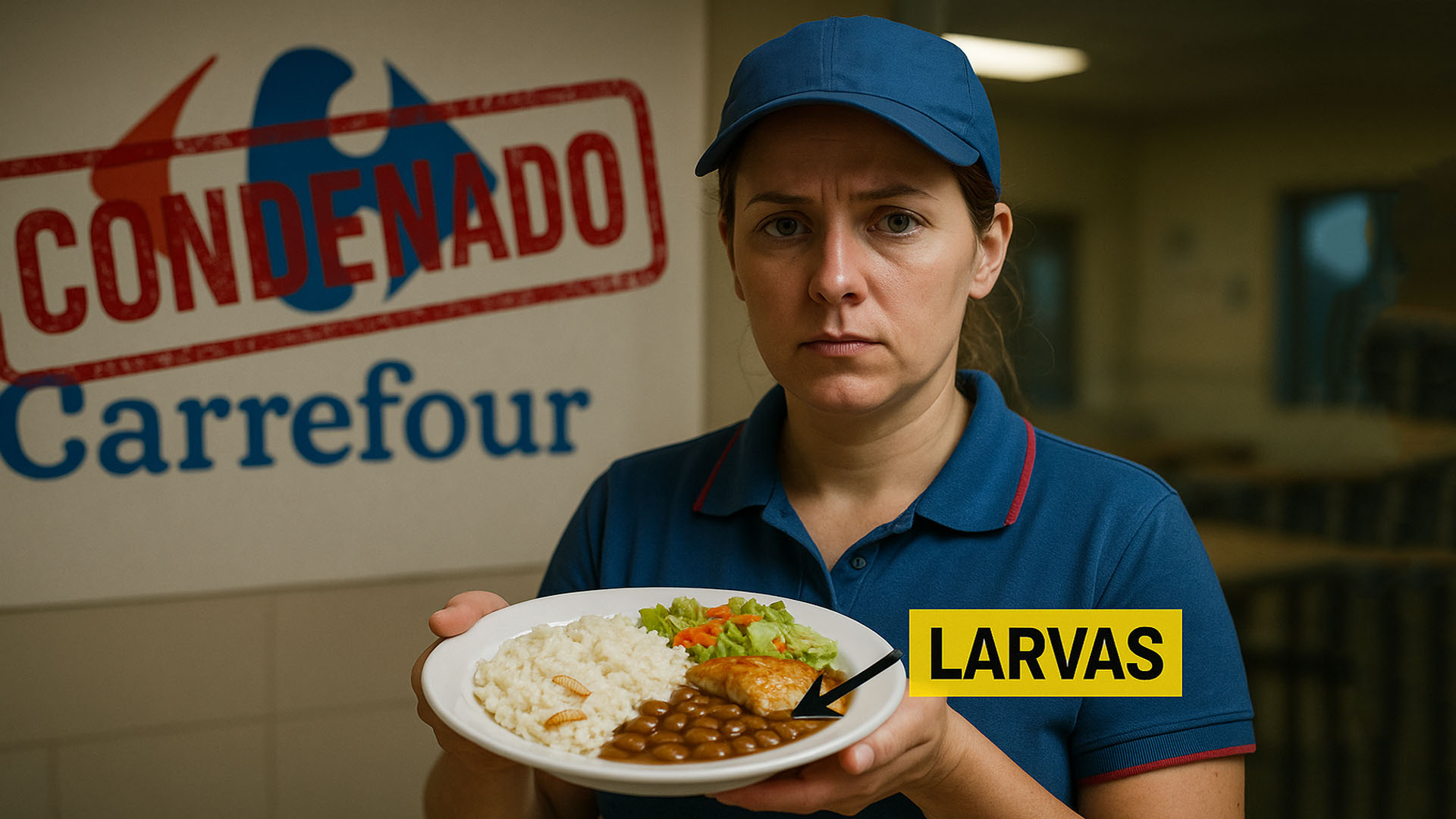
The Decision of the 2nd Labor Court of Guarujá Recognized Degrading Conditions After Evidence Confirmed the Presence of Insects and Larvae in Food Served to Employees.
The Labor Court of São Paulo ruled that Carrefour must pay R$ 50,000 in moral damages to a former employee who worked under conditions deemed inadequate on the São Paulo coast. The sentence, issued by the 2nd Labor Court of Guarujá, represents another chapter in labor disputes involving major retail chains in Brazil.
The case gained attention after evidence was presented confirming the poor quality of the food offered to workers. The court ruling, signed by Judge Eduardo José Matiota, was based on witness testimonies and photographic evidence revealing the presence of larvae and insects in the meals.
The worker served as a gas station attendant at a gas station located inside a hypermarket of the chain between October 2022 and May 2025. During this period, according to reports submitted to the court, employees were exposed to insufficient meals and inadequate hygiene conditions.
-
Amid the United States’ economic blockade, China delivers 15,000 tons of rice to Cuba as part of a 60,000-ton donation personally approved by Xi Jinping. The package includes 80 million dollars and solar panels for hospitals.

-
For around 200 reais, anyone can buy a kit and have a chip implanted between their fingers to replace cards, keys, badges, and even medical information in case of a hospital emergency.
-
A 600-meter hill in the interior of Santa Catarina hides a volcanic past of almost 600 million years. The Morro do Garrafão in Corupá may have been an ancient extinct volcano, and science now confirms what the residents have always suspected.
-
Family has lived for over 50 years without electricity and running water at home in the South of Minas, 10 minutes from the city, improvising light, bath, and water while facing a lack of basic resources and awaiting property regularization.





Evidence Confirmed Degrading Conditions in the Cafeteria
According to the ruling, the oral testimonies unanimously confirmed that the meals served were in poor hygiene and preservation conditions. The judge emphasized in his ruling that the food was unfit for human consumption.
The meals contained insects and larvae, were poorly stored, and prepared without the necessary sanitary care, as found during the analysis of the case. A photograph attached to the case clearly showed a larva in a plate of food, serving as compelling evidence of the irregularities.
In addition to the problems with food quality, the court ruling pointed out another serious issue: the differential treatment between workers. There was unequal treatment, as market employees received better quality food than cafeteria workers.
The attorneys for the former employee, Lucas Pinho and Lucélia Santos, initially requested compensation of R$ 61,500. However, the amount was reduced to R$ 50,000 by the presiding judge. In addition to the compensation for moral damages, Carrefour was ordered to pay an amount equivalent to the meal allowance for each day worked by the employee.
Company Denies Accusations and Appeals Against Decision
In a statement, Carrefour reported that it considers the accusations unfounded and that it appealed the court’s decision. The company stated that it took immediate measures upon learning of the complaints, including replacing the outsourced company responsible for providing food.
The retail chain reiterated its commitment to a safe and respectful work environment for all employees. During the proceedings, the company’s defense claimed that the worker’s statements were fanciful and that the company always provided the best working conditions.
However, witness testimonies were decisive for the court’s ruling. The accounts confirmed not only the inadequate quality of the food but also the lack of appropriate structure in the work environment.
Additional Requests Were Denied by the Court
In the same action, the employee had made other requests related to work conditions. She claimed overload of duties, stating that she had to clean, sell products, and operate the cash register, in addition to her main duties as a gas station attendant.
The worker also questioned the lunch break, arguing that the cafeteria was located about 10 minutes from the station. According to her, this commute, combined with the time needed to heat food in a single microwave available, compromised the rest period.
The defense requested salary additional and overtime related to the break time. However, the judge denied these specific requests, only maintaining the ruling related to the conditions of the food provided.
Workers’ Defense Seeks Increase in Compensation
The attorneys for the former employee regarded the ruling as an important advance in the defense of labor rights but considered the amount of compensation insufficient given the gravity of the facts. For this reason, the defense filed an appeal requesting an increase in the compensation.
According to the attorneys, the current amount does not fulfill the pedagogical and punitive character that the ruling demands. They argue that if the amount is not increased, the company may feel encouraged to maintain inadequate practices.
In a statement, the law firm revealed that it represents another 10 workers in similar situations against the same company. This suggests that the case is not isolated but part of a pattern of problems in managing work conditions.
According to the attorneys, the employees tried to resolve the issue internally. They even conducted a petition demanding improvement in food quality, but did not receive an effective response from the company’s management.
Labor Legislation and the Right to Adequate Food
The Consolidation of Labor Laws ensures the right to adequate food at work, establishing the employer’s obligation to provide meals or conditions for workers to have their meals properly.
Although the CLT does not establish the obligation to provide food in all cases, the legislation stipulates that when offered, the meal must meet minimum standards of quality and hygiene. Regulatory Norm 24 specifies the sanitary and comfort conditions that places intended for meals must present.
The Worker Nutrition Program, established in 1976, encourages companies to provide nutritious food to employees, offering tax benefits to organizations that join the program. When the company participates in PAT, the amount paid is not considered salary.
Cases like Carrefour’s in Guarujá highlight the importance of complying with labor laws related to food. The court ruling reinforces that companies cannot neglect basic aspects that directly affect the health and dignity of workers.
Do you believe that cases like this are exceptions or do they reflect broader problems in labor relations of large retail chains? Are the current compensations sufficient to curb inadequate practices, or should the amounts be higher to have a pedagogical effect? Share your opinion in the comments.









Be the first to react!