Portuguese
  Spanish


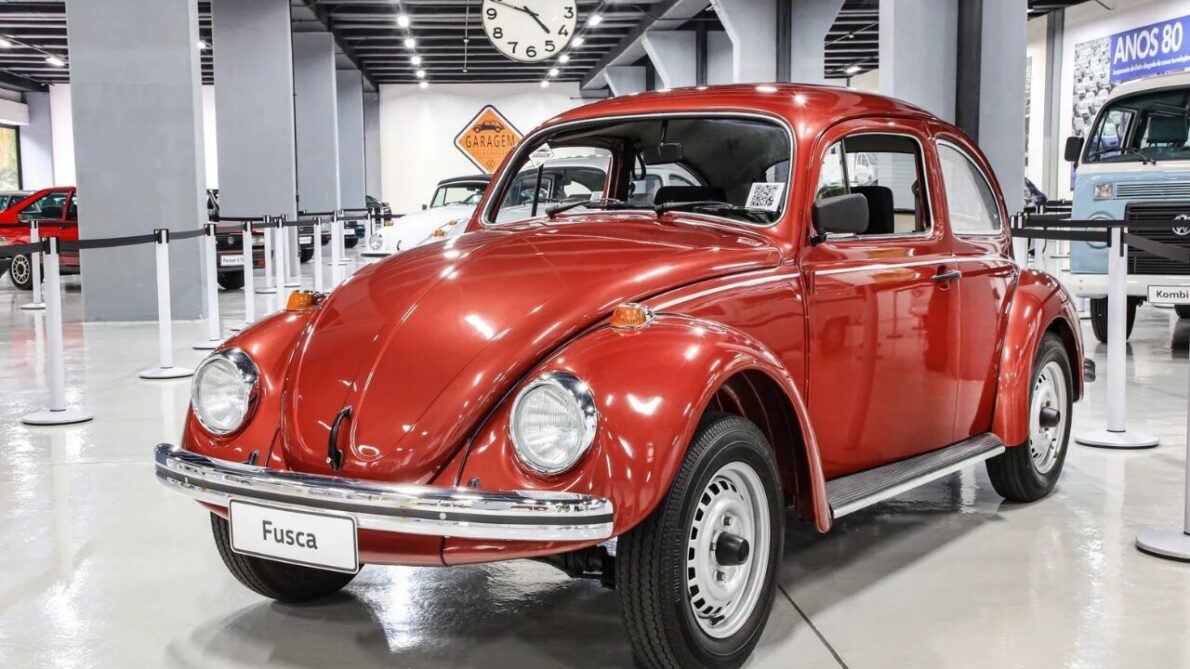

1994 Fusca 1600: A Classic Car from the ’90s with a 1.6 Naturally Aspirated Engine and Unmistakable Design! Discover if It’s Still Worth It for You.
The 1994 Fusca 1600 is a car model that piques the interest of many enthusiasts and collectors. This iconic car represents a significant part of automotive history. With its 1.6L naturally aspirated engine and a design that marked its time, it remains an attractive option for those seeking a vehicle with a story and unique features.
Fusca 1600 Engine Characteristics
The 1994 Fusca 1600 is equipped with a 1.6L naturally aspirated engine, meaning it has a displacement of 1584 cm³.
This engine, with 4 opposing cylinders and 8 valves (2 per cylinder), delivers a power output of 58.7 hp. The fuel system operates with dual carburetion, and the fuel used is ethanol.
-
End of an era in Brazil: beloved sedan by Brazilians is discontinued despite having a 2.0 engine with 151 hp, CVT transmission, 466-liter trunk, and up to 650 km of range.

-
New Law Proposal in Brazil Could Heavily Penalize Drivers: Dangerous Overtaking May Become a Serious Offense with Fines Increased Tenfold and a 12-Month License Suspension; Update on 2026 Progress

-
Electric Revolution: Watts W125 Motorcycle Offers 160 km Range, 90 km/h Speed, and Affordable Price Starting at $3,000
-
General Motors Replaces Over a Thousand Workers with 50 Cobots at Electric Vehicle Plant, UAW Union Criticizes Move Amid Industry’s Automation Push



The engine is positioned longitudinally and at the rear, contributing to its characteristic performance.
The Fusca 1600 has a torque of 11.9 Kgf.m and is known for its rear-wheel drive and mechanical steering.
The transmission is a manual 4-speed, offering a driving experience reminiscent of classic cars from the era.
Performance and Fuel Consumption
In terms of performance, the Fusca 1600 has a maximum speed of 140 km/h and takes 14.3 seconds to accelerate from 0 to 100 km/h.
For fuel consumption, the vehicle averages 8.4 km/L in the city and 9.7 km/L on the road.
These figures are representative for the time and reflect the efficiency of the engine and the overall car configuration.
The Fusca 1600’s suspension is designed to ensure a comfortable and safe ride.
The front suspension is independent with trailing arms, while the rear suspension is independent with a swing axle.
In terms of braking, the car features solid disc brakes at the front and drum brakes at the rear.
The Fusca 1600 is equipped with 15-inch steel wheels and tires sized 165/80/R15.
These specifications contribute to the vehicle’s stability and overall performance.
The Fusca 1600 measures 4050 mm in length, has a wheelbase of 2400 mm, a height of 1500 mm, and a width of 1540 mm.
It has a curb weight of 796 kg. The trunk has a capacity of 141 liters, and the fuel tank holds 41 liters.
The car is a 2-door model and accommodates up to 5 occupants.
With its compact design and technical features, the Fusca 1600 is a car that combines nostalgia and functionality.
Despite being an old model, it continues to attract people who appreciate vehicles with a rich history and reliable performance.
The Fascination with the Fusca 1600 Today
Today, the Fusca 1600 is more than just a simple car; it is a cultural icon. For many, acquiring this model is a way to connect with the past and experience an important part of automotive history.
The appeal of the Fusca 1600 lies not only in its technical specifications but also in the nostalgia it evokes.
Its striking presence on the streets, the characteristic sound of the engine, and the unique design ensure that the Fusca 1600 remains a beloved car among collectors and enthusiasts.
So, Is the 1994 Fusca 1600 Worth It?
For those considering purchasing a Fusca 1600, it’s important to note that this model may require specific maintenance due to its age.
The availability of parts and maintenance costs may vary, and it’s advisable to seek a mechanic specialized in classic cars.
Additionally, the market value of the model may vary, but it can be found for around R$ 40,700, according to the FIPE table.
Evaluating the vehicle’s overall condition, maintenance history, and originality of parts are crucial aspects to ensure a sound investment.