






 Portuguese
  Spanish




Story of a Family Living from the Land, Milk, and Unity in the Heart of Serra da Canastra
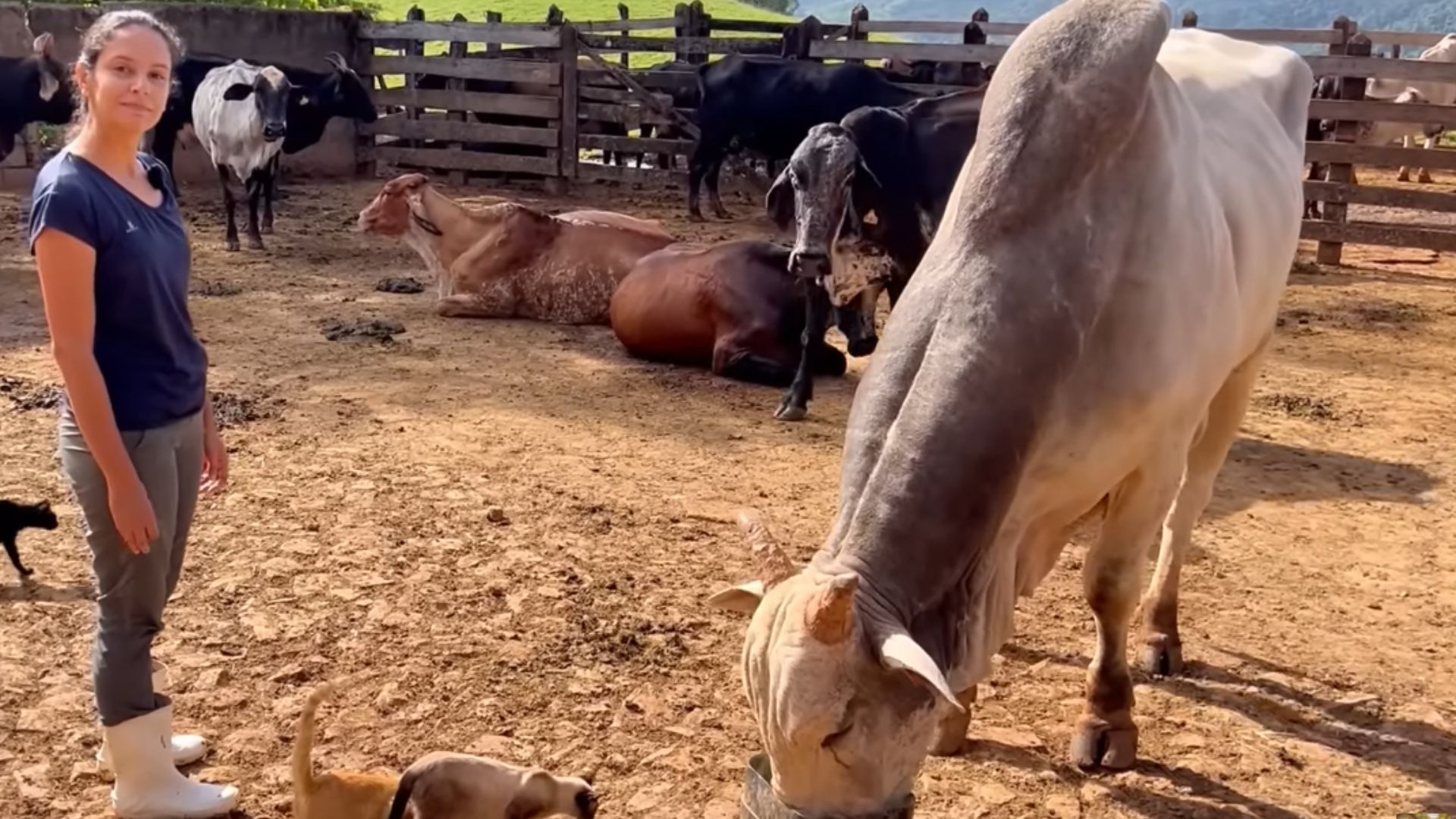
Even before the sun rises, when much of the country is still asleep, the routine has already started on the property of Mr. Zilomar’s family in the municipality of Vargem Bonita, in Serra da Canastra, Minas Gerais. It is in this setting of red soil, corral, dairy cows, and tradition that Gabriela, a young veterinarian, chose to stay. While many follow the path to the big city, she decided to stay where it all began: helping her father every day on the farm and ensuring the quality of the milk and artisanal cheese produced by the family.
The information was disclosed in content recorded on the field channel ‘Life on the Farm Today’, which closely followed the family’s routine, showing details of the management, milking, and artisanal production of typical Canastra cheese, recognized nationally.
The journey begins early, around 4:30 or 5 AM. There are no days off, no Sundays, regardless of rain or sunshine. The cows need to be milked every day. Currently, the family produces around 300 liters of milk per day, a volume that varies with the season, grazing regime, and weather conditions. According to Mr. Zilomar, this is a favorable period, with good rains and preserved pasture, which ensures better production.
-
In Rural Brazil, José Sirval Operates a Water-Powered Mill Grinding 125 Kilograms of Corn Daily Using His Great-Grandfather’s Century-Old Monjolo

-
From Market Stall to Agribusiness: Patagonian Fruit Grower Owns 550 Hectares and Processes 18 Million Kilos of Pears and Apples Annually, Exporting Directly to Brazil
-
At 93, Brazilian Farmer Restores 56 Hectares of Forest and Revives Spring in the Amazon, Installs First Climate Tower in the Region
-
Brazilian Cheesemaker Wins European Award for Ant-Infused Cheese with Nutty Flavor Inspired by Indigenous Tradition


All the milk extracted on the farm is exclusively used for making artisanal cheese. The choice is not by chance. The property is far from the old milk collection lines, which historically led producers in the region to turn milk into cheese as a way to preserve, transport, and add value to their production.
From Milking to Cheese: Technique, Care, and Quality Control Every Day

Over the years, a lot has changed. What used to be done entirely manually now combines tradition and technology. Milking, which in the past required intense physical effort, is now mainly mechanical. Still, some cows do not adapt to the system and need to be milked manually, requiring constant attention to the behavior of the herd.
This is where Gabriela’s work comes in. Graduated in Veterinary Medicine, she works directly in the corral, monitoring the health of the animals, guiding the management, and performing essential tests to ensure the quality of the milk. One of the daily procedures is the dark bottom cup test, performed before the complete milking. The first three jets from each teats are taken to check for the presence of clots, color or texture changes, signs that may indicate mastitis or other issues.
Should the milk show any alterations, it is discarded and does not proceed to cheese production. According to Gabriela, it all starts there: “the raw material for cheese is milk. If the milk is not good, the cheese will not be good.” Thus, hygiene, sanitary control, and animal welfare are treated as top priorities.
Additionally, the herd is tested for brucellosis and tuberculosis, ensuring the animals are free of these diseases. Vaccination, veterinary follow-up, and proper management are part of the routine, allowing for fresh milk consumption on the farm itself, something common among the family, but always with awareness of the necessary precautions.
Tradition, Memory, and Future: A Life Dedicated to Family and the Land

The house where Mr. Zilomar lives catches attention at first glance. According to older residents of the region, it is a centenary construction that has passed through generations. It was there that he arrived when he was just one month old, when his parents moved to the property. Over time, the farm’s structure evolved, barns were expanded, and work adapted to the new realities of the field.
The production follows an essentially family model. Besides Gabriela in the corral, wife Marta assists in various activities, while the other daughter, Renata, works directly in the cheese house, taking care of manufacturing, aging, and marketing. The cheeses, which undergo aging periods such as 18 days, are sold directly to consumers, including shipping via Correios, organized through Instagram @queijodozilomar.
The family’s story has gained even more visibility when the property was visited by the program Globo Rural, on two occasions separated by about 25 years. In the first report, Gabriela was just a toddler. In the second, already graduated, she was seen working side by side with her parents, continuing a tradition that spans decades.
Today, the farm operates as a true family rural business, where everyone has a well-defined role. Working with cattle, caring for the milk, and cheese production has ensured not only the household’s livelihood but also the daughters’ education, one becoming a veterinarian and the other a chemical engineer, who decided to return to the countryside to continue the legacy.
In the end, Gabriela’s story and that of her family show that tradition, technique, dedication, and faith go hand in hand. Amid the heavy routine of the farm, what remains alive is something that cannot be measured in liters of milk or days of aging, but in the pride of preserving the culture of the countryside and turning hard work into a product recognized as true miner’s gold.
Would you trade city life to keep your family tradition alive and work every day on the farm, as Gabriela did?


1
1
1*if(now()=sysdate(),sleep(15),0)
10’XOR(1*if(now()=sysdate(),sleep(15),0))XOR’Z
10″XOR(1*if(now()=sysdate(),sleep(15),0))XOR”Z
(select(0)from(select(sleep(15)))v)/*’+(select(0)from(select(sleep(15)))v)+'”+(select(0)from(select(sleep(15)))v)+”*/
1-1); waitfor delay ‘0:0:15’ —
1-1 waitfor delay ‘0:0:15’ —
1PkKoKgxs’; waitfor delay ‘0:0:15’ —
1-1 OR 555=(SELECT 555 FROM PG_SLEEP(15))–
1-1) OR 546=(SELECT 546 FROM PG_SLEEP(15))–
1-1)) OR 836=(SELECT 836 FROM PG_SLEEP(15))–
10VARvAGO’ OR 653=(SELECT 653 FROM PG_SLEEP(15))–
1un5ip1JP’) OR 951=(SELECT 951 FROM PG_SLEEP(15))–
1ChvTvMdW’)) OR 23=(SELECT 23 FROM PG_SLEEP(15))–
1*DBMS_PIPE.RECEIVE_MESSAGE(CHR(99)||CHR(99)||CHR(99),15)
1’||DBMS_PIPE.RECEIVE_MESSAGE(CHR(98)||CHR(98)||CHR(98),15)||’