






 Portuguese
  Spanish


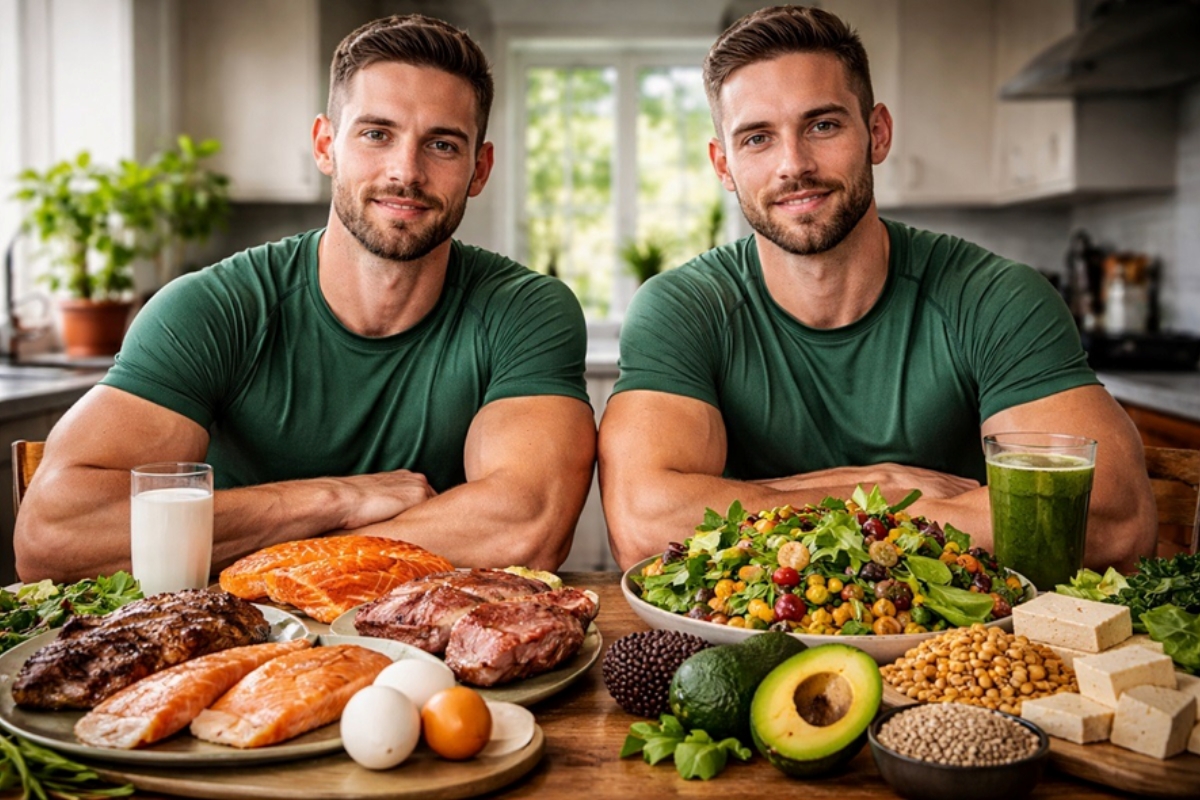


In London, Athlete Brothers Conducted a 12-Week Food Experiment with Opposing Diets to Measure Physical Performance and Health, Sparking Discoveries About Energy, Cholesterol, and Microbiota That Caught Experts’ Attention
The brothers Hugo and Ross Turner live to test the limits of the body. Adventure sports athletes for over 10 years, they turned their own routine into a human laboratory.
Being identical twins, with practically the same genetics, they decided to use this advantage to answer a question that is growing worldwide: does cutting out animal products really change physical performance?
The experiment attracted attention because it was monitored by experts in twin research. For 12 weeks, the two maintained identical training and caloric intake. The only difference was their diet.
-
A 3-year-old deaf student received the first white belt in Jiu-Jitsu and understood the achievement because the teacher learned Libras to communicate with him, in a video that surpassed 7 million views and moved social media by showing inclusion happening on the mat.

-
Miguel Krigsner opened a small compounding pharmacy in Curitiba in 1977, turned Brazilian fragrances into a national success, and created O Boticário, now one of the largest beauty networks in the world.

-
Meet the charming parrot grandpa, who became known for hugging free birds and revealed how he gained their trust over the years.
-
After 18 years of development, Bridgestone launches the AirFree airless tire, which requires no inflation and is puncture-proof, into daily service in Japan, starting with autonomous vehicles up to 20 km/h, used for transporting elderly people.




The outcome revealed curious differences, learnings about energy, and even clues about how the human gut functions.
The Experiment That Divided the Diet of Two Genetically Identical Bodies
The proposal was simple on paper but demanding in practice.
Hugo adopted a completely vegan diet, without meat, milk, or derivatives. Ross continued eating everything, including animal proteins and dairy.
Both consumed the same number of calories daily and followed exactly the same physical training program throughout the 12 weeks.
The idea was to isolate the effect of diet on performance and health. The most striking detail was how two genetically identical organisms would react to different fuels.

Difficult Adaptation on One Side and Energy Fluctuations on the Other
The first weeks were challenging for Hugo.
The craving for meat, cheese, and milk was constant. His food base became fruits, nuts, and whole foods.
Over time, however, he noticed significant changes. His blood sugar levels became more stable, and his feeling of fullness increased throughout the day.
Another point reported was the increase in energy.
Ross, who maintained the traditional diet, reported a different pattern. He experienced energy spikes followed by longer periods of fatigue, something he did not expect when starting the test.
Physical Results Emerged, but Without Extreme Differences
At the end of the 12 weeks, the data showed changes, but nothing radical.
There were small improvements in indicators such as cholesterol, body fat percentage, and resistance to type 2 diabetes.
Even so, the results between the two were not drastically different.
This surprised the researchers since the diets were opposing. What seemed impossible, two identical bodies reacting very differently, was not confirmed intensely in the final numbers.
The Invisible Factor That May Explain Different Reactions
The analysis raised a crucial hypothesis: the gut microbiota.
This collection of trillions of bacteria and microorganisms lives in the digestive system and influences immunity, metabolism, satiety, and even mood.
According to researchers, identical twins share only 25 to 30 percent similarity in gut flora.
In other words, even with the same DNA, the gut can respond completely differently to foods.
These microorganisms produce chemical substances that help the body fight infections, regulate the immune system, and influence signals sent to the brain, such as hunger and stress.
Four Habits That Help Strengthen Gut Microbiota
Experts pointed out essential practices for keeping the gut healthy and balanced:
Consume about 30 different plants per week
Prioritize foods rich in polyphenols, such as berries and citrus fruits
Include probiotics like natural yogurt, kefir, and kombucha
Reduce ultra-processed foods
Ultra-processed foods include products like filled cookies, soft drinks, snacks, industrialized sauces, and ice creams, which undergo intense processing and lose natural characteristics.
The Greatest Learning from the Food Experiment
Ross stated that observing his brother’s diet raised awareness about his own consumption of processed foods.
The researchers emphasized a central point: a vegan diet is not automatically healthier.
It all depends on the quality of what is consumed. It is possible to be vegan while consuming a large volume of ultra-processed foods, which diminishes benefits.
The results also cannot be generalized for the entire population, as the brothers are high-performance athletes with extremely controlled routines.
Still, the experiment showed that improving diet and caring for microbiota can reduce fatigue, excessive hunger, and even body weight.
In the end, the experiment reinforced a powerful idea: there is no perfect diet that works the same for everyone, not even among twins with the same genome.
The brothers themselves changed habits after the test, seeking more balance, variety, and moderation on their plates.
What did you think of this experiment among identical twins? Would you have the courage to test two opposing diets on your own body? Leave your opinion in the comments.


