Portuguese
  Spanish



The Metals Are the Oboniobite and the Scandium-Fluoro-Eckermannite and Both Promise to Revolutionize High-Tech and Defense Industries on the Planet
In the vast and little-explored Inner Mongolia, a group of Chinese geologists made a discovery that could transform various global industries. During an exploration at the Bayan Obo mine, known for its abundance of rare earth elements, two new metals were identified: oboniobite and scandium-fluoro-eckermannite. These rare metals have unique properties, essential for advanced technological applications and defense. This finding not only represents a scientific milestone but also promises to be a catalyst for emerging technological innovations, according to Oantagonista.
What Are the Newly Discovered Minerals?
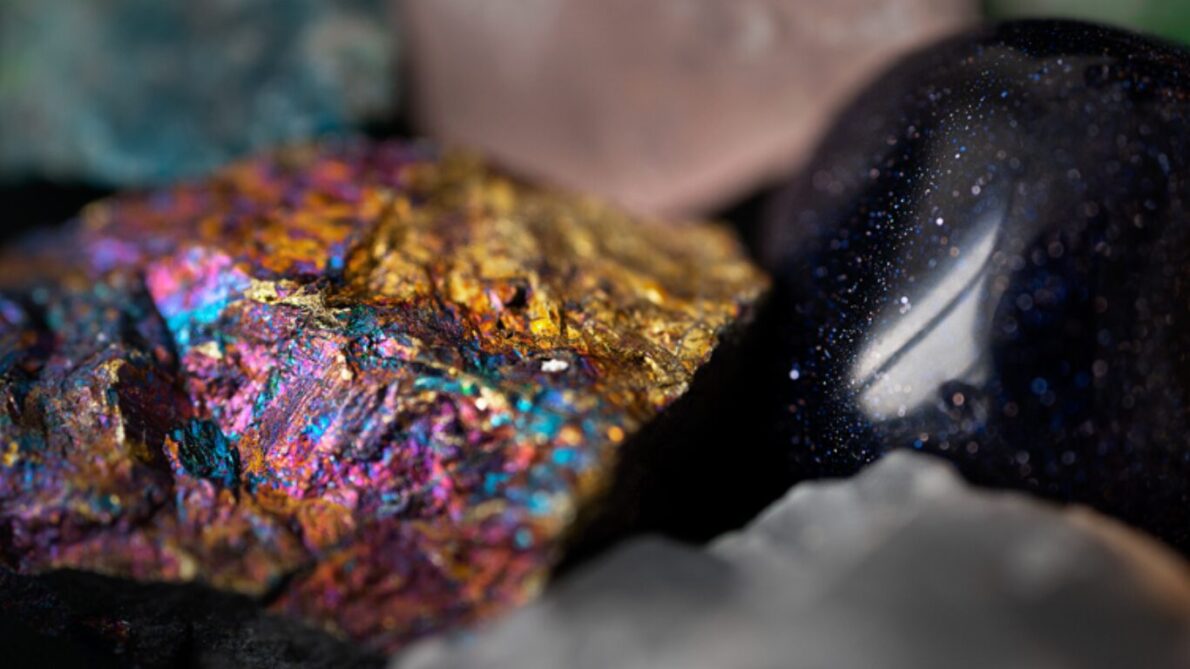
The oboniobite, belonging to the niobium family, exhibits a color that ranges from brown-yellow to brown and forms in plates up to 100 micrometers. This metal is extremely resilient and has high durability. The scandium-fluoro-eckermannite, from the scandium family, displays a hue between pale yellow and light blue, forming columnar structures that can reach 350 micrometers. This mineral is particularly notable for being the first containing scandium discovered in China, highlighting its rarity and value.
Importance of Rare Metals for Technology and Industry
Rare earth elements, such as niobium and scandium, are crucial for various industrial and technological applications. Niobium, for example, is essential in the production of special steels and superconductors, materials that are fundamental for constructing more robust and efficient infrastructures. In contrast, scandium is vital in aluminum-scandium alloys, widely used in the aerospace industry for manufacturing lightweight and durable components, as well as in solid oxide fuel cells.
-
U.S. Invests $75 Million in Projects to Extract Rare Earths, Gallium, Germanium, and Aluminum from Coal Waste

-
Eni Acquires 25% Stake in Chilean Lithium Project, Plans to Invest Up to $225 Million in Eco-Friendly Extraction Method
-
Mexico’s Giant Crystal Cave: A Deadly 58°C Underground Palace with 11-Meter Crystals Formed Over Nearly a Million Years

-
China Dominates Over 90% of Rare Earth Refining, Prompting Global Concerns: Canada and Japan Launch Billion-Dollar Plan to Reduce Dependency and Safeguard Batteries, Semiconductors, and Defense




Impact of the Discovery on Technological Development
With the introduction of these new rare metals into the market, sectors such as defense, energy, and aerospace are expected to experience significant advancements. The ability to develop more efficient and corrosion-resistant materials could result in substantial improvements in sustainable technologies. For instance, the production of more powerful magnets for electric vehicles and wind energy turbines may benefit greatly. Therefore, this discovery represents an important step for the future of global technology, providing new tools to tackle the challenges of a constantly evolving technological world.
Confirmation and Repercussions of the Discovery
The International Mineralogical Association confirmed the identification of oboniobite and scandium-fluoro-eckermannite, marking a significant moment for the scientific community. This confirmation not only strengthens the economic potential of mining in the region but also underscores the ongoing importance of geological research in the discovery of valuable natural resources. Moreover, the mining company responsible for exploring the Bayan Obo mine is already preparing to scale up production of these rare metals, anticipating a positive impact on global economic growth and technological development.
The discovery of these rare metals in Mongolia is not only a scientific advancement but also a promise of innovation and progress for various industries. With oboniobite and scandium-fluoro-eckermannite, we are faced with a future where technologies can be more efficient and sustainable, highlighting the importance of mining and continuous research in rare earths for global development.