






 Portuguese
  Spanish
  4 min of reading
  21 comments


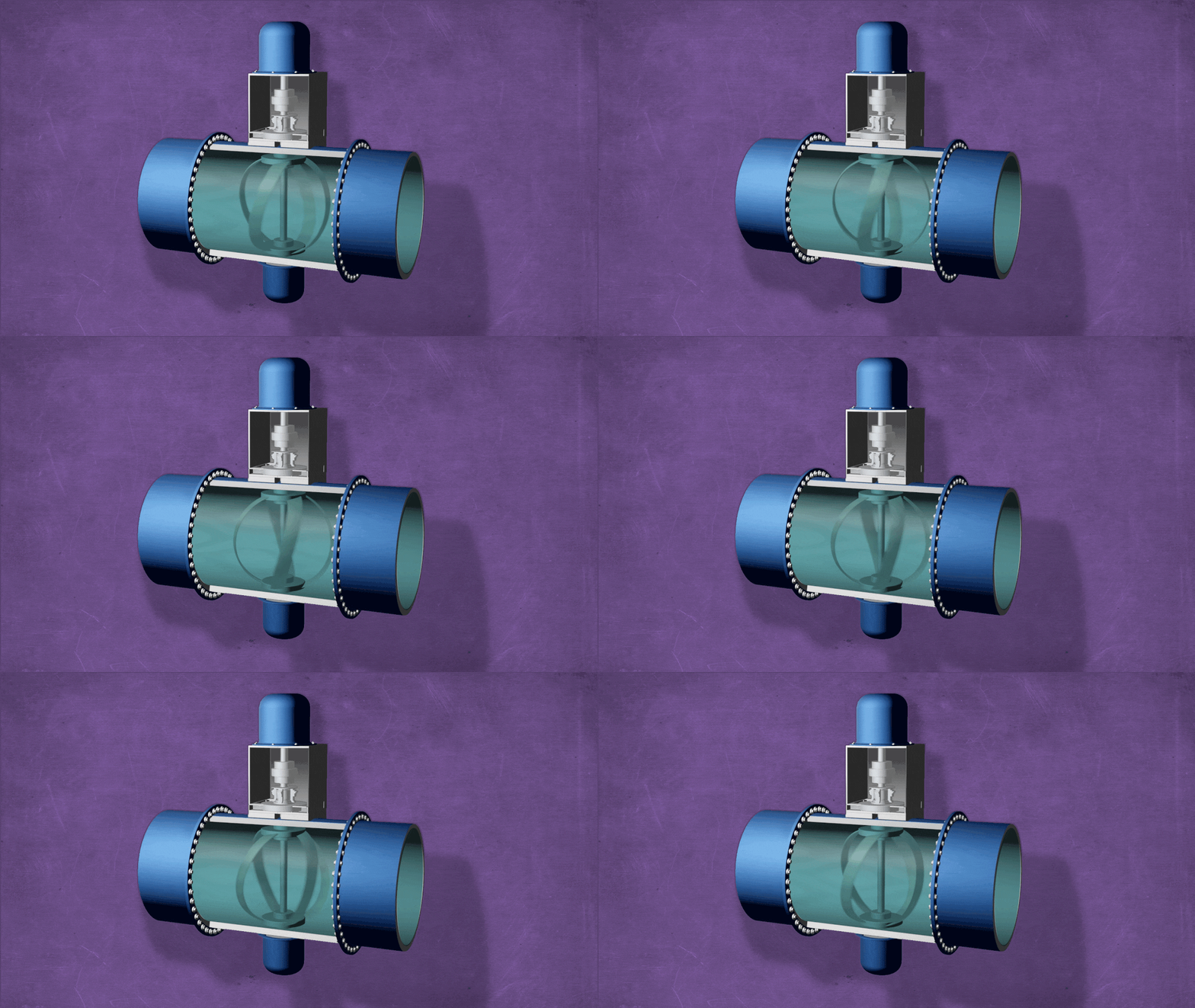


Company Develops Amazing Technology Capable of Generating Electricity from Potable Water for Entire Cities. Discover the New Method from Lucid Energy.
Currently, access to water is as simple as turning on a tap. However, for water to reach our homes, it must pass through pumps and extensive piping networks, processes that consume a significant amount of energy, in addition to the necessary treatment. The good news is that a company has developed an innovative technology capable of generating electricity from potable water.
Understand How This Innovative Electricity Generation Technology Works

With the scarcity of non-renewable energy generation methods, companies and cities must adopt eco-friendly solutions. The city of Portland, in the United States state of Oregon, for example, developed a very creative solution: generating electricity from potable water.
This technology was developed in partnership with LucidEnergy, a company specializing in generating electricity from water pipes. The system features small turbines installed in the pipes that spin due to the flow of water and send this electricity to a generator, which connects to the city’s electrical grid. Although it may not seem like such an innovative technology, the impression changes with some data.
-
Brazilian scientists are simultaneously advancing two research projects on clean hydrogen and driving solutions that could transform the energy matrix, enhance industrial competitiveness, and accelerate large-scale emission reduction targets.

-
Advancement in renewable energy: A R$ 150 million project launched by Petrobras and Finep aims to create state-of-the-art electrolyzers for green hydrogen, strengthening national research and preparing Brazil to compete in a billion-dollar energy market.
-
Illiterate or semi-literate grandmothers were trained to repair solar systems, open rural workshops, and light up homes that still depended on kerosene.
-
The world has bet on green hydrogen as the fuel of the future, but now faces the side effect: producing 1 kilogram requires about 9 liters of ultrapure water, and the largest projects on the planet are precisely in the driest regions of the Earth, where water is already scarce for people.


The estimate is that 6% of all energy in the United States is used just for water treatment, while in California this number rises to 20%. Sanitation companies that filter and purify water, for example, can use LucidEnergy pipes to reduce the cost of producing clean water.
Industries that use large volumes of water for processing or cooling machines, such as aluminum factories, thermal power plants, and even data centers, can install this type of pipe to reduce expenses. Moreover, irrigation companies or water transmission and distribution companies can take advantage of the method to sell electricity to the city, for example. Everyone benefits.
Company Utilizes New Technology in Other Initiatives
Another project from LucidEnergy that generates electricity from potable water, carried out in the city of Riverside, California, utilizes piping to power streetlights and other lighting points in the city. During the day, when electricity prices rise, they can repurpose this energy to reduce the city’s operational costs.
According to Gregg Semler, president of Lucid Energy, water and electricity are two extremely related things. The executive notes that a large amount of energy is required to deliver potable water, and a significant amount of water is needed to generate energy.
Therefore, any municipality that needs water and energy must seek another way to generate energy; thus, the company emerges as a great option, generating electricity from potable water.
Understand How the Technology Works
The piping installed in Portland features 4 turbines with a diameter of 107 cm, which are placed in between the regular water pipes. The project is the first in the United States to close a Power Purchase Agreement (PPA) for renewable energy produced through hydropower in a municipal water pipeline.
Electricity generated from potable water, also called Conduit 3 Hydroelectric Project, is funded by a private agency and purchased by the company responsible for electricity distribution in Portland, Portland General Electric.
The system has a capacity of 200 kW and is expected to produce 1,100 MWh of electric energy annually, enough to power approximately 150 homes.
However, not everything is perfect, as the technology does not generate electricity at every location. The generator only works if the water is under a flow created by gravity. It is worth mentioning that, to take advantage of the method, the company decided to install pressure sensors to detect any leaks in the pipe, in addition to sensors to monitor water quality and assess whether it is clean enough for consumption.
Is It Possible to Generate Electricity Using Potable Water in Brazil?
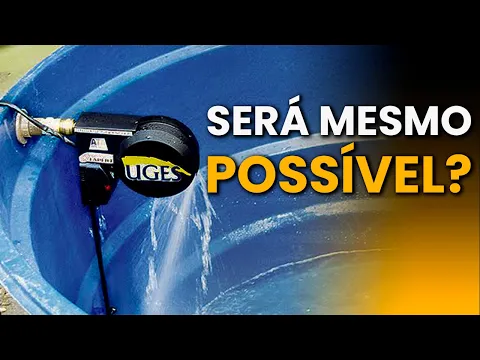
Yes! Known as UGES, this innovative technology transforms water tanks into small hydroelectric plants. The acronym UGES stands for Sustainable Energy Generating Unit, an invention of engineers Mauro Serra and Jorgea Marangon. This solution is practical and adaptable to any water tank, regardless of size.
“The UGES takes advantage of the water flow that supplies the reservoirs to generate energy. It is important to emphasize that the daily per capita water consumption in Brazil is about 250 liters, an amount that, until now, was not used to produce energy. With this system, we can generate clean electricity with no harmful gas emissions,” explained Mauro Serra in an interview with Faperj.
The patent for the idea has already been registered and will soon be available in the market. The UGES system is not only installed inside the water reservoir but also includes a mobile unit that converts the captured energy into electricity for domestic use, operating independently of external energy sources.
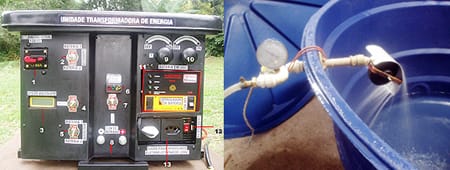
Mauro Serra details that, when entering the reservoir, the water is pressurized by the system, passing through a mini power plant that is strategically positioned at the water outlet. This pressure is then converted into electricity, sufficient to power devices such as light bulbs, refrigerators, and computers, but is not recommended for high-energy-consuming equipment like showers or hair dryers.
Although the amount of energy generated varies according to the size of the tank and water consumption, in larger supply systems, such as municipal ones, it could be sized to supply public lighting or even places with high water consumption, such as restaurants or industries. The system also allows for the storage of excess energy for later use, providing partial independence from the electrical grid.









A empresa Lucid Energy não se encontra em lugar algum na internet. Site fora do ar.
Como funciona este?
Muita gente já teve essa ideia. Fico surpreso de ser aceita em concurso, por que a Sabesp já prevê e proíbe isso em seus regulamentos. Aposto que as outras companhias tem regras similares.