






 Portuguese
  Spanish


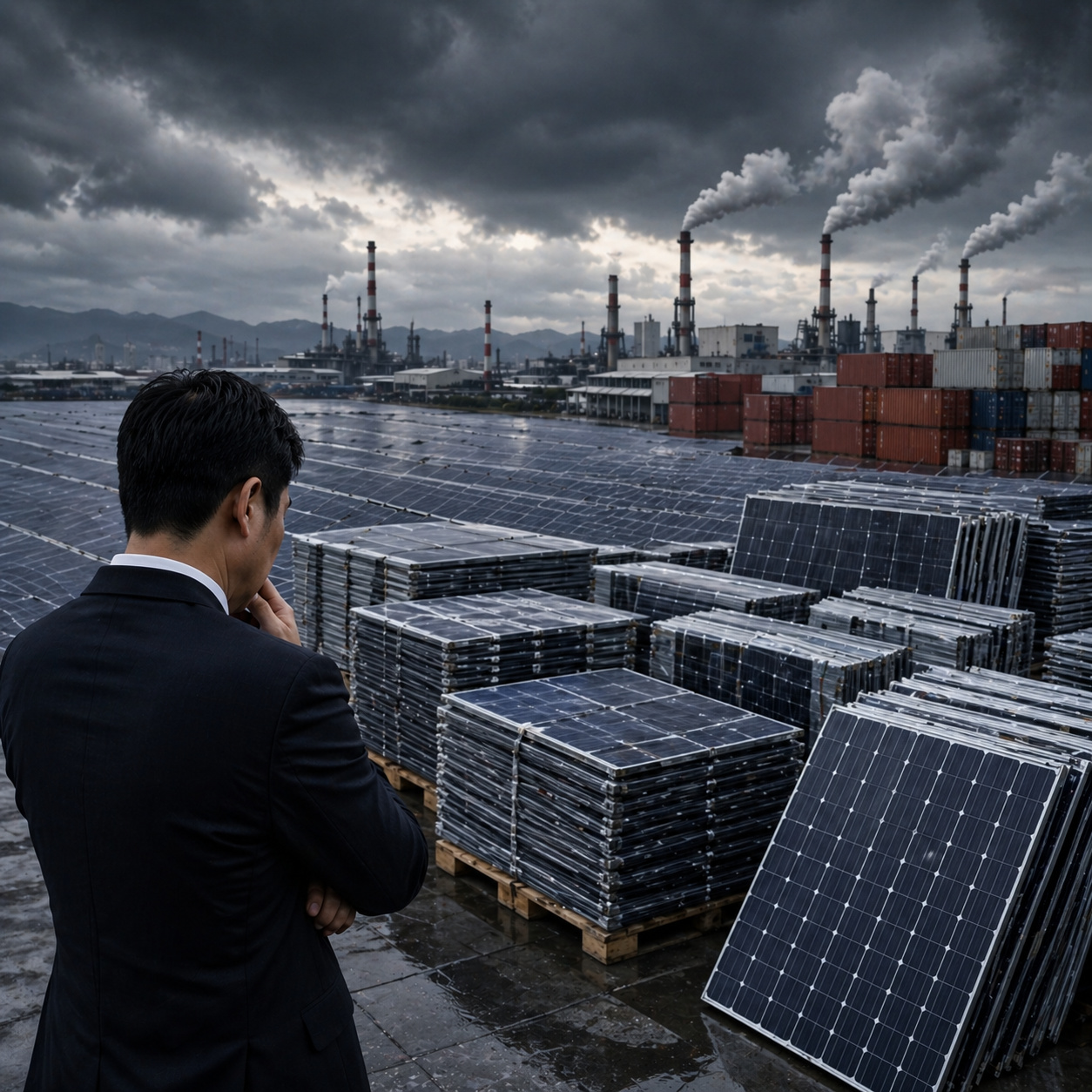
Chinese solar panel manufacturers accumulate billion-dollar losses, pressured by oversupply and price drops, with direct impact on the global market in 2026.
In April 2026, the world’s largest solar energy manufacturers, concentrated in China, released financial results that reveal a sharp shift in the sector’s balance: billion-dollar losses, compressed margins, and a drop in domestic demand in one of the most relevant markets of the global energy transition. Data reported by Reuters on April 30, 2026, show that companies like Longi Green Energy, JinkoSolar, and Trina Solar face a combination of oversupply, aggressive price drops, and a slowdown in domestic demand.
The impact goes beyond China. As the country dominates the global photovoltaic module supply chain, the current scenario projects direct effects on international prices, investments, and the expansion of solar energy in markets like Brazil, Europe, and the United States. The most sensitive data is the projection that global demand for solar panels may fall between 5% and 10% in 2026, with a contraction of about 20% in the Chinese market, according to estimates released by industry executives.
Continue reading below to understand why the world’s largest solar industry has entered a cycle of losses, how the price war is reshaping the sector, and what the expected effects are on the global energy transition.
-
Solar energy can increase property value by up to 10% and become a selling point.

-
Solar and wind energy surpass natural gas for the first time in the world and accelerate energy revolution

-
Africa has about 500,000 cell towers and most still burn diesel to operate, while companies rush to cover antennas with solar energy and avoid signal blackouts.
-
Farmers swapped diesel for solar panels in Pakistan, powered irrigation pumps almost cost-free, expanded rice fields, and now groundwater has become a red alert in the countryside.
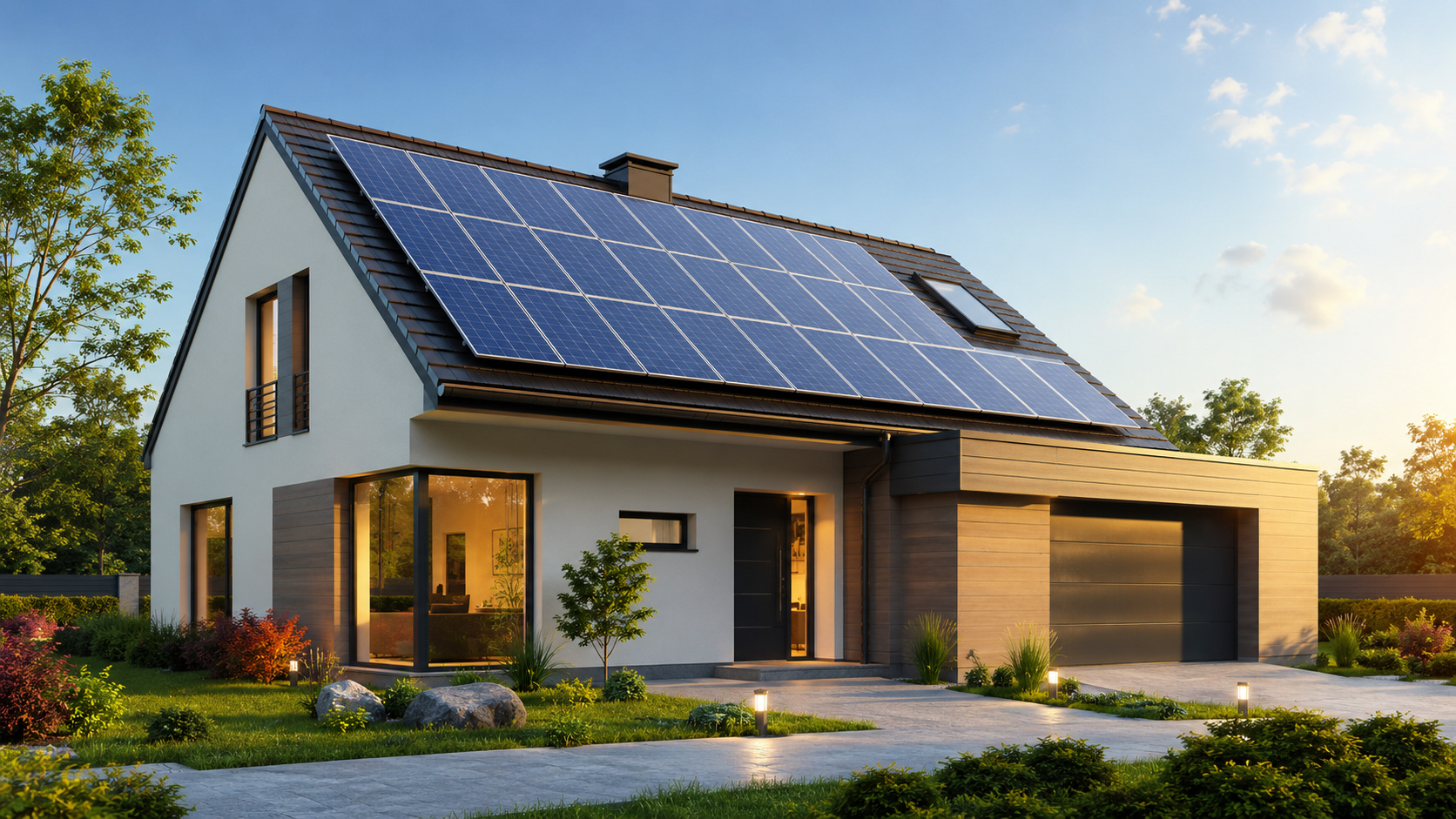



Global oversupply pressures prices and destroys margins in the Chinese solar industry
The main factor behind the losses is the imbalance between supply and demand. In recent years, Chinese manufacturers have aggressively expanded their production capacity, driven by government incentives and the expectation of continuous solar energy growth worldwide. This movement led to a scenario of overproduction, where supply began to exceed actual demand.


As a result, photovoltaic module prices have suffered sharp declines. In some cases, values have dropped to levels that do not fully cover production costs, compressing margins and leading companies to operate at the edge of profitability.
This phenomenon created an internal price war, in which manufacturers reduce values to maintain market share, even with a direct impact on financial results.
Billion-dollar losses and divergent results expose sector fragility
The recent balance sheets show a heterogeneous scenario, but with a clear trend of financial pressure. Longi Green Energy expanded its quarterly loss to about 1.92 billion yuan, reflecting the price drop and the difficulty of absorbing the excess installed capacity.
Meanwhile, companies like JinkoSolar and Trina Solar managed to reduce losses compared to previous periods, but still operate under strong margin pressure.
This situation indicates that, even among global leaders, the sector is going through a phase of structural adjustment, where operational efficiency and scale are no longer sufficient to guarantee profitability.
Chinese domestic demand falls by about 20% and amplifies global imbalance
Another decisive factor is the slowdown in the Chinese domestic market. After years of accelerated growth, the demand for new solar systems in China showed an estimated decline of about 20%, according to projections released by industry executives.
This drop reduces the capacity to absorb local production, increasing the exportable surplus and intensifying pressure on international prices.
At the same time, external markets continue to grow, but at a pace insufficient to offset the Chinese slowdown.
Projection of up to 10% drop in global demand raises alarm for 2026
The combination of oversupply and partial demand contraction led to a revision in global expectations. The projection of a drop between 5% and 10% in global demand for solar panels in 2026 represents a sign of deceleration in a sector that had been operating in continuous expansion.
This data does not indicate a collapse of solar energy as a technology, but rather a cyclical adjustment after a period of accelerated growth.

Still, the impact is significant, as it affects investment decisions, project planning, and expansion strategies in various countries.
China dominates global supply chain and transmits crisis to international markets
The relevance of this scenario is amplified by China’s role in the global production chain. The country concentrates most of the world’s production of:
- photovoltaic cells,
- solar modules,
- critical supply chain components.
This means that any internal imbalance has a direct impact on the international market. With falling prices, importing countries may benefit from cheaper equipment in the short term, but they also face risks associated with supply instability and potential industry consolidation.
Price drop may accelerate solar projects, but creates industrial uncertainty
From the perspective of consumers and investors in solar generation, price reduction may seem positive. Cheaper equipment reduces the cost of implementing solar power plants and residential systems, potentially accelerating projects.
However, this benefit comes with uncertainty. If financial pressure leads to manufacturers exiting the market or industry consolidation, supply may concentrate among fewer players, increasing future price risks and dependence.
The current scenario can be interpreted as a natural adjustment after years of intense growth. Solar energy has expanded rapidly in the last decade, driven by public policies, technological advancements, and falling costs.
This growth led to massive investments in production capacity, which now need to be absorbed by the market.
The current phase represents a moment of balance between supply and demand, albeit with negative short-term impacts for manufacturers.







Be the first to react!