






 Portuguese
  Spanish


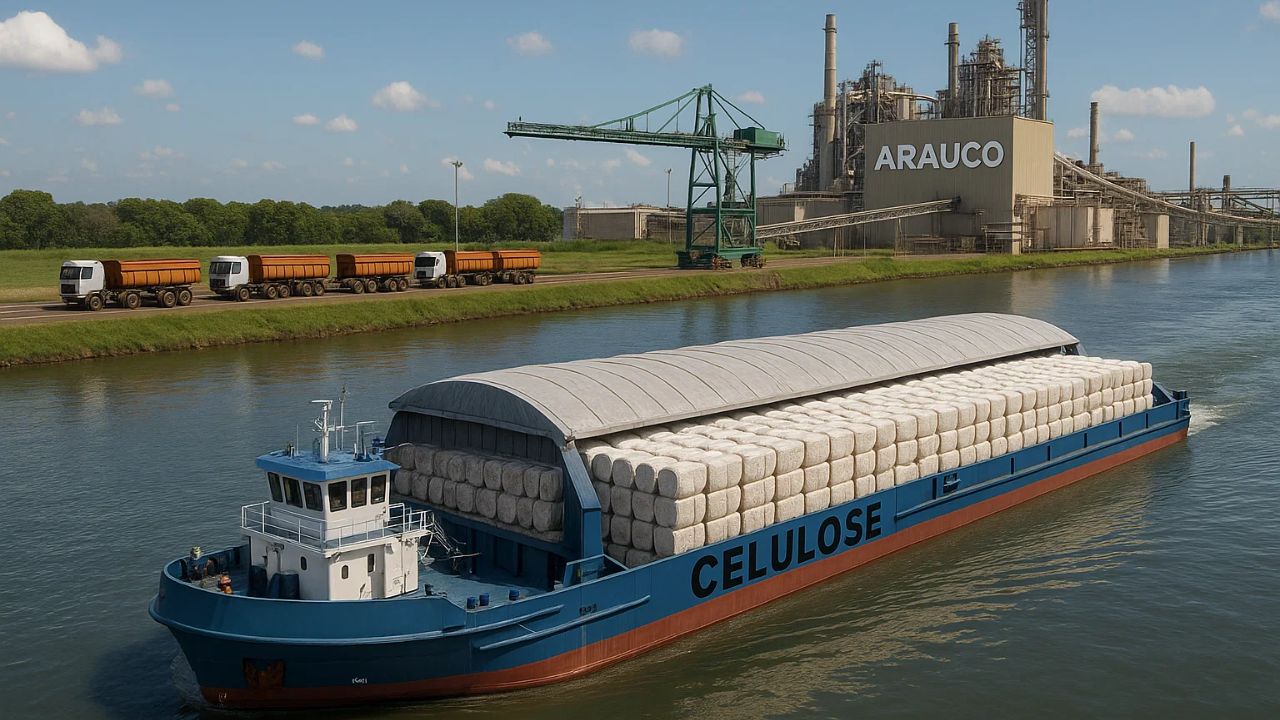

Arauco Studies Using the Paraná-Tietê Waterway for Transporting Pulp from Its New Plant in MS. Understand How the Logistical Change Can Reduce Costs and Emissions.
The Chilean multinational Arauco, which is investing R$ 25 billion in the construction of its new pulp plant in Inocência (MS), is exploring changes in its transport logistics plan. The company, which already has authorization to build a railway branch connecting the unit to the Ferronorte network, is now analyzing the possibility of using the Paraná-Tietê waterway as the main route for transporting the 3.5 million tons of annual production projected from 2027.
The choice of this multimodal model, which combines roads, waterways, and railways, can reduce costs, enhance operational efficiency, and significantly lower greenhouse gas emissions.
The move reinforces Arauco’s positioning as one of the leaders in sustainable solutions in the pulp sector.
-
The Port of Itaqui closes the best first semester in history with over 17 million tons and takes off as the locomotive of the Northern Arc.

-
Brazil’s North-South Railway to Auction Two Grain Terminals in Central Tocantins

-
AI-powered traffic cameras in São Paulo now issue fines for cellphone use and seatbelt violations around the clock

-
Free Upgrade to Professional Driver’s License Categories in Over 130 Locations in Brazil, Including Exams and Courses



New Pulp Plant of Arauco in Brazil
Expected to commence operations in the last quarter of 2027, the Inocência unit will be Arauco’s first plant in Brazil.
The project, named Sucuriú, is launched with an initial production capacity of 3.5 million tons of pulp per year, but the environmental license already anticipates future expansion to up to 5 million tons annually.
The investment includes not only the industrial plant but also a complex supply chain.
About 1,500 drivers will be needed to operate the 350 trucks responsible for the daily transport of eucalyptus logs.
The company’s forests cover more than 400,000 hectares in the region, ensuring the necessary raw material for supply.
Paraná-Tietê Waterway: Sustainable and Strategic Alternative
The use of the Paraná-Tietê waterway emerges as an alternative to the railway project initially approved by the National Land Transport Agency (ANTT).
In this model, pulp would be transported from Inocência to Três Lagoas by trucks — an average of 200 trailers per day covering 130 km — and would then proceed by barges to Pederneiras (SP), on a route of 450 km.
From there, the cargo would board trains heading to the Port of Santos, located 550 km away.
According to the company, this solution would remove about 6,000 trucks from the roads monthly, reducing CO₂ emissions by 80% compared to road transport.
In addition to the positive environmental impact, water transport presents competitive gains and lower logistical costs.
Railway Remains an Option for Pulp Transport
Despite the analysis regarding the waterway, Arauco does not rule out the construction of the 47 km railway branch to Ferronorte.
The project, estimated at R$ 2.4 billion, includes the purchase of 23 locomotives and 750 wagons, sufficient to form seven compositions with 100 wagons each.
The railway also offers significant environmental benefits, with a 60% reduction in CO₂ emissions compared to road transport.
If this alternative prevails, construction will need to begin soon, as the estimated execution time is 18 months.
Future Expansion and Long-Term Vision
According to Alberto Pagano, who is responsible for the company’s transport sector, Arauco’s logistics plan has been designed with a focus on the future.
He highlights that Brazil is ahead in logistics solutions for the pulp industry, citing 96-ton wagons, well above the capacity practiced in Chile.
In addition to its current production, the plan includes the transport of liquid inputs, wood, and even the use of containers, reinforcing the multimodal nature of the project.
The strategy ensures flexibility for adaptations in light of the expansion of the new pulp plant and the growing demand in the sector.
Regional Impacts and Job Creation
The investment by Arauco in Inocência (MS) extends beyond the industry.
The arrival of the new pulp plant is expected to boost the local economy with the creation of thousands of direct and indirect jobs, in addition to strengthening the supply chain.
Another relevant point is the mechanization of eucalyptus forests, with the planting of 65,000 hectares annually and a cutting cycle of six years.
This process ensures productive efficiency and security in the supply of raw materials.








