






 Portuguese
  Spanish
  4 min of reading
  0 comments


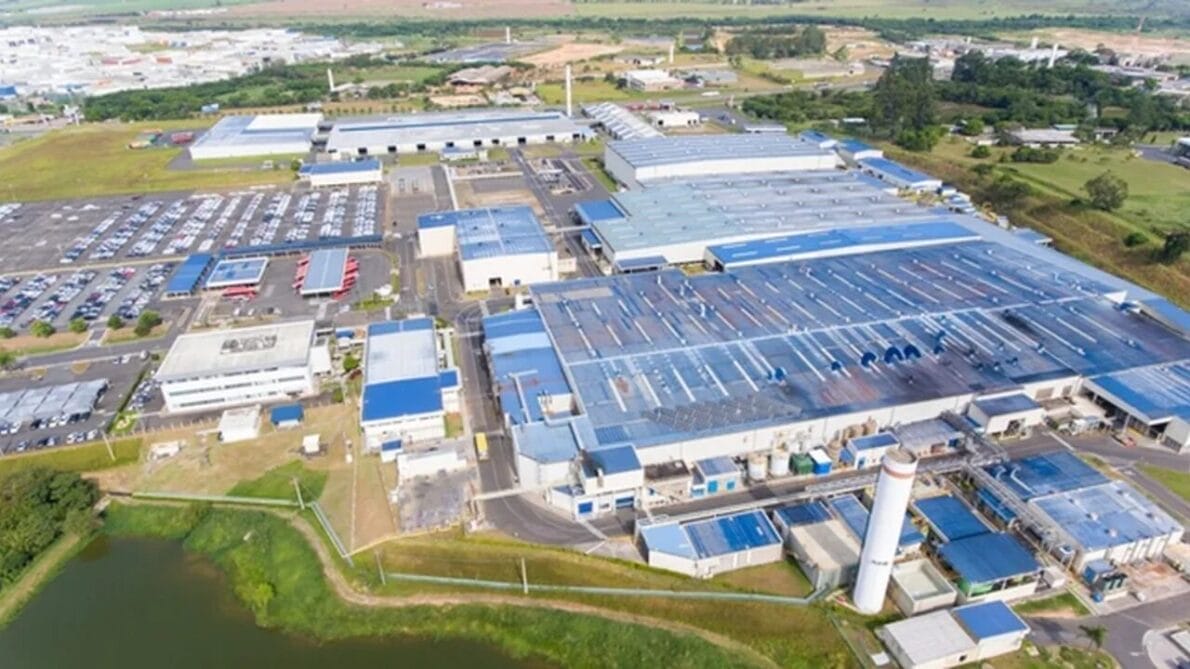
Neta Auto, Chinese Manufacturer, Comes to Brazil with Three Electric Cars and Plans for Local Production in 2026, Possibly at the Toyota Plant in Indaiatuba. Focused on Electrification, the Company Aims to Establish a Dealership Network and a Parts Distribution Center in São Paulo.
The Chinese manufacturer Neta Auto is expanding its horizons and, starting in the second half of the year, will land in Brazil with the promise of revolutionizing the automotive market with three new electric car models. The company follows in the footsteps of other Chinese giants, such as BYD and GWM, by not only announcing its entry into the Brazilian market but also its intention to establish a factory in the country by 2026.
International Expansion and Neta Auto’s Focus in Brazil
Neta Auto is not a newcomer to international markets.
With factories already operating in China, Thailand, and Indonesia, the company is now turning its eyes to Latin America.
-
Bolivian Female Construction Workers Form Association to Combat Discrimination and 38% Pay Gap in the Industry

-
Near Amsterdam, residents buy land and discover they must also build streets, manage drainage, handle waste, and grow food on half their plot.
-
Without a mansion, without high investment, and without a traditional classroom, a teacher living in a 22 m² house taught students to build a 9 m² studio apartment with the equivalent of R$10,000.
-
Without her own home and pressured by rent, a 25-year-old bought a small 15-meter boat, gradually renovated the interior by herself, transformed the interior with paint, new flooring, a larger bathroom, and started living on the canals, paying much less per month.


Brazil, Mexico, and Malaysia are the next chosen destinations for new manufacturing plants.
In Brazil’s case, Neta Auto is strongly considering acquiring the Toyota plant in Indaiatuba (SP), which will cease operations by the end of 2025.
This location already has robust infrastructure, with 1.5 million square meters, facilitating the transition to electric vehicle production.
Strategy to Buy Toyota Plant in Brazil
Henrique Sampaio, Neta’s Marketing and Product Director in Brazil, emphasizes the strategic advantage of acquiring an existing factory.
Building a plant from scratch in less than two years is unfeasible. Having a ready-made factory saves time and investments.
“It makes sense [from a strategic point of view] to have a factory in the state of São Paulo that is already operational. Therefore, there is this study [about the potential purchase of Indaiatuba],” said Henrique.
Initially, the operation will follow the Completely Knocked Down (CKD) regime, where the cars are assembled from imported parts.
However, the factory will need adaptations to accommodate the production of electric vehicles, which require specific assembly lines and infrastructure for high-capacity batteries.
Neta Auto Plans Dealership Network and Distribution Center
While the factory location is not yet finalized, Neta Auto is already mobilizing to establish its dealership network and a parts distribution center in São Paulo.
Sales of the first imported models are expected to begin in 2024.
For Wilson Sun, President of Neta Auto and Executive Vice President of the International Business Department, “Brazil is very important for the electric car market. Therefore, there will be a parts distribution center and specialized workshops here. In this initial phase of operations, it will be in São Paulo. The factory, however, needs to be in a location that meets the brand’s logistical market demands.”
Electric Car Factory in Brazil Will Be Strategic for the Chinese Giant
The Brazilian factory will play a strategic role, not only for the local market but also for other countries in South America.
Neta Auto plans a major offensive in the region, with Chile being one of the first to receive the brand’s launches in the second half of 2024.
Thus, local production will allow Neta Auto to offer vehicles at more competitive prices and adapt models to the specific needs of South American consumers.
The transition to electric vehicle production in Indaiatuba will represent a significant challenge.
Although the factory already has some preparation for electrified vehicles, such as the production of the hybrid flex Corolla, the adaptation for fully electric cars will require substantial investments.
Additionally, the existing infrastructure will need modernization to support the assembly of robust batteries and other specific components of electric vehicles.
Neta Auto’s arrival in Brazil marks a new chapter in the national automotive market, especially in the electric car segment.
With ambitious plans to launch three models this year and start local production in 2026, the company shows confidence in the potential of the Brazilian and South American markets.
The acquisition of the Indaiatuba factory, if realized, will be a crucial step in establishing Neta Auto as a relevant player in the region’s automotive industry.
The combination of innovative vehicles, local production infrastructure, and a robust distribution network positions Neta Auto as an emerging force in the electric vehicle market in Brazil and beyond.
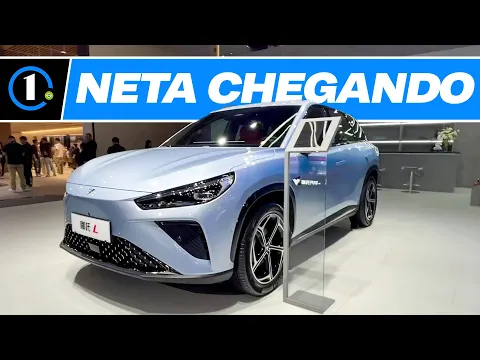
Discover the Electric Car Models from Neta Auto

With information from Auto Esporte.





Be the first to react!