Portuguese
  Spanish


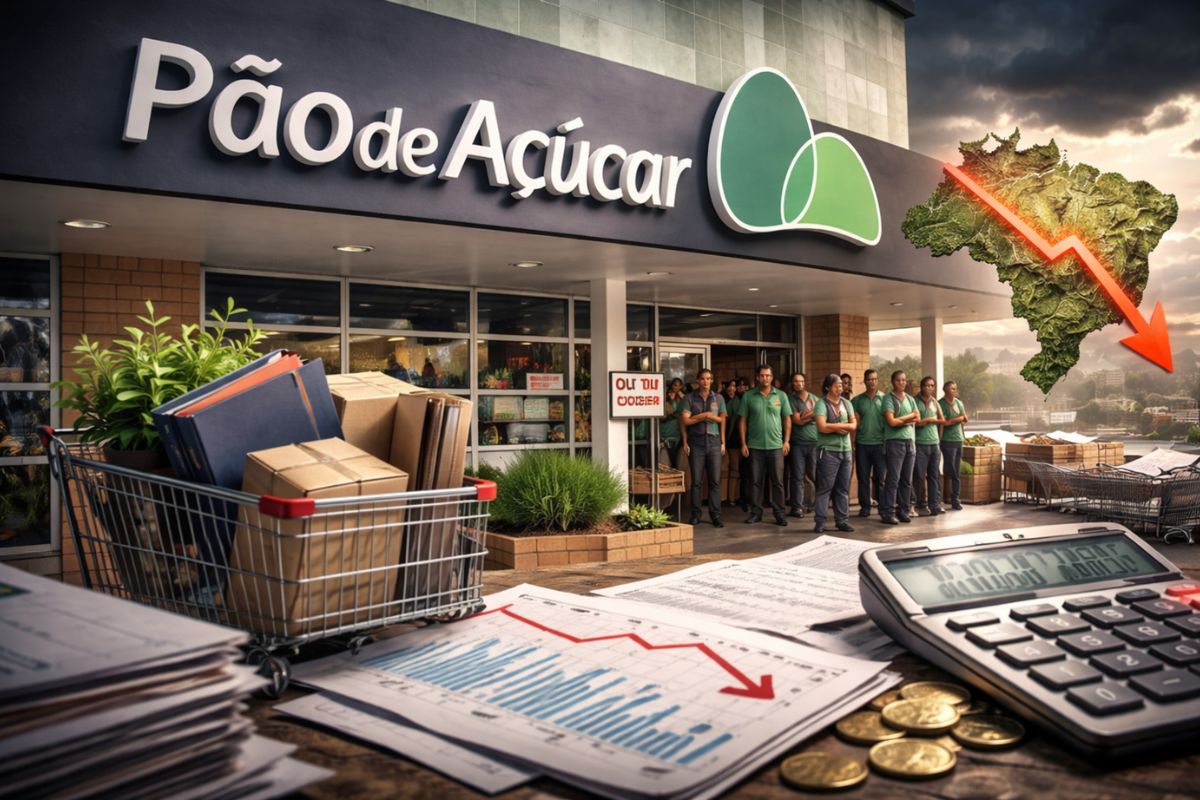

The Brazilian Supermarket Grupo Pão de Açúcar Says That Operational Improvement Was Not Enough to Stem Losses and Mentioned Continuity Risk in the Fourth Quarter of 2025. With Cash of R$ 1.7 Billion, Gross Debt of R$ 4 Billion and Working Capital Deficit, the Warning Has Gained Weight Now
The Brazilian supermarket Grupo Pão de Açúcar included, in a financial document, a phrase that the market usually treats as a siren: risk of continuity of operations in the country. It Is Not a Collapse Announcement, but it is an admission that the operational improvement, so far, has not reversed the sequence of accumulated losses.
The warning came in the financial statements for the fourth quarter of 2025, released after market closure, with an explicit mention in explanatory note 1.6. The Practical Effect Is Immediate: the discussion ceases to be merely performance and begins to include financial survival, liquidity, payment profile and ability to navigate 2026 without losing cash control.
What Exactly Triggered the Continuity Warning

The central point is the formal framing of the risk. Grupo Pão de Açúcar, described as the fifth largest supermarket group in Brazil, reported that the continuity of operations may be threatened due to the sequence of losses in recent quarters.
-
As Brazil Expands Social Welfare, Survey Reveals 40% Blame Poverty on Laziness, While 58% Cite Lack of Opportunities

-
China Tightens Control on Antimony, Driving Prices from $22,000 to Nearly $40,000 per Ton as U.S. Rushes to Bolster Strategic Reserves

-
BlackRock Freezes $1 Billion in Brazilian Renewable Energy, Impacting 1.5 GW of Planned Projects and Highlighting Investor Concerns Over Infrastructure Bottlenecks Cutting Up to 25% of Solar and Wind Generation
-
Labor Shortage: Despite Record Average Salary, 90% of Brazilian Bar and Restaurant Owners Struggle to Hire Key Roles Like Sushi Chefs and Head Cooks


This Type of Wording Usually Raises the Bar for Investors, Creditors and Suppliers, because it alters the perception of risk of the business.
The financial text states directly that the operational improvement has not been sufficient to reverse accumulated losses. This is significant because it places the discussion in the realm of recurrence, not an isolated episode.
When Loss Becomes a Sequence, Cash Becomes a Clock, and the clock gets even louder when there are relevant deadlines in the short term.
Quarter Loss and the Reading Behind the Number
Between October and December of 2025, the company reported a loss of R$ 578 million.
There is one data point that, by itself, can be confusing: this was a 48% reduction compared to the same period last year, when losses totaled R$ 1 billion.
Reducing the Loss Helps, but it does not change the fact that the result remains negative and pressure on cash continues.
This type of partial improvement usually creates two readings simultaneously. The first, more optimistic, is that there is a trend of adjustment and decline in losses.
The second, harsher, is that even with improvement, the result has not turned and continues to drain resources.
When the Loss Persists, the Company Tends to Cut First Where It Hurts Less in the Short Term, such as investments and renegotiations, before tackling what hurts more, like structure and employment.
Cash, Debt and the Short-Term Problem
At the end of the fourth quarter, GPA had R$ 1.7 billion in cash, a 19% decrease compared to the previous year. On the other side of the equation, gross debt reached R$ 4 billion, more than double the available amount.
This Contrast Does Not Prove Insolvency, but shows liquidity fragility when the cycle of losses drags on.
The situation is described as aggravated by short-term indebtedness.
The company has a net working capital deficit of approximately R$ 1.2 billion, mainly due to loans and debentures maturing in 2026, totaling R$ 1.7 billion.
Working Capital Is the Oxygen of Retail, because supermarkets depend on daily cash flow, constant replenishment and sequential payments to keep shelves stocked and operations running smoothly.
The Size of the Operation and What Is at Risk in Real Life
The group ended 2025 with R$ 20.6 billion in revenue, employs 37,000 people and operates 728 stores across the country. It also serves more than 20 million customers per month.
These numbers are not details. They Show That Any Relevant Adjustment Is Not Restricted to the Spreadsheet, because it affects employment, consumption, suppliers, and the routine of cities where a unit is a reference for supply.
The most shocking headline speaks of a possible layoff of 37,000 employees and the closure of 728 units, but there is an essential nuance within the base: the company has not officially announced mass layoffs or store closures.
What exists, for now, is the mention of continuity risk, which raises an alert about the future of the chain and its 37,000 employees.
In Such Situations, Silence About Cuts Does Not Eliminate the Risk, it only indicates that the issue is still in the realm of scenario and crisis management, not of public execution.
The Plan Presented to Investors and the Logic of “Buying Time”
In a conference call with investors, the executive board announced measures to preserve cash generation and prevent the crisis from worsening.
The list is typical of those trying to reduce pressure in the short term: renegotiation of financial debts with creditors, review and renegotiation of contracts, reduction of investments, sale of idle properties, and strategies to boost revenue.
These measures have a practical reading: extending deadlines, reducing cash outflows, and creating room to navigate the critical period of 2026, when R$ 1.7 billion in loans and debentures will mature, according to the material itself.
Renegotiating Is Buying Time, but the market usually demands a counterpart: rapid execution, clear goals, and signs that the adjustment does not rely solely on promises.
Market Reaction and the Signal That the Price Gives
The financial deterioration provoked an immediate reaction: GPA’s shares fell by about 8%, trading at R$ 2.88 in the session on Wednesday, the 25th.
Such movements are not a final verdict, but they show that investors price in risk quickly when they read “continuity” in an explanatory note.
This type of drop tends to amplify the pressure cycle, as it affects external perception of the ability to raise capital and the cost of money.
When Confidence Slips, Renegotiating Can Become More Expensive, and the company needs to work twice as hard to convince creditors that the plan is viable and that cash can withstand the strain until the measures take effect.
Where This Could End If the Crisis Does Not Unwind
The most immediate storyline is the attempt to stabilize cash without dismantling the operation.
Reducing investments and selling idle properties are usually the first levers, as they affect daily service less. Renegotiating contracts tries to alleviate recurring expenses.
<p“And boosting revenue” typically means tightening commercial execution, mix, efficiency and margin, even if this is not detailed in the base.
But the looming risk is the chain reaction: losses still present, lower cash compared to the previous year, high gross debt, and working capital deficit with maturities concentrated in 2026.
At This Point, the Debate About Unit Closures and Layoffs Appears as a Ghost, even without an official announcement, because retail tends to cut structure when financial and operational solutions are insufficient.
The case of GPA exposes a problem that is frighteningly straightforward: the company is large, serves more than 20 million customers per month, has 728 stores and 37,000 employees, but the fourth quarter of 2025 ended with a loss of R$ 578 million, cash of R$ 1.7 billion, and gross debt of R$ 4 billion, in addition to a working capital deficit of around R$ 1.2 billion driven by 2026 maturities.
When These Numbers Are in the Same Room, the Word Continuity Weighs Heavily.
I want an answer based on what you see in your city, not a generic guess: in the region where you live, a potential reorganization of a large Brazilian supermarket would affect employment, shelf prices or neighborhood supply more, and why? And have you ever seen any large chain genuinely retreating by closing a unit, or just changing branding and continuing to operate?