





 Portuguese
  English
  Spanish
  3 min of reading


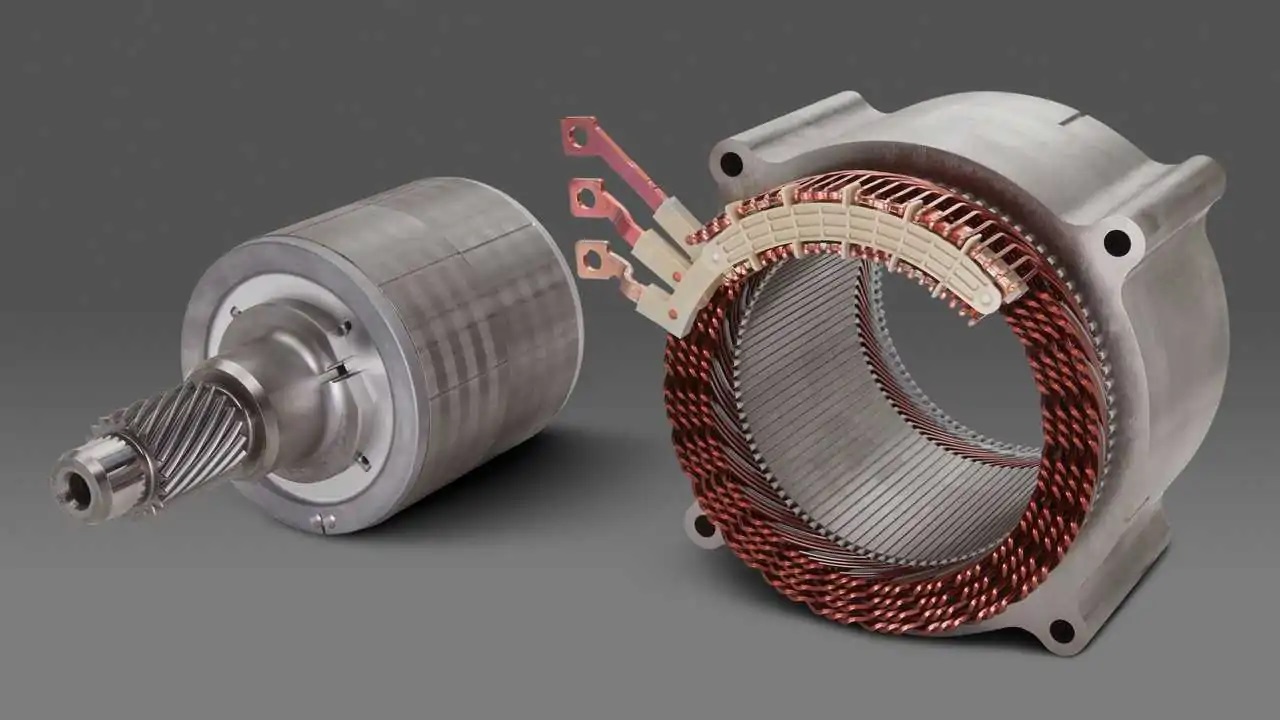
General Motors (GM) Is Leading New Electric Motor Technologies and Investing Billions in an Attempt to Catch Up with the Leader in This Segment: Tesla, Multimillionaire Elon Musk’s Company.
While consumers in the country are sadly saying goodbye to the Volkswagen Gol, the 21st century moves forward without nostalgia for the past. As electric motors replace internal combustion engines, automakers, developers, and suppliers are seeking ways to reduce costs, weight, and even friction in a second generation of this type of propulsion, finding a solution for even expanding power through enhancements in electronics.
GM Aims to Surpass Tesla in the Electric Mobility Sector
According to Mark L. Reuss, global president of General Motors (GM), when it comes to electric cars, more money is needed to generate efficiency, which is key to profitability in this new business. While other experts may disagree with the executive, he is the one signing the check for US$ 35 billion, which directly converts to nearly R$ 185 billion, with which GM aims to surpass Tesla, the segment leader, in the shift to electric mobility.
The executive emphasizes that even with a 3% gain in efficiency terms, there will be significant savings for automakers. It will only be possible to achieve the same profitability we have today with internal combustion engines when cost parity can be achieved.
-
A mechanic warns: Car air conditioning can hide bad odors, fungi, and strained parts if the driver ignores 5 simple care tips that make a difference in heat, cold, and even on long trips.

-
“Brazilian Elon Musk” unveils prototype of the Lecar 459, a car capable of running up to 1,000 km with a 165 hp electric motor and a hybrid system that dispenses with direct traction from the combustion engine.

-
How much does it cost to keep the POLO Comfortline TSI 200 in the garage?
-
Once beloved in Brazil, sedans plummeted from 29% to just 12% of the market in 10 years, while SUVs jumped from 14% to nearly 55%; understand the numbers and the changes that turned the game at dealerships.



The manufacturing of a second generation of electric motors is the beginning of a long journey. Just in the state of Michigan, in the United States, where GM’s headquarters is located, investments of approximately US$ 6.6 billion will be made in expanding the assembly line for electric pickups and in the development of battery cells by 2024.
Dynamic Drive Technology for Electric Motors
Tula Technologies, a Silicon Valley startup that developed the cylinder deactivation system used by several large pickups and SUVs sold in the United States, is now developing a similar system for energy savings with electric motors.
Called dynamic motor drive, it pulses power to the propulsor, deactivating and activating the component thousands of times per second. According to John Fuerst, senior vice president of the company, for the industry, any advantage in this sense, no matter how small the percentage, means a reduction in battery manufacturing costs, in terms of kWh.
Using a Chevrolet Bolt, for example, the pack costs US$ 7,200, which directly converts to R$ 37,700. Thus, if there is an opportunity to optimize electricity consumption by 3%, it would represent savings of US$ 216, equivalent to R$ 1,130 per set.
GM Bets on Developing 50% Smaller Electric Motors
In an electric motor that reaches 20,000 RPM, the stator, rotor, and permanent magnets must be extremely durable, and it is no exaggeration to say that there is more engineering in this set than in the construction of an intake manifold. However, according to GM’s general manager of electrification and fuel cells, Tim Grewe, since the Chevrolet Volt in 2011, which was still a hybrid car, the company has optimized its magnets’ operation while reducing its dependence on certain materials, such as rare metals.
Tim has been working in the development of this type of technology since the EV1 in the late 1990s. For Grewe, neodymium, terbium, and dysprosium are chemical elements that few people know, but he continues to halve the use of these raw materials. He also advances in 3D computational fields and, in this way, has taken his Ultium motors to a new generation.
Bosch, one of the largest and most qualified automotive suppliers in the world, has managed to reduce the size of an electric unit by half by integrating the motor, inverter, and transmission.


Be the first to react!