






 Portuguese
  Spanish
  5 min of reading
  0 comments


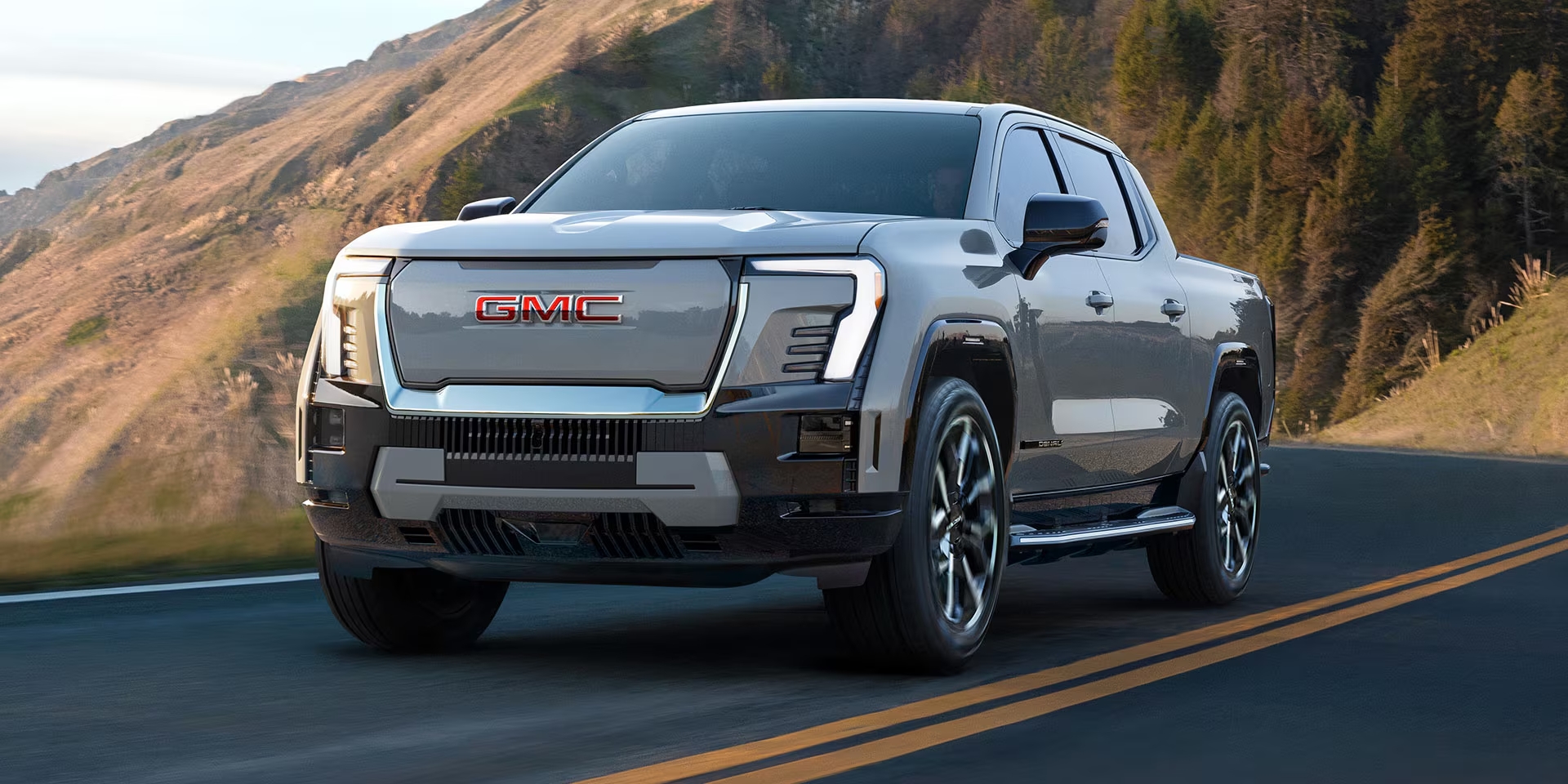
GMC Sierra EV offers up to 769 km of range, up to 760 hp, and 5.6 tons of towing capacity to take on diesel pickups.
In 2025 and 2026, GMC accelerated its electric offensive against the historical dominance of diesel in the U.S. full-size pickup market with the Sierra EV, a model that now boasts numbers previously associated almost exclusively with combustion trucks. For the 2025 lineup, the Sierra EV Denali already offered up to an EPA-estimated 460 miles of range, about 740 km, in addition to 760 hp and towing capacity of up to 10,500 pounds; for the 2026 lineup, the manufacturer’s official page, consulted on May 1st, raises the package to up to a GM-estimated 478 miles of range, about 769 km, 760 hp, 785 lb-ft of torque, and a towing capacity of up to 12,500 pounds, approximately 5.6 tons.
This advancement places the electric pickup in direct competition with traditional work models, as it combines long-range autonomy, electric four-wheel drive, high instant power, and heavy-duty towing capacity. While diesel still maintains advantages in quick refueling, infrastructure, and extreme use on long journeys, the Sierra EV’s numbers show that electrification has already entered the territory of powerful, cargo, and heavy-duty pickups.
Continue reading below to understand why the GMC Sierra EV has become a landmark in the segment, how its numbers challenge diesel’s hegemony, and what this new generation of electric pickups reveals about the future of the automotive market.
-
Uber Faces Shareholder Scrutiny as Board Accused of Ignoring Safety, Compliance, and Harassment Warnings Amid Over 3,500 U.S. Lawsuits

-
Ferrari’s First Electric Car Divides Fans, Priced at $630,000, Amid Concerns Over Limited Editions; Brand Clarifies It’s Not Just for Future Perks
-
BYD Dolphin Mini: The Electric Car That Defies Depreciation, Losing Only 3.58% in a Year and Becoming the Best-Selling Retail Model Under $22,000

-
Electric Car JAC E-JS4 Loses $19,000 in Value in One Year, Leading Record Depreciation of Used Cars in Brazil Due to Expensive Battery and New Models


Range of up to 769 km puts electric pickup in the same territory as combustion vehicles
One of the biggest challenges for electric pickups has always been range, especially in real-world use with cargo or towing.
In the case of the Sierra EV, GMC offers versions with an estimated range of up to 478 miles (approximately 769 km) on a single charge, depending on the battery configuration.


Even more basic versions already offer around 283 miles (approximately 455 km), which already places the model above many traditional electric vehicles.
This level of range completely changes the landscape, as it reduces one of the main barriers to the adoption of electric vehicles in professional use.
Power of up to 760 hp places the Sierra EV among the strongest pickups on the market
The Sierra EV not only focuses on efficiency but also on extreme performance. Depending on the version, the pickup delivers between 605 hp and up to 760 hp of power, with torque that can exceed 760 lb-ft (over 1,000 Nm) in some configurations.
This level of power positions the model on par with or even above many diesel and gasoline pickups. Furthermore, electric motors deliver instant torque, which improves:
- acceleration capability with load,
- control on difficult terrain,
- immediate response at low speed.
Towing capacity of up to 5.6 tons maintains standard required for heavy-duty work
To compete with traditional pickups, work capacity must be maintained. The Sierra EV achieves up to 12,500 pounds of towing (about 5,670 kg), depending on the version and configuration. This number places the model directly in competition with diesel pickups used in:
- equipment transport,
- agricultural use,
- towing trailers and machinery.
Even with variations between versions, the model maintains a high standard of capacity.
Payload capacity and robust structure maintain the pickup’s utility function
In addition to towing, the Sierra EV also maintains relevant payload capacity. Depending on the version, the pickup can carry between 1,700 and over 2,200 pounds (up to about 1,000 kg) in the bed.
This ensures the vehicle remains functional for professional use, not just recreational. This point is critical, because many early electric pickups sacrificed cargo capacity due to battery weight.

Another strategic point is charging. The Sierra EV uses high-voltage architecture, allowing it to recover up to about 116 miles (186 km) of range in just 10 minutes on fast chargers.
This reduces downtime and increases the viability of long-distance use. In practice, charging ceases to be an absolute blocker, bringing the experience closer to traditional refueling.
Consumption and range under load are still challenges, but within operational limits
Even with advancements, towing still impacts range. Studies indicate that when towing loads near the limit, the range can drop to about 190 to 240 miles (300 to 380 km).
This behavior is expected, as energy consumption increases significantly under load. Still, these numbers already cover a large part of real-world work applications.
The Sierra EV represents a structural change. Instead of relying on displacement and fuel, power now comes from:
- electric motors,
- high-capacity batteries,
- electronic energy management.
This transforms how performance is delivered. Power is no longer limited by combustion and is now controlled by electronics and software.
Pickup market enters direct dispute between diesel, hybrids, and electrics
The launch of the Sierra EV comes at a time of transition. Today, the market is divided between:
- traditional diesel pickups,
- hybrid models,
- fully electric vehicles.
Each solution meets different needs. The Sierra EV’s differentiator is trying to cover all of them simultaneously: power, range, and work capability.
GMC’s strategy shows that electrification has already reached the most resistant segment of the automotive sector
Pickups have always been one of the most difficult segments to electrify. This is because they require:
- high cargo capacity,
- long range,
- robustness in severe conditions.
The launch of the Sierra EV indicates that these barriers are being overcome. Electrification is no longer exclusive to urban cars and enters the most demanding territory of the automotive sector.
The Sierra EV is not just another electric pickup. It redefines what is expected of a work vehicle.
By combining range close to internal combustion vehicles, extreme power, and high cargo capacity, the model changes the perception of what an electric vehicle can do.
Given this scenario, the direct question remains: if an electric pickup can already deliver power, range, and work capacity at this level, how long until diesel ceases to be dominant even in the heaviest uses?





Be the first to react!