Portuguese
  Spanish


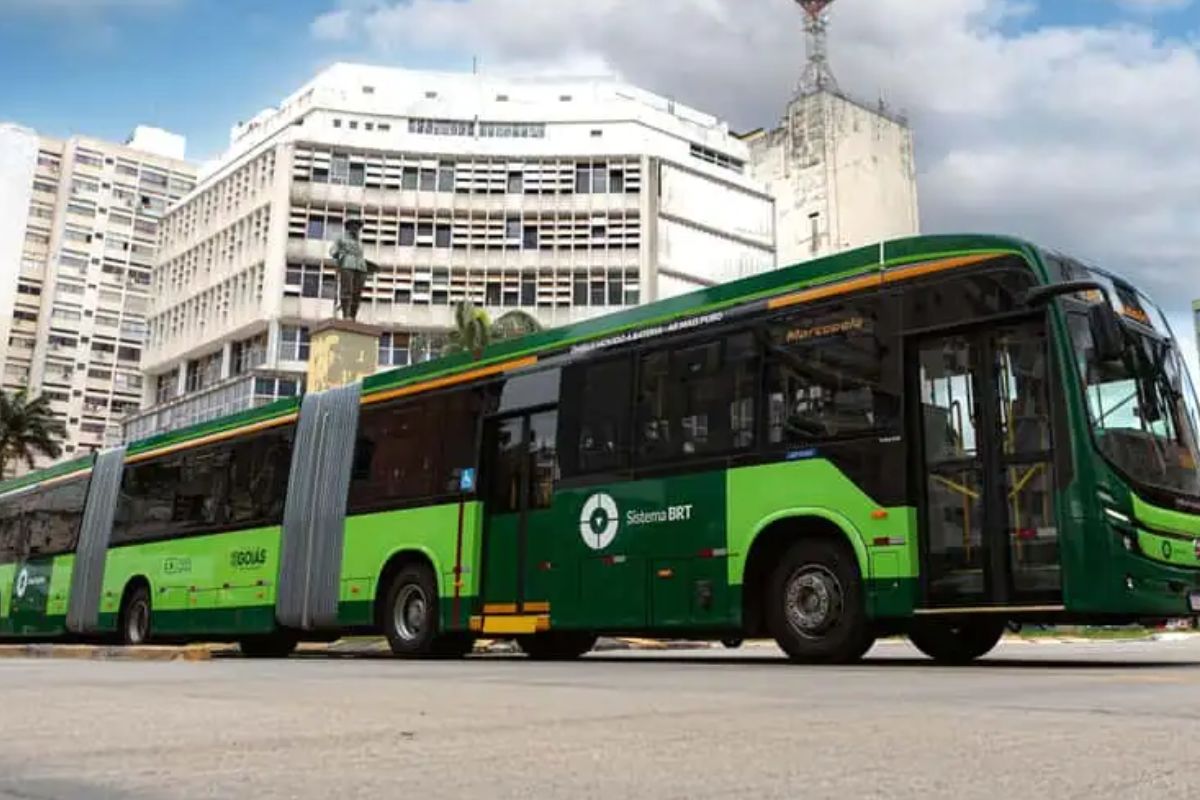


Goiás Debuts The World’s Largest Electric Bus in Goiânia Within a BRT with 21 Vehicles, 6 MW Charging Station, and a Management Model That Separates User Fare From Technical Fare to Sustain the Fleet in the Long Term
The world’s largest electric bus is already operating in Goiânia and changes the standard of public transportation in the metropolitan area. The 28-meter bi-articulated bus, 100% electric, arrives in a BRT fleet of 21 vehicles, with a passenger fare of R$ 4.30 and a public investment package that is expected to exceed R$ 1 billion by 2026.
More than just the “world’s largest electric bus” for inauguration photos, Goiânia launches a system with a 6 MW charging station, contracts renewed until 2048, subsidies shared between the state and municipalities, and an operation that treats the metropolitan area as a single system, without artificially dividing municipal and intermunicipal lines. It’s a business model shift that tries to make buses a desired option, not a last resort.
From Curitiba to Goiânia: The Story That Prepared the Ground
Long before the world’s largest electric bus arrived in Goiânia, Brazil was already testing giants on wheels.
-
As Brazil Expands Social Welfare, Survey Reveals 40% Blame Poverty on Laziness, While 58% Cite Lack of Opportunities

-
China Tightens Control on Antimony, Driving Prices from $22,000 to Nearly $40,000 per Ton as U.S. Rushes to Bolster Strategic Reserves

-
BlackRock Freezes $1 Billion in Brazilian Renewable Energy, Impacting 1.5 GW of Planned Projects and Highlighting Investor Concerns Over Infrastructure Bottlenecks Cutting Up to 25% of Solar and Wind Generation
-
Labor Shortage: Despite Record Average Salary, 90% of Brazilian Bar and Restaurant Owners Struggle to Hire Key Roles Like Sushi Chefs and Head Cooks


In the 1990s, Curitiba inaugurated the use of bi-articulated buses in exclusive corridors, paving the way for São Paulo to do the same shortly after, still using Volvo technology and focusing on high transportation capacity.
In the capital city, these bi-articulated buses operated in corridors like Santo Amaro, with a special chassis, central motor, and a solution to prevent the “knife effect” at the joints.
Over time, the fleet migrated to super-articulated buses of 21 meters, which replaced the traditional bi-articulated ones. The idea of transporting many people in fewer vehicles was already established – what was missing was to electrify this concept.
How The World’s Largest Electric Bus That Debuted in Goiânia Works

In Goiânia, the story gains a new chapter: the world’s largest electric bus in regular operation is a 28-meter bi-articulated BZRT model from Volvo, with a Marco Polo Ative body and a capacity for about 250 passengers. The 21-meter articulated version carries up to 180 people, making up an electric fleet of 21 vehicles in the BRT.
The BZRT has two electric motors of 200 kW each, totaling 400 kW, equivalent to about 540 horsepower. It can accommodate up to eight batteries, with a total capacity of 720 kWh.
The motor is located in the central part, under the floor, which improves weight distribution and the balance of the world’s largest electric bus during maneuvers and braking. The batteries are also positioned low, freeing internal space for more comfortable passenger flow.
In addition to the electric traction, the world’s largest electric bus in Goiânia comes with an advanced active safety package: cameras to reduce blind spots, side and front sensors for pedestrians and cyclists, license plate reading with speed limit warnings on the dashboard, and a VDS steering system, which makes driving more precise and stable.
It is a heavy, long, and silent bus, but with electronics to help the driver operate it as if it were a smaller vehicle.
Fare at R$ 4.30 and Subsidy Over R$ 1 Billion: Where Does the Money Come From
One of the greatest curiosities about the world’s largest electric bus in Goiânia is simple: who pays the bill. According to the government of Goiás, the model clearly separates the fare paid by the passenger from the technical fare that remunerates the service.
The user fare is R$ 4.30. The technical fare, which reflects the actual cost of the system, is around R$ 12.83.
The difference of R$ 8.53 per ticket is funded by the public sector, in an arrangement involving the state and municipalities in the metropolitan area, such as Goiânia, Aparecida de Goiânia, Senador Canedo, Trindade, and Goianira. Each municipality contributes a proportional share, and the cost is distributed among all.
This model only sustains itself because it was redesigned by state complementary law, which established that the world’s largest electric bus and the associated fleet would be financed based on technical fare, explicit subsidy, and long-term contracts.
The early extension of concessions until 2048 provides a horizon for companies to invest in electric vehicles, terminals, BRT, charging stations, and stopping points.
To ensure payment, mechanisms were created such as the compensation and custody chamber, funds linked to batteries, and even the use of state and municipal participation funds as guarantees in case of defaults.
In practice, this reduces interest rates, increases financing terms, and provides security that the world’s largest electric bus will not just become a temporary experiment.
Public Investment, Fiscal Balance, and Combating Corruption
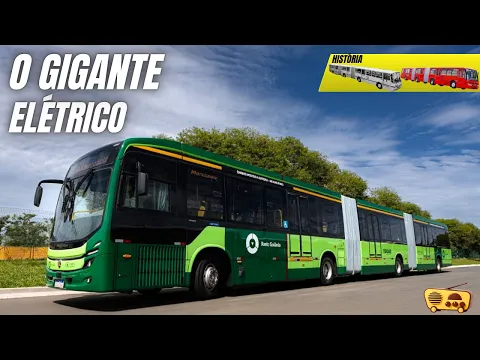

In the state government’s narrative, the arrival of the world’s largest electric bus in Goiânia is also showcased as a management showcase.
The deployment of the electric fleet, BRT terminals, and the 6 MW charging station is presented as a result of fiscal balance, fighting corruption, and annual budget planning.
The logic is to treat public transportation as state policy, not as a campaign issue. This means moving away from using works and fleets only on the eve of elections and starting to plan, within the budget, how much will be invested in education, health, security, highways, and mobility, without delaying salaries and without leaving room for off-the-books payments. When the provider knows they will be paid without “shortcuts,” trust increases and financial costs drop.
The world’s largest electric bus enters this context as a visible symbol of a longer process of cleaning up accounts and the transportation sector itself.
Metropolitan Model and 24-Hour BRT: Why Goiânia Becomes a Reference
Another point that highlights the world’s largest electric bus is the institutional design. The entire metropolitan region of Goiânia is treated as a single system.
There is no rigid division between municipal and intermunicipal lines, and the planning is done based on the origin and destination of people’s trips, not administrative boundaries.
The consortia operate with companies that maintain their garages and workshops, but the fleet operates under integrated command.
The dispatch of vehicles considers the demand of the corridors, and the world’s largest electric bus is allocated where it makes the most sense, according to passenger volume and characteristics of the BRT.
The companies have also taken on commitments beyond the fleet: renewing and expanding buses, constructing and maintaining terminals, BRT stations, and stopping shelters in all 21 municipalities.
This ensures that the visual and operational quality seen in Goiânia is replicated in smaller cities in the region, with the same standards of shelters, information, and QR codes to track the lines.
Quality, Price, and Competition with Private Cars
Getting the world’s largest electric bus on the road doesn’t solve the challenge of attracting passengers alone. Therefore, the package includes three fronts at the same time: visible quality improvement, relative cost reduction compared to fuels, and increased reliability.
Historically, a bus fare used to cost about 1 liter of gasoline and deliver a dirty, rundown, and slow service.
Now, the goal is to keep the fare below the price of ethanol while delivering a faster system, with BRT, new vehicles, and the world’s largest electric bus promoting the image of modernity.
The logic is simple: if public transportation is cheaper than fueling the car, faster than facing traffic and parking, and more comfortable than the old standard, the choice stops being merely a necessity and becomes a matter of convenience.
Electric Future, Biogas, and Other Clean Matrices
Although the world’s largest electric bus is the highlight, Goiânia’s plan does not rely on a single energy matrix.
The national industry is working with a portfolio ranging from the most efficient diesel to pure electric, including ethanol-electric hybrids and biogas vehicles.
Marco Polo itself has indicated that Goiânia should soon receive biogas-powered buses, broadening the diversity of sustainable solutions.
The idea is simple: to combine increasingly clean buses with long-term contracts and a business model that allows for continuous investment in fleet renewal.
In the case of electric buses, a specific fund was created for battery replacement, with part of the technical fare going directly to this reserve. After about six years, the accumulated resource should be used to replace batteries without upsetting the system’s cash flow.
Maintenance, Reliability, and Full-Time Operation
Operating the world’s largest electric bus requires top-notch technical support. Volvo works with the regional concessionaire and maintains a dedicated team within the customer’s yard, providing in-house service to quickly address any problems.
The goal is to replicate, within the electric fleet, the high reliability reputation that the brand already has with diesel vehicles. In a BRT that operates with intense service and narrow maintenance windows, there is no margin for the world’s largest electric bus to be idle due to recurring failures.
The operation has also been adjusted so that the electric bi-articulated bus fulfills the role of reducing convoys, decreasing the formation of queues at terminal exits, and better serving the corridors with the highest demand, maintaining more stable intervals.
Showpiece Policy or State Policy?
The big question when talking about the world’s largest electric bus in Goiânia is whether all of this is just a passing showcase or an actual state policy.
The answer involves several points that have already been tied together: contracts until 2048, funds guaranteed by payments from states and municipalities, a unified metropolitan model, and clear distribution of responsibilities between the public sector and private entities.
On the operators’ side, there is a reclaiming of protagonism: instead of merely “surviving” with decaying systems, the entrepreneur is reinvesting to be recognized by society as part of the solution.
On the passenger side, the delivery of new buses, refurbished terminals, BRT with the world’s largest electric bus, and a competitive fare with fuel constructs the narrative that public transport can once again be the preferred choice for commuting.
In the end, what will determine whether this debut of the world’s largest electric bus is a showcase or a real turning point is time, the continuity of investments, and the system’s ability to maintain both quality and price simultaneously.
And you, if you had a corridor served by the world’s largest electric bus near your home, would you leave your car in the garage more often?