Portuguese
  Spanish




If 1980s Cars Were Sold Today, How Much Would They Cost? See the Values Adjusted for Inflation and What It Reveals About Popular Cars in Brazil.
The 1980s were marked as a time when cars seemed closer to the average worker. Simple models dominated the streets, and the idea of a “popular car” was much more present in the collective imagination. But were these cars really cheap or did they just belong to a completely different economic reality? Adjusting prices for inflation and comparing with the current scenario yields surprising results and debunks many myths.
Which Cars Dominated Brazil in the 1980s
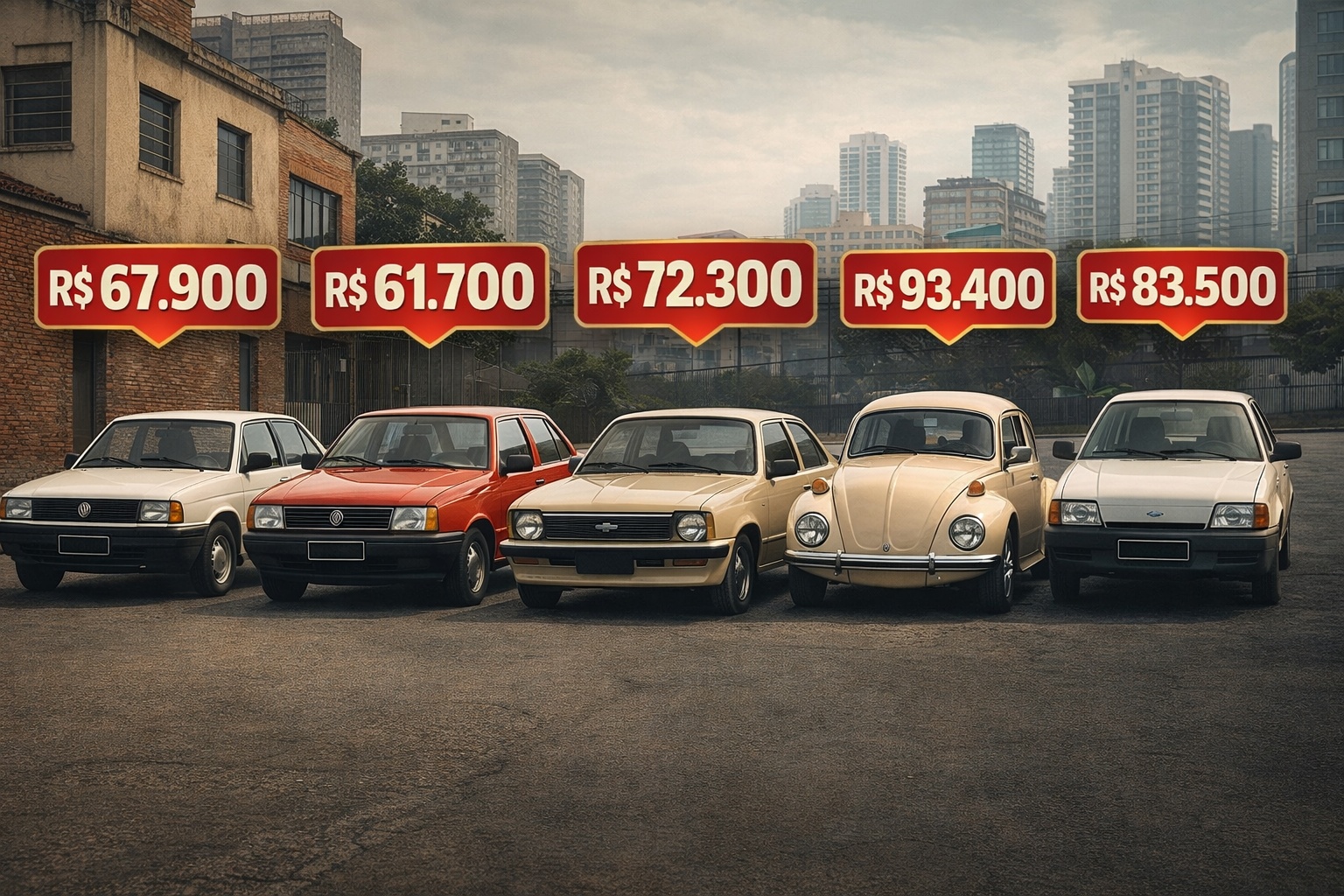
In the 1980s, some models were found in practically every Brazilian city. Chevrolet Chevette, Volkswagen Gol, Fiat Uno, Volkswagen Beetle, and Ford Escort made up the backbone of the national fleet.
They were simple cars, with little technology, basic finishes, and a total focus on mobility. Luxury and safety were concepts very distant from what we know today.
-
Suitcase-sized hydrogen engine spins at 25,000 rpm, nearly doubling the efficiency of conventional cars and replacing exhaust smoke with water vapor

-
1983 Chevrolet Runs Over 100,000 km Without Gasoline, Powered by Wood Chips, Reaches 125 km/h in Airport Test

-
Workshop Converts Giant Tractor Tire Tricycle into a Three-Wheel Drive Hybrid with 36,000-Watt Electric Motor Capable of Climbing Hills

-
Sales of Brazil’s Cheapest Electric Car Halted Before First Deliveries: E-Motors Suspends Emova Easy Due to Import Tax Increase and Rising Freight Costs




How Are Old Prices Adjusted for Current Values
To understand how much these cars would cost today, the most used reference is the IPCA adjustment, the official inflation index in Brazil. This method preserves the purchasing power of money over time.
Additionally, another important comparison is the number of minimum wages required to buy the car, an indicator that helps understand the real weight of the vehicle in the worker’s budget at the time.
How Much Would a Square Gol Cost Today, in Adjusted Values
The Volkswagen Gol from the 1980s, when adjusted for inflation, would today have an estimated price between R$ 75,000 and R$ 90,000, depending on the year and version considered.
This value places the old Gol on the same level as modern compact hatchbacks, dismantling the idea that it was an extremely cheap car for its time.
Chevrolet Chevette: The “Popular” That Would Cost Like a Modern Car
The Chevette, a symbol of the people’s car, would today have an adjusted price between R$ 80,000 and R$ 100,000. This number varies according to the base year and the adjustment method.
In other words, if it were sold today with the same economic weight it had in the 1980s, the Chevette would cost almost the same as a current entry-level car.
Fiat Uno and the Idea of Affordable Simplicity
The Fiat Uno, launched in the late 1980s, was seen as a modern and affordable car. Adjusted for inflation, its current price would be in the range of R$ 70,000 to R$ 85,000.
The significant difference was not the absolute price, but the fact that the Uno delivered simple solutions, low maintenance costs, and reduced fuel consumption, something essential in that economic context.
Beetle and Escort: Cheap or Just Compatible With the Era?
The Volkswagen Beetle, already a veteran in the 1980s, would today have an adjusted price between R$ 60,000 and R$ 75,000, while the Ford Escort would be around R$ 80,000 to R$ 95,000.
These values show that neither of them was cheap in the modern sense. They were compatible with a less complex economy and much lower technical requirements.
Why Do Old Cars Seem Cheaper Than They Really Were
Nostalgia distorts perception. What changed was not only the price of cars but also the purchasing power of the minimum wage, the tax burden, industrial costs, and legal requirements.
In the 1980s, there were no airbags, ABS, strict emission controls, or onboard electronics. Today, all of this is mandatory and significantly increases the final cost of the vehicle.
What This Comparison Reveals About Current Brazil
When we look at the adjusted numbers, it becomes clear that the car has never really been cheap in Brazil. It has always required a significant portion of the worker’s income.
The difference is that in the past, there was more economic predictability and less pressure on the monthly budget. Today, the car competes with much higher costs of housing, food, and services.
If 1980s cars were sold today, they would cost values very close to those of current popular cars. The idea that “it was easy to buy a car before” does not hold up under the adjusted figures.
What existed was a different balance between income, cost of living, and expectations. The comparison makes it clear that the challenge of owning a car has always existed — it has only taken on new forms over time.